
 Sulawesi & Maluku
Landscape
South Sulawesi
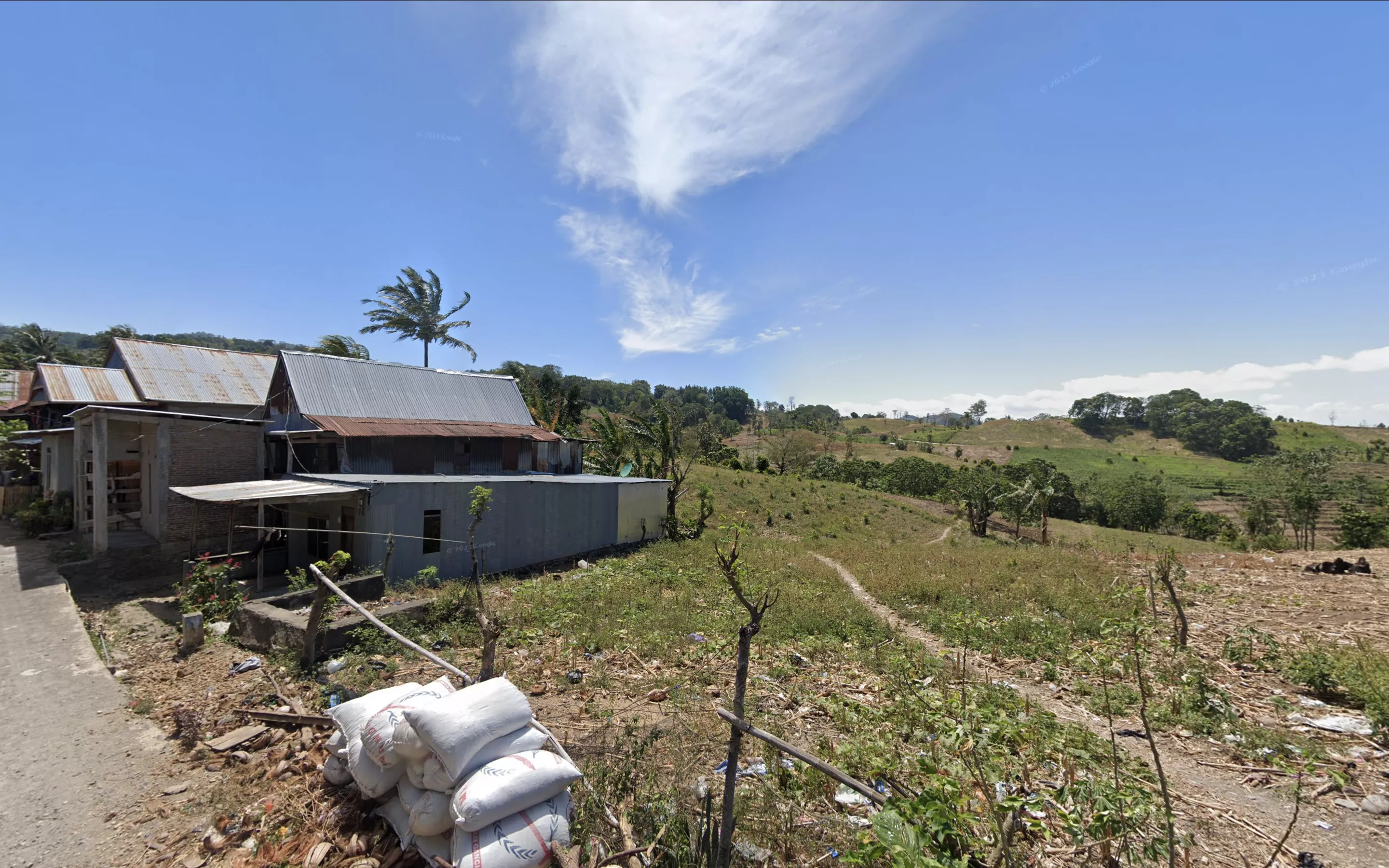

Higher altitude regions in Southern Sulawesi can be recognised by a hilly yet not quite mountainous feel. Unlike in the north, roads tend to be paved with asphalt instead of concrete.The architecture in this area is usually a mix of traditional Buginese stilt houses and single-storey modern brick houses.
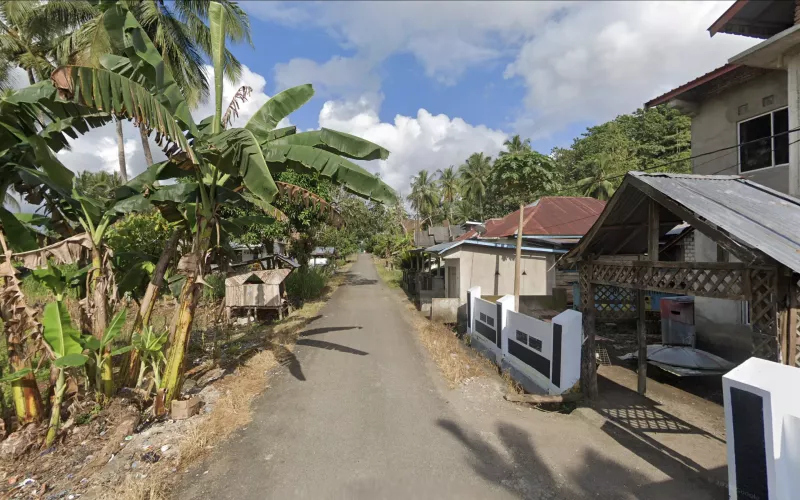

Sinjai Regency has a subtle rolling landscape.
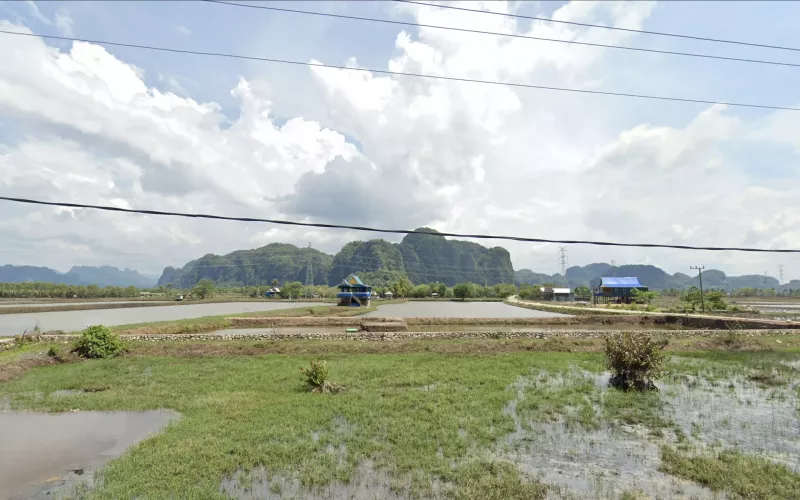

Mountains in southern Pangkajene Dan Kepulauan Regency and northern Maros Regency can be easily recognised by their typical karst formation hills. Steep limestone cliffs can also sometimes be seen in the distance.
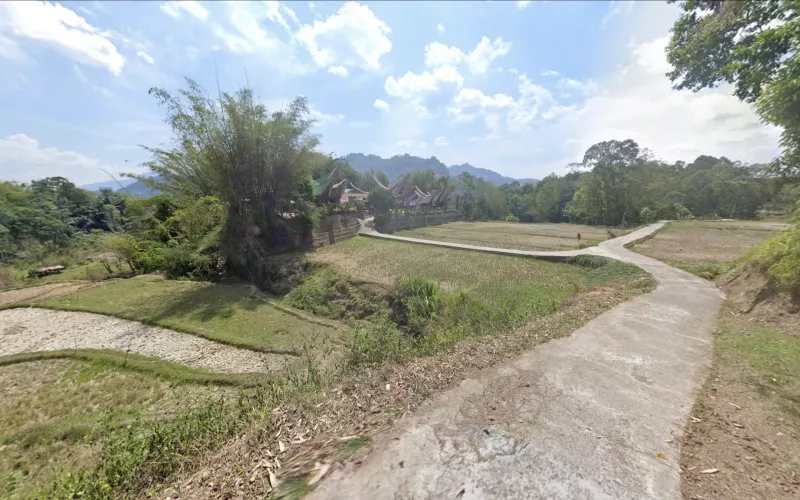

The landscape in Tana Toraja Regency consists of rice terraces surrounded by hills of scattered forests. These hills are dotted by vernacular villages with narrow concrete paths winding through hills. Bamboo and Sumatran pines are also common in this area.
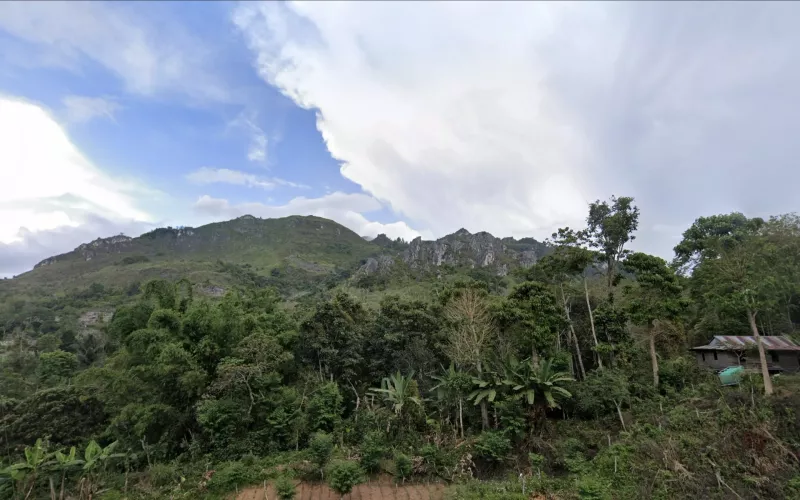

Karst landscapes can be seen in the Enrekang and Tana Toraja regencies. The mountains in this area commonly feature sharp peaks and rocky edges and are significantly higher, steeper and more jagged than the karst mountains found further south in South Sulawesi.
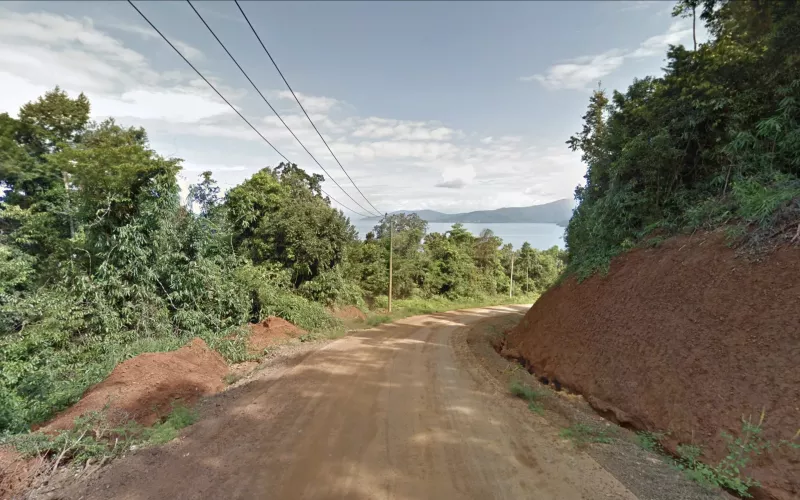

The eastern part of Luwu Timur Regency near Sornako is recognisable by its distinct red soil. Roads there also have a dark red tinge. You can sometimes see the lakes Danau Matano and Danau Towuti in the distance.
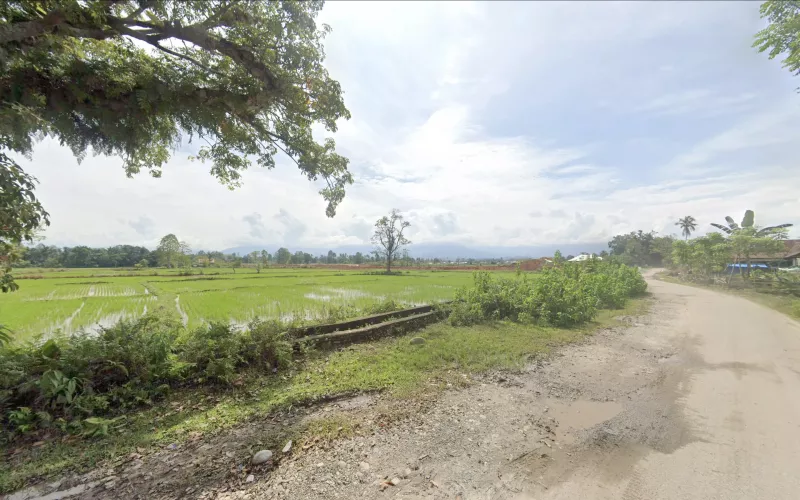

A ridge can sometimes be seen to the northwest in Luwu Utara Regency.
West Sulawesi
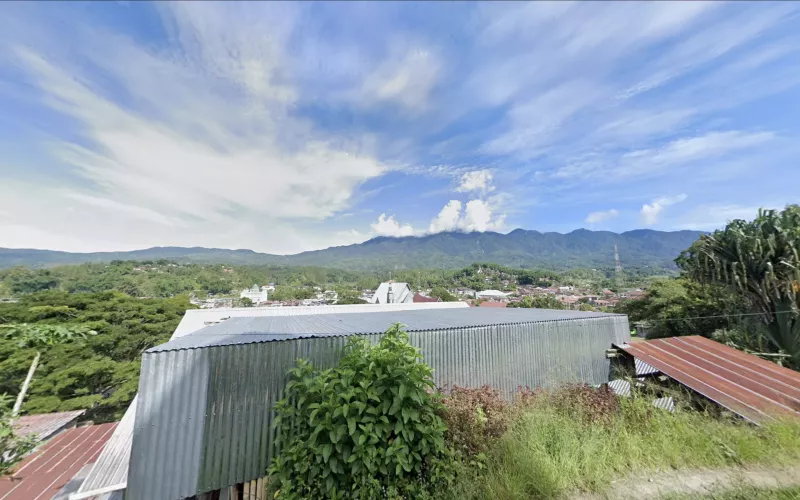

The town of Mamasa is situated in a NE-SW valley with exceptionally high mountains to the north.
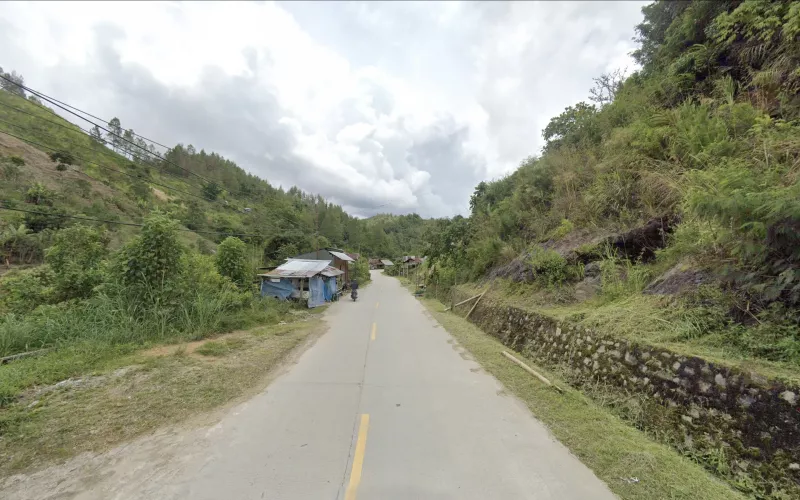

The undulating terrain of Mamasa Canyon is characterised by exposed rock walls and a high number of pine trees in the nearby highlands.
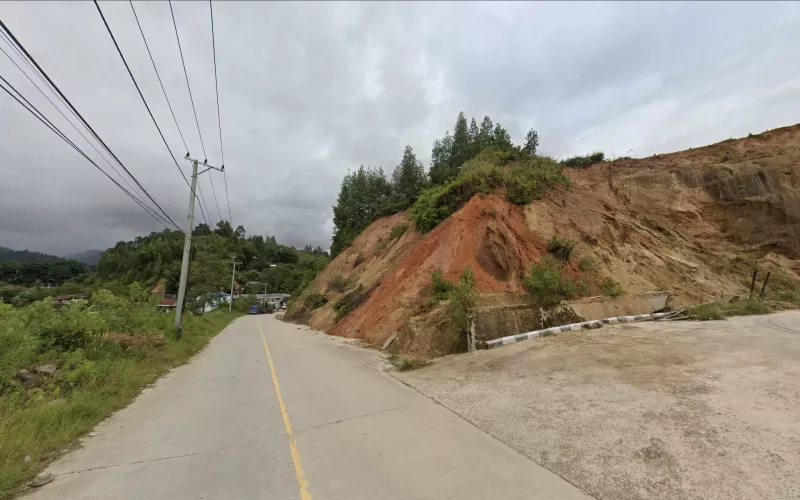

Near the town of Mamasa, you will often see earthen cliffs with a pinkish tinge topped with Sumatran pines. In contrast, it is rare to see this type of landscape in Tana Toraja because most of the roads there go around hills instead of cutting right through them.
South East Sulawesi
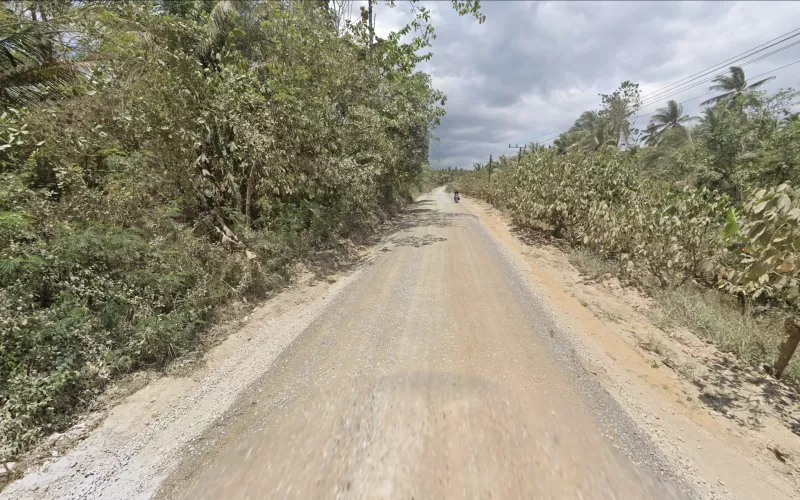

The South East Sulawesi plain is characterised by its distinct blindingly-white chalky soil. The soil can commonly have a red or brown tinge, with fine grass growing on the side.
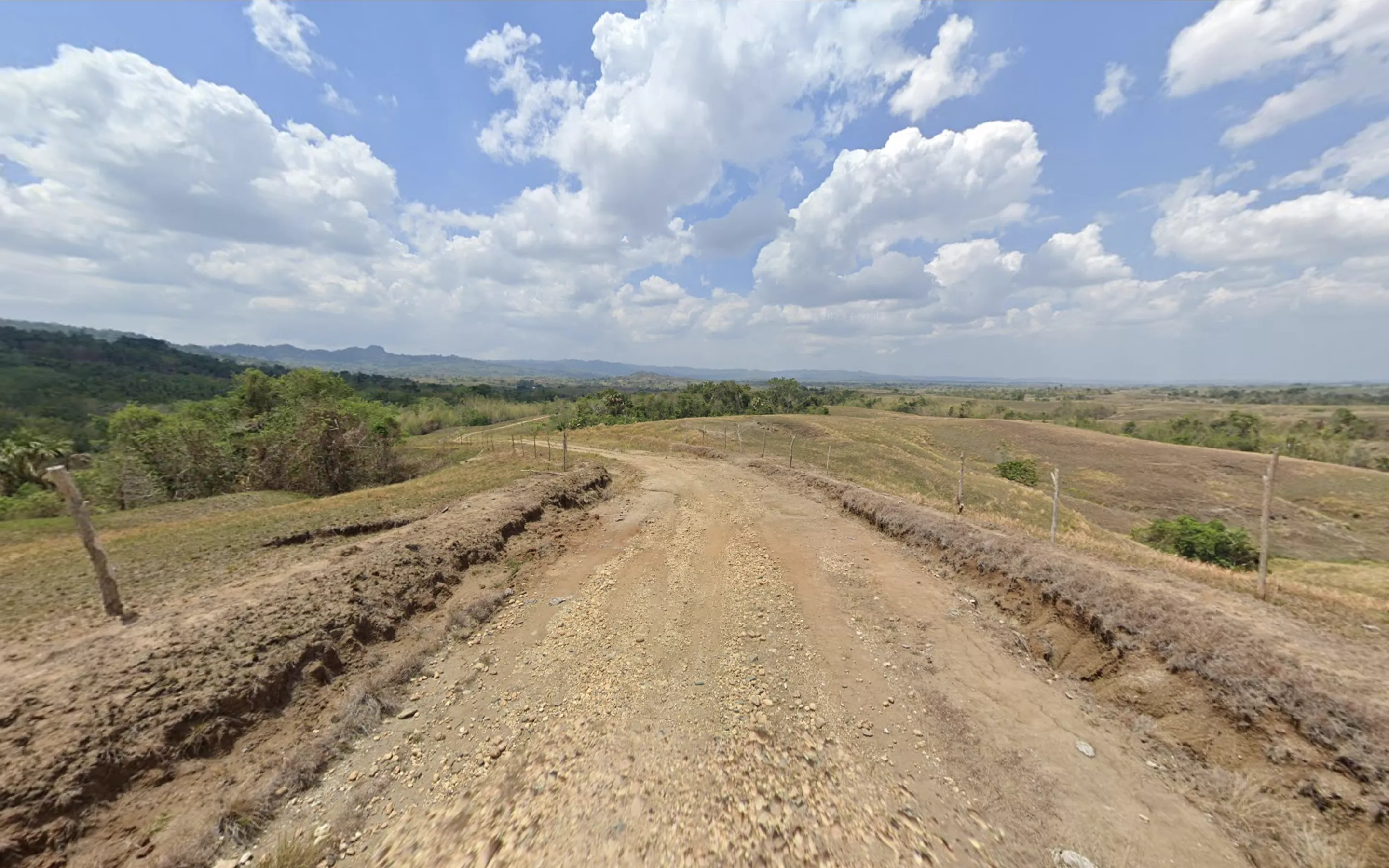

On the border between Bombana and Kolaka Regency you can find an open landscape of dry grassy rolling hills, with random crop fields and shrubs in between.
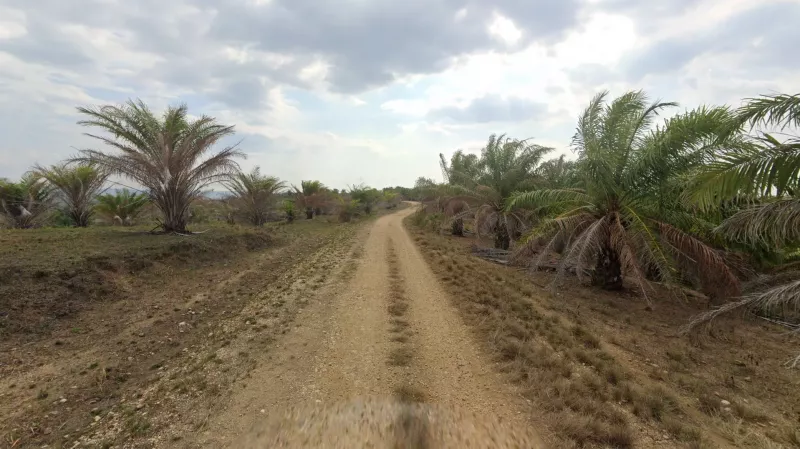

Southern Kolaka Regency is home to oil palm plantations, paired with the characteristic light brown gravel of the regency.
Central Sulawesi
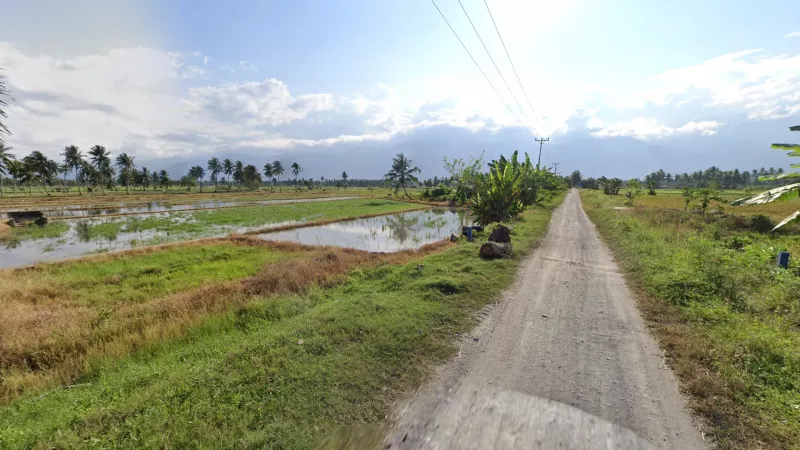

The Palu Valley is a SE-NW valley that widens to its north. It is lined with some of the most striking mountainsides in the country. Throughout the valley, you will encounter light, almost sandy soils alongside expansive agricultural areas. Coconut palms are also very common here.
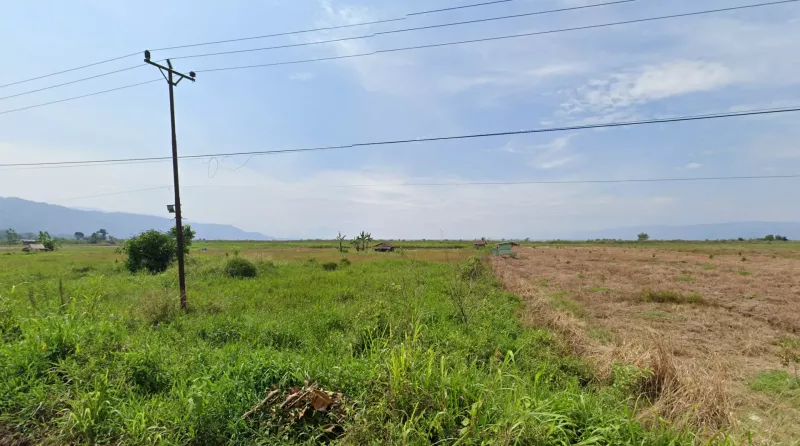

Lake Poso is located in a vast valley in inland Central Sulawesi. The lake is large enough that the opposite side is not always visible, so it can be mistaken for the sea. There are mountains rising directly from the water’s edge, with the mountains on the west side of the lake being higher. To the south of the lake lies a flat valley with gridded village layouts and various tree plantations next to rice paddies.
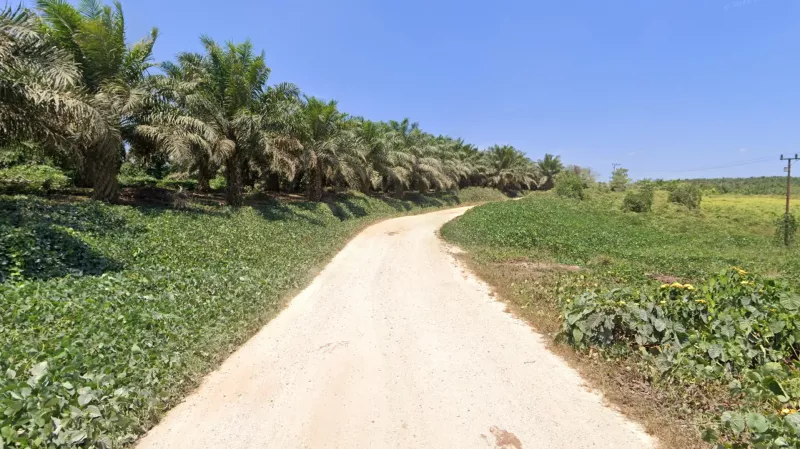

In contrast to the other parts of the Morowali regencies, the western part of North Morowali Regency features very bright, pale soil which is visible on both road shoulders and dirt tracks. It also contains the largest oil palm plantations in Central Sulawesi.
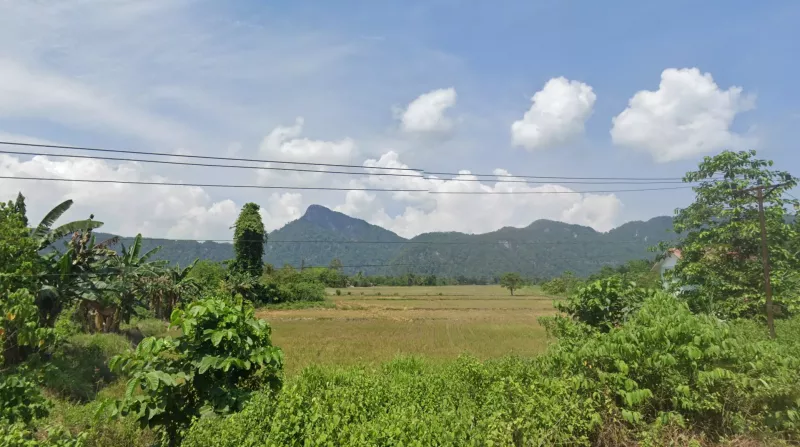

Morowali Utara Regency is identifiable by its intense, dark red soil. Around the capital of Kolonodale, this red soil is paired with striking mountain formations that make the area easy to recognise.
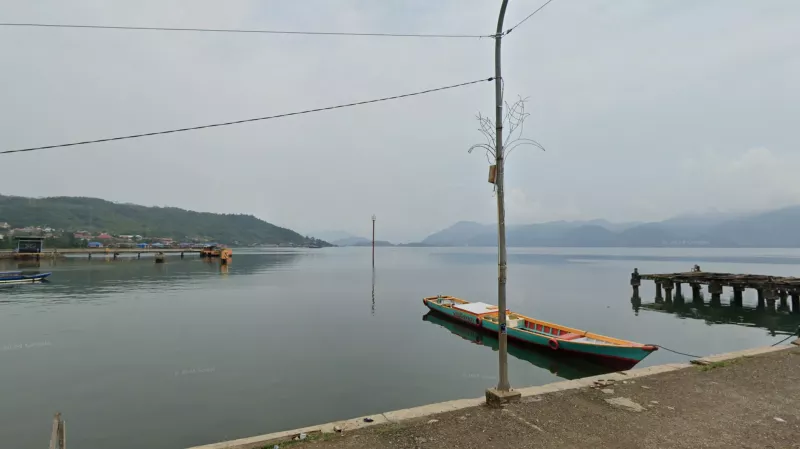

Kolonodale Bay features calm, lake-like waters with large mountains to the north and east.
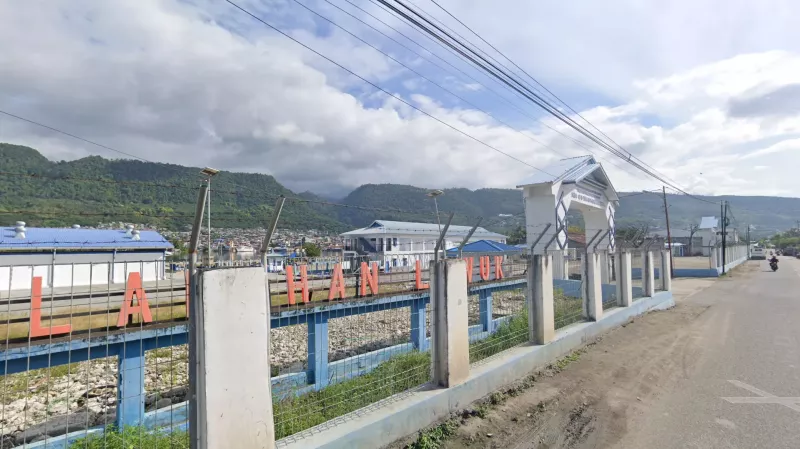

Luwuk, the largest city on the Banggai peninsula, is recognisable by the long, curved ridge to the northwest. This ridge has a distinctive appearance with the mountains being a uniform height interrupted by the notches made by cols. A tall red-white telephone tower in the middle of the city can also help with identification.
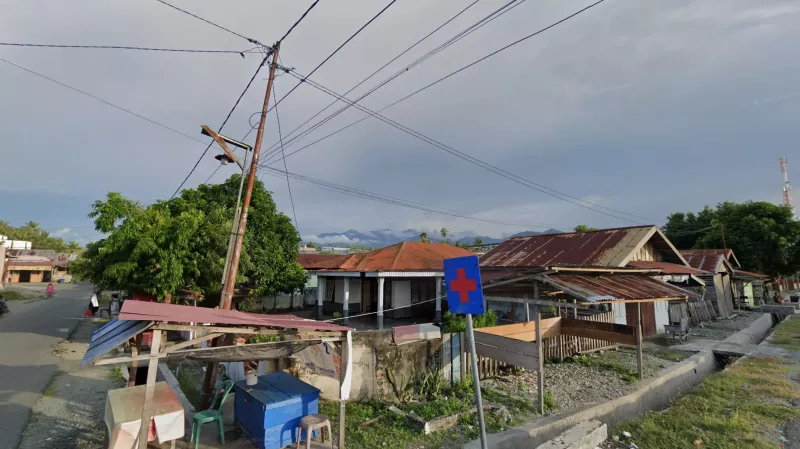

Ampana, the capital of Tojo Una-Una, is characterised by a "layered" mountain backdrop that is frequently shrouded in clouds. The city is also known for the long, green lamps attached to its utility poles.
Gorontalo
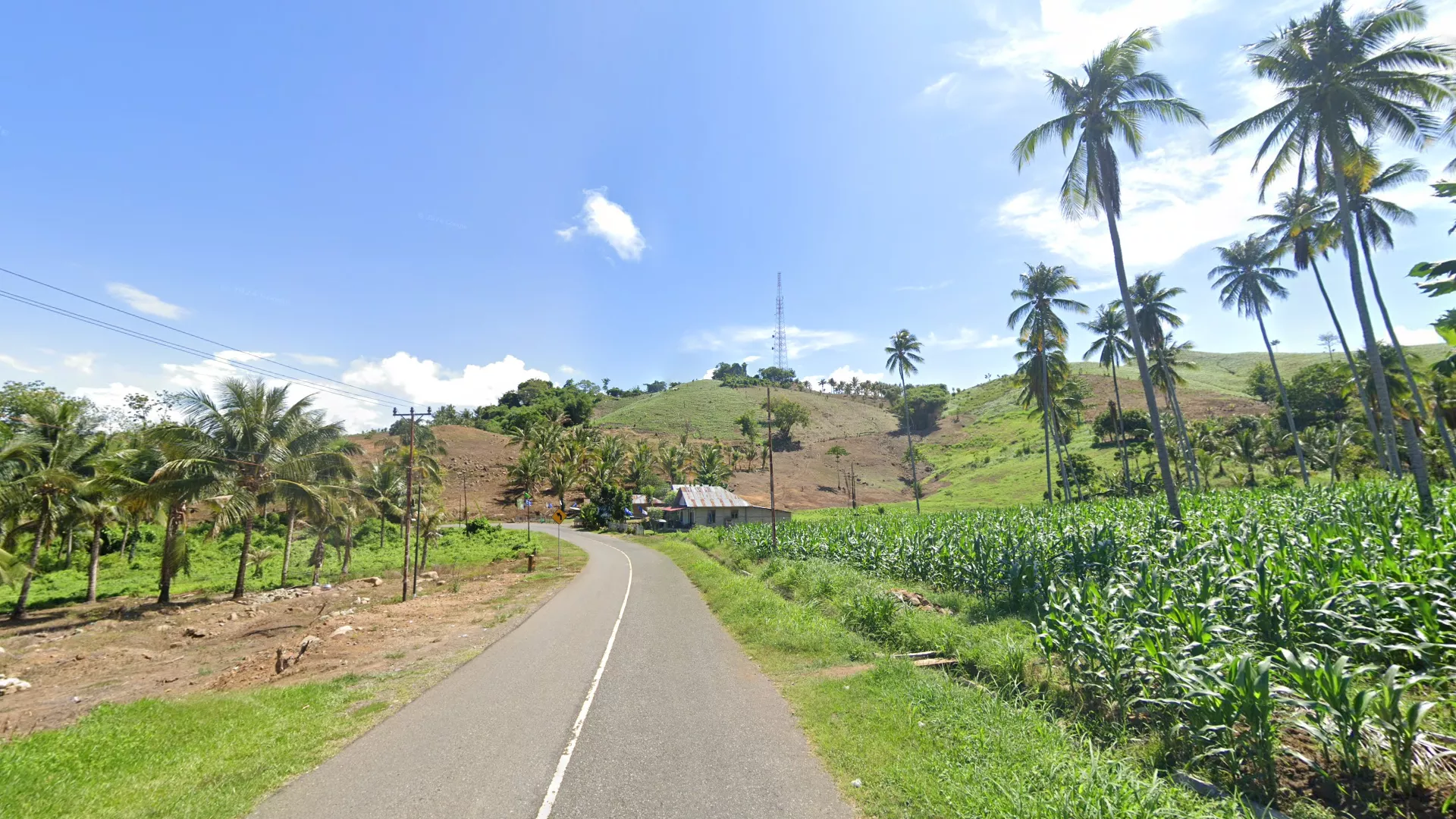

In many parts of Gorontalo you can find the famous ‘Gorontalo Matcha Chocolate Cake Hills’. These gentle rolling hills are varying shades of green and brown with valleys in between them. You can find them in the Gorontalo and in the eastern part of Buol Regency. The area around Gorontalo City and Lake Limboto is flatter however.
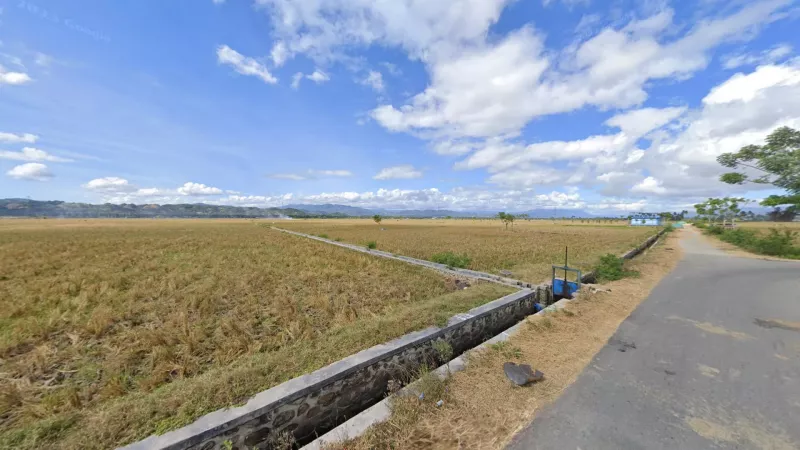

Gorontalo has E-W mountain ridges along its north and south coasts which are often visible from the area between them.
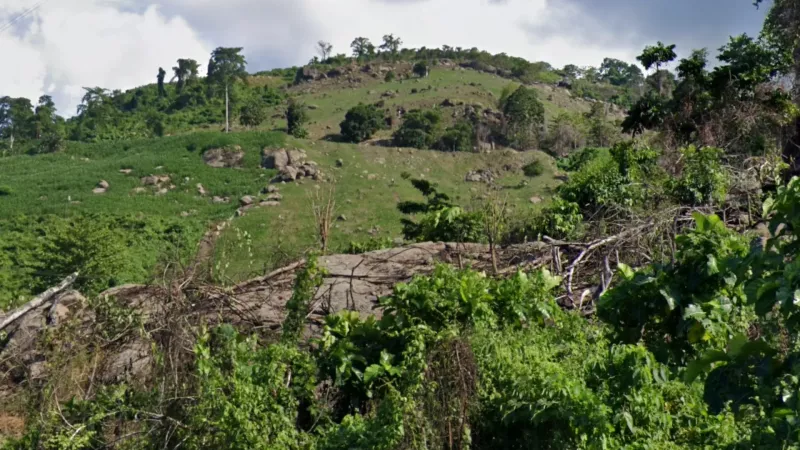

Large rocks are clearly visible on some of the hills in Gorontalo.
North Sulawesi
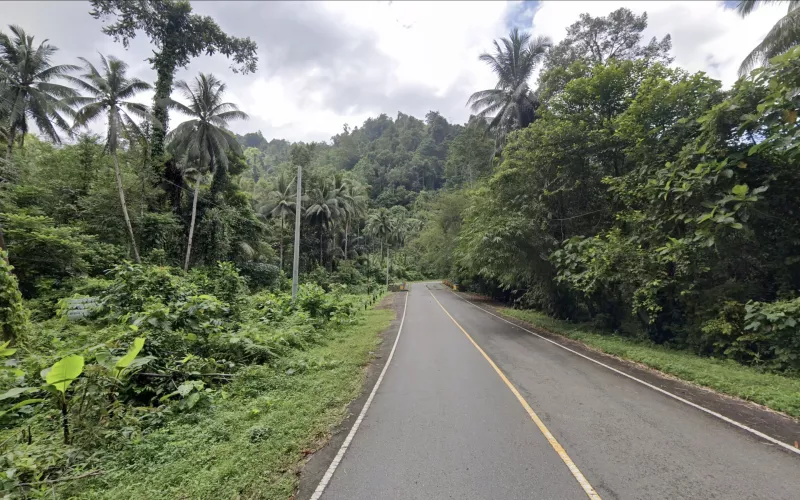

North Sulawesi has mountainous terrain.
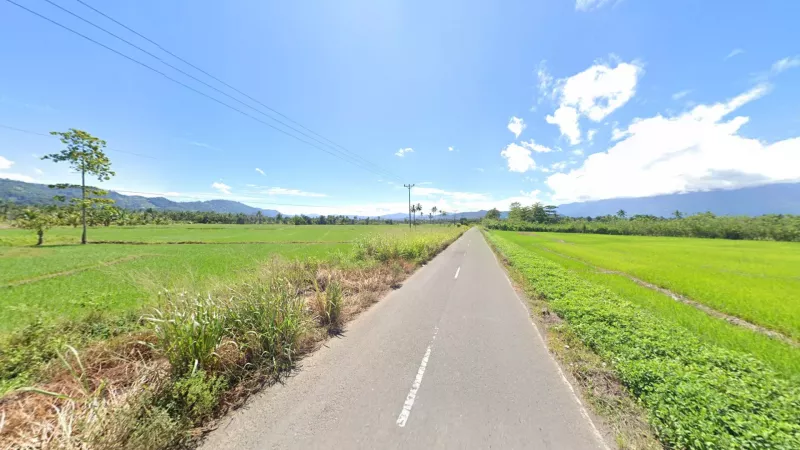

This valley in North Sulawesi is fairly recognisable with rice fields enclosed by NE-SW mountain ridges on both sides.
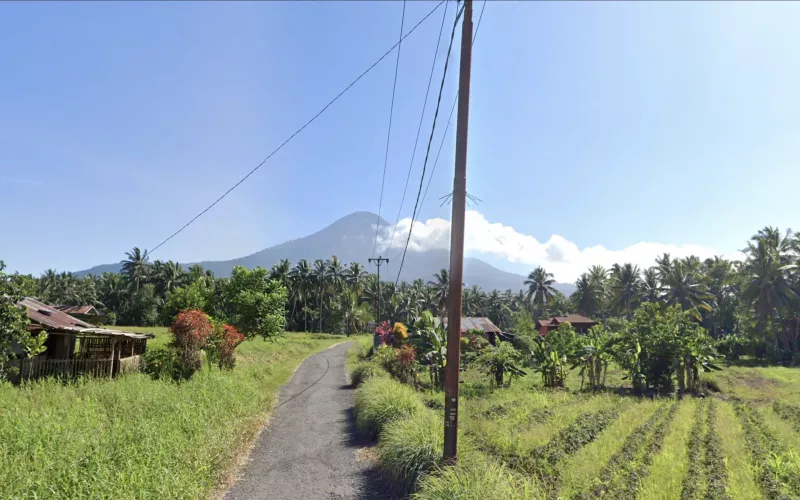

Mount Klabat volcano rises 2,000 meters above North Sulawesi’s two major cities, Manado and Bitung. Note that North Sulawesi is the only province in Sulawesi with volcanoes.
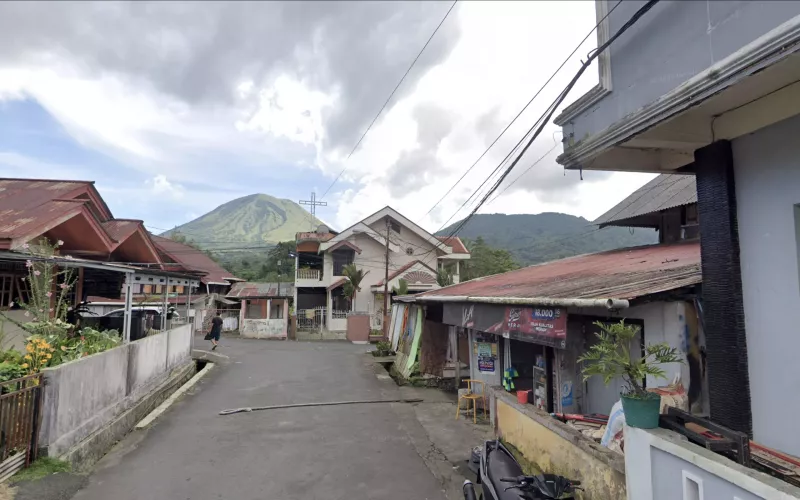

Two active twin volcanoes, Mount Lokon and Mount Empung, lie south of Manado. Mount Lokon is recognisable by its conical shape, light green base colour, and dark green forests on its slopes.
Muna Island & Buton Island
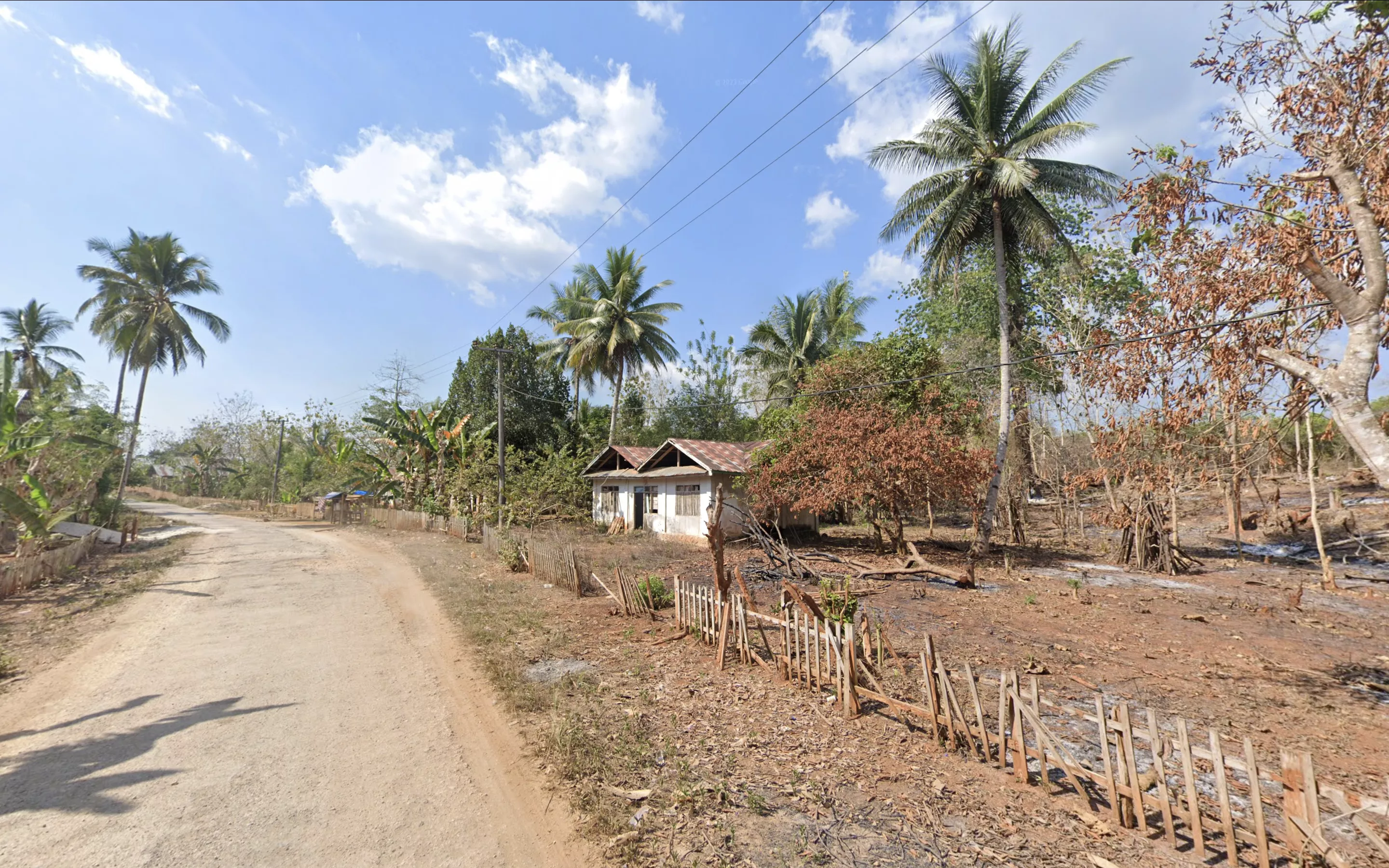

Muna Island is significantly flatter than Buton Island and has many fields with an arid appearance.
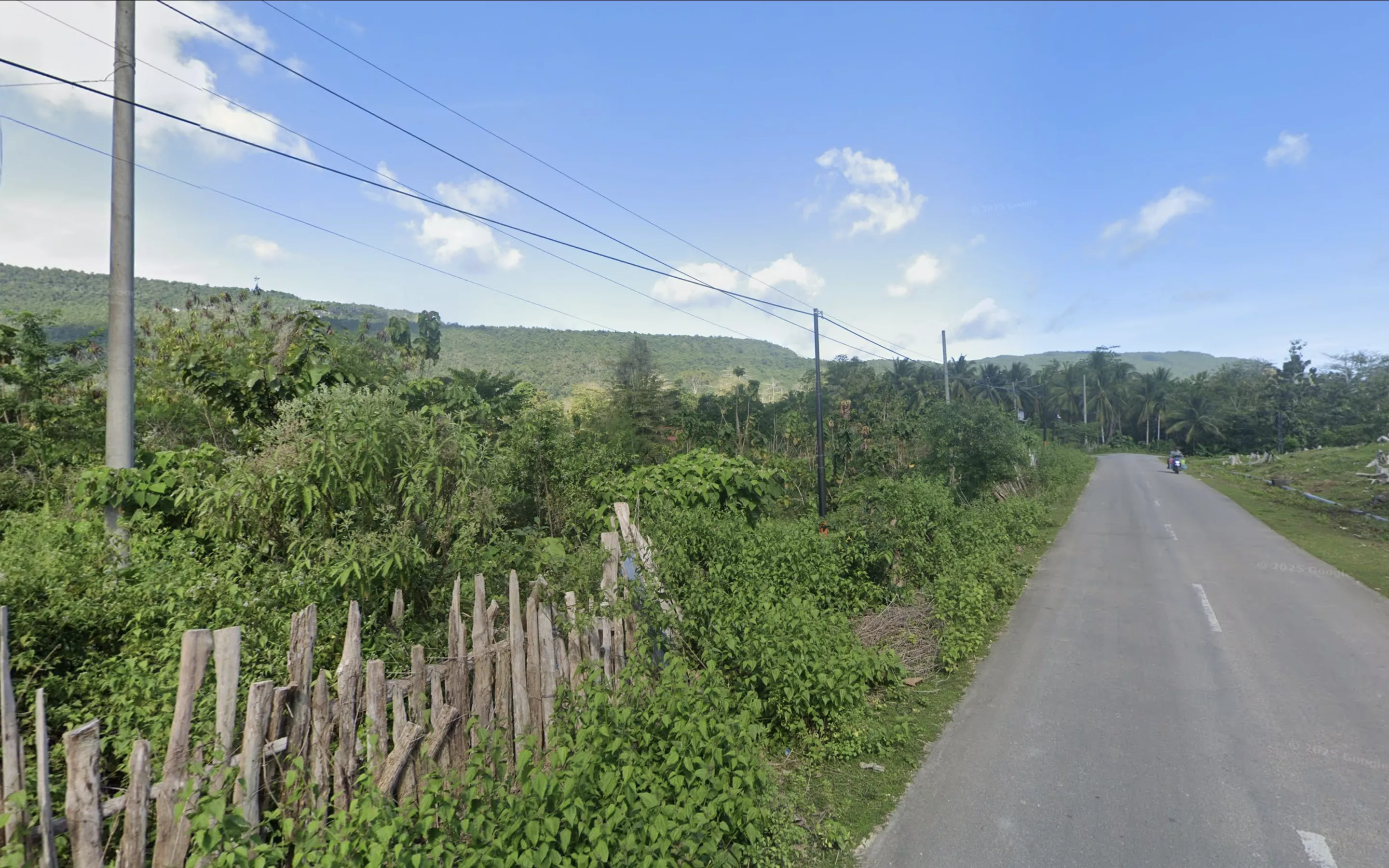

Buton Island, in contrast to Muna Island, is less arid and has comparatively green, high hills.
Peleng Island & Banggai Island
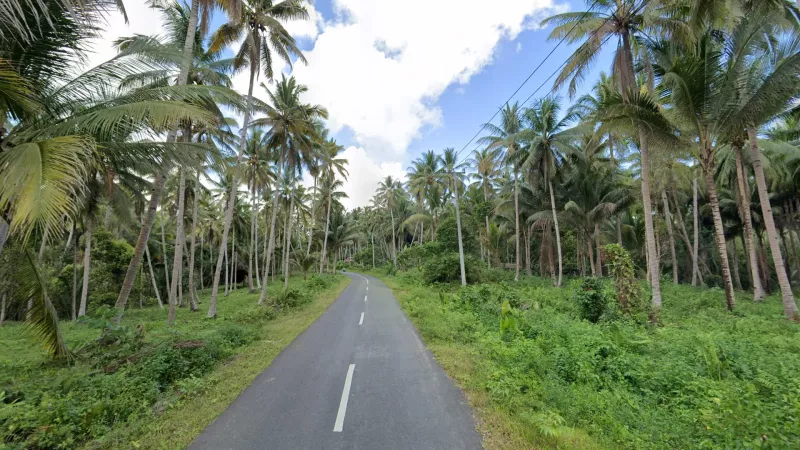

On Peleng Island and Banggai Island, it is common to see small paved paths running through a densely vegetated landscape. Ferns grow extensively on the islands and coconut trees are ubiquitous along the coasts. The presence of ferns helps to distinguish this area from North Sulawesi which also has large groves of coconut palms.
Ternate Island & Tidore Island
Ternate and Tidore are easily two of the most recognisable islands in Indonesia.
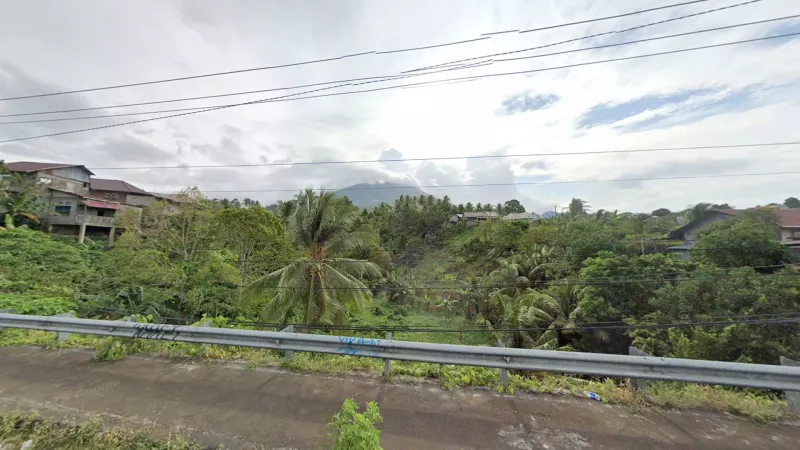

Ternate is essentially one big volcano - Gunung Gamalama. Areas with coverage are usually densely-populated with narrow, inclined roads on the foothills of the volcano.
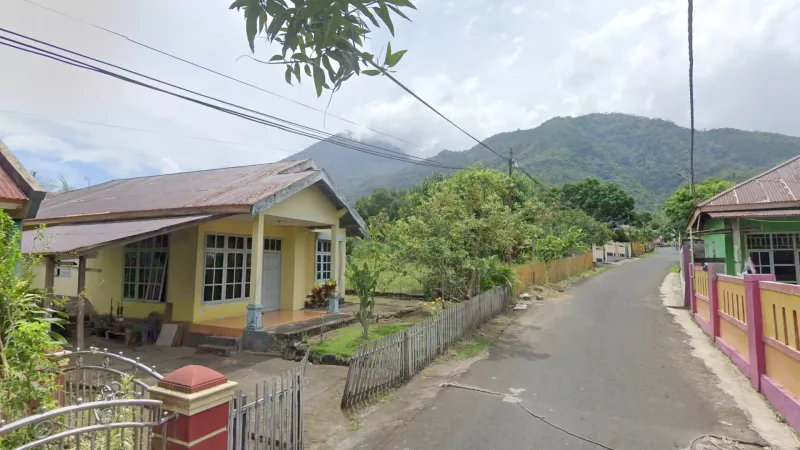

Tidore consists of two volcanoes: Kie Matubu, a cone-shaped volcano with a partially bald peak, in the south and a bumpy caldera volcano in the north. The island is less densely-populated than Ternate.
Agriculture & Vegetation
South Sulawesi
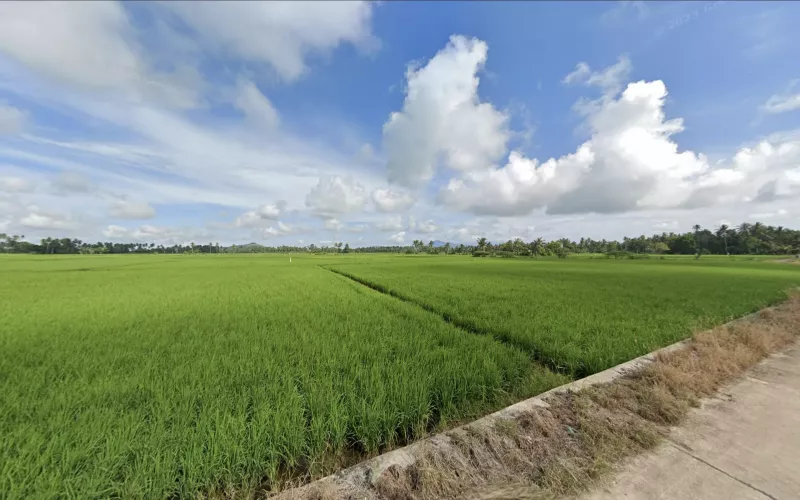

The area around Danau Tempe in central South Sulawesi can be recognised by flat rice fields dotted with scattered coconut palms and Palmyra palms. Mountain ranges can often be seen in the distance.
West Sulawesi
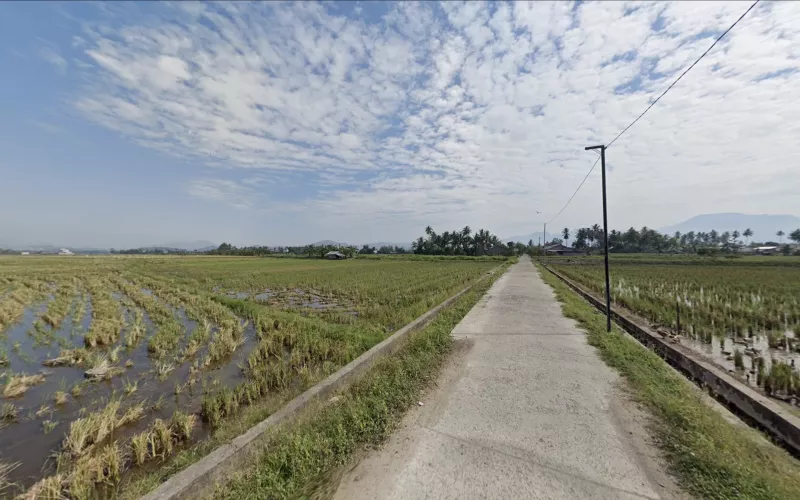

The coastal plains in southern West Sulawesi are characterised by flat farmland, often rice paddies, surrounded by mountains to the north, east and west. Small groups of coconut palms are often clearly visible in the distance. The surrounding settlements feature the Buginese-style houses typical of the region.
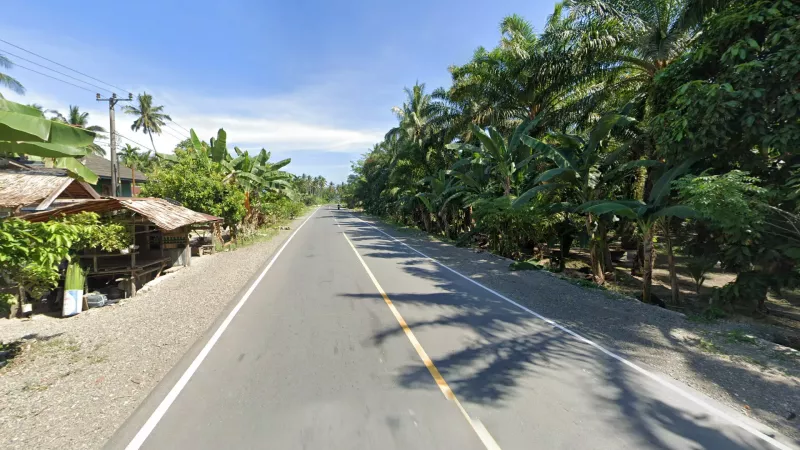

The coastal hills in the northern half of West Sulawesi are covered with oil palm groves, the largest area of such groves in Sulawesi. The N-S main road is paved and has grey rocky soil at its sides. Side roads are often unpaved with a grey rocky soil surface entirely. Narrow stalls selling goods are common along the main roads in this region.
South East Sulawesi
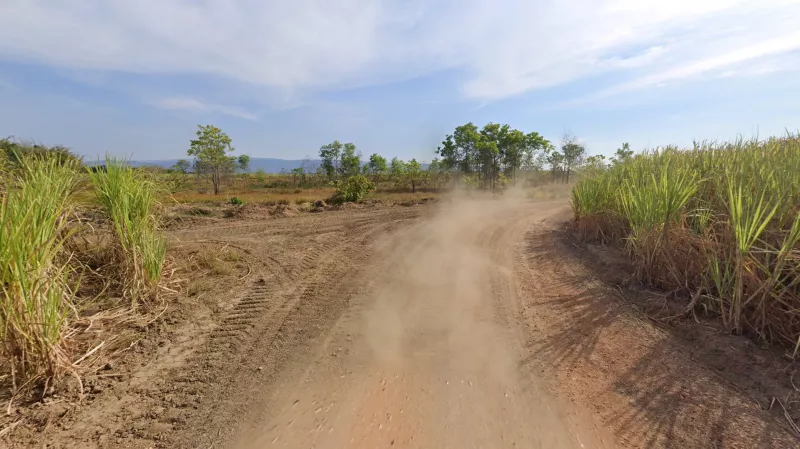

Dry undulating hills with sugar cane can be found in eastern Bombana Regency. Ridges may also be visible to the north and south.
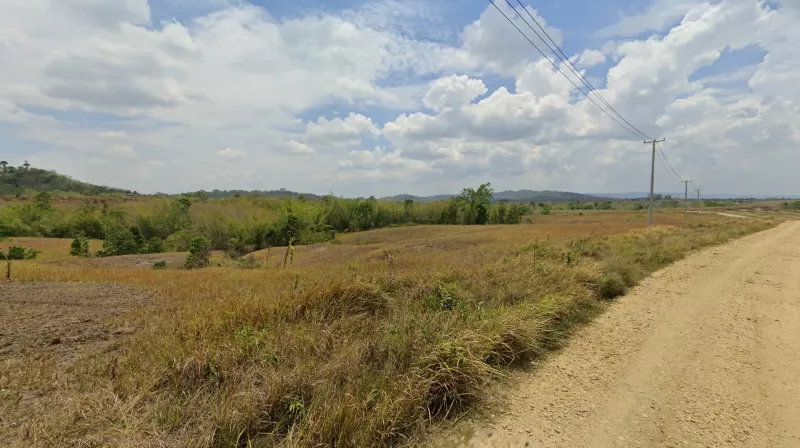

The region shown on the map has dry, ochre-coloured gravelly soil. The area is covered by large bamboo groves, but you can also find oil palms and teak trees.
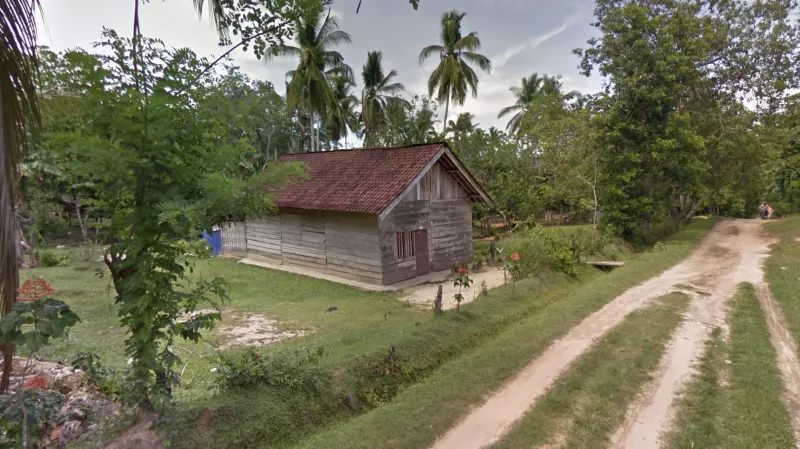

Simple wooden houses are very common in South East Sulawesi. These houses often have tiled roofs, vertical wooden window bars and open roof sections.
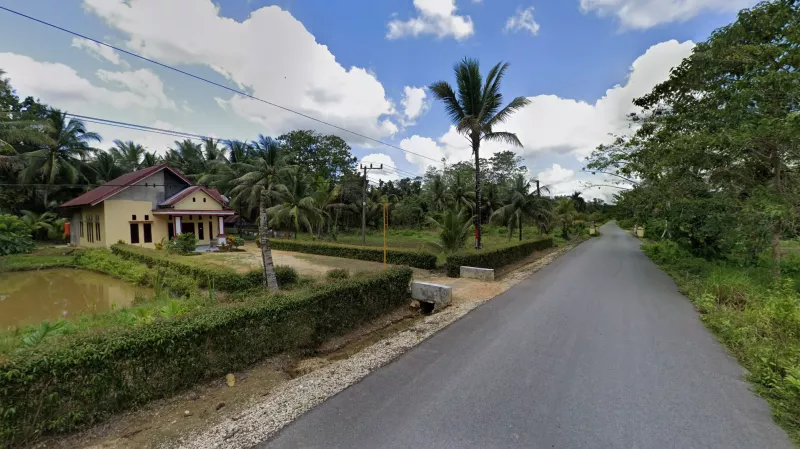

Many villages in South East Sulawesi have grid-like layouts and well-maintained hedges, which are often strikingly long.
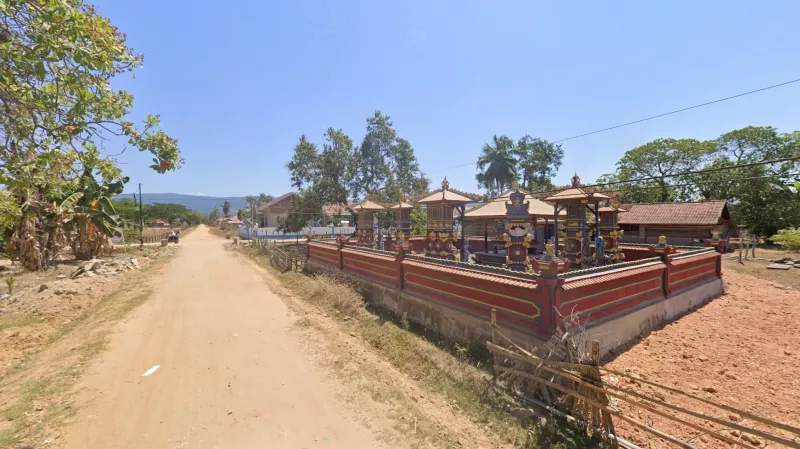

In the central southern part of South East Sulawesi, you can find a lot of Hindu-related architecture.
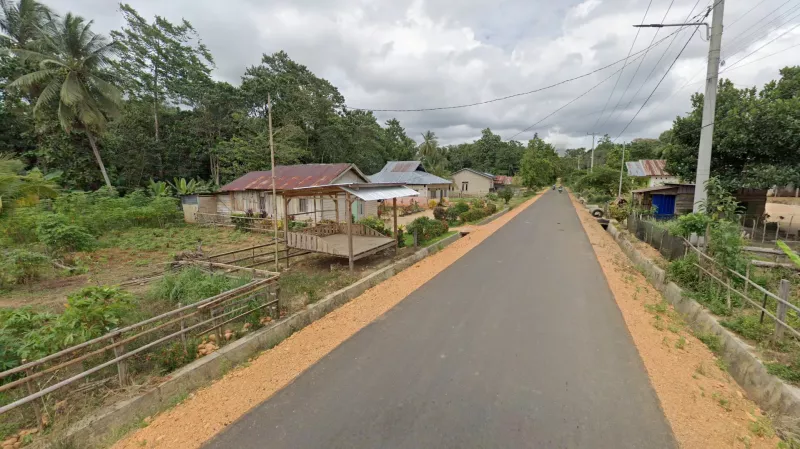

In addition to Sula fences, many bamboo fences can be found in the southern part of the South East Sulawesi.
Central Sulawesi
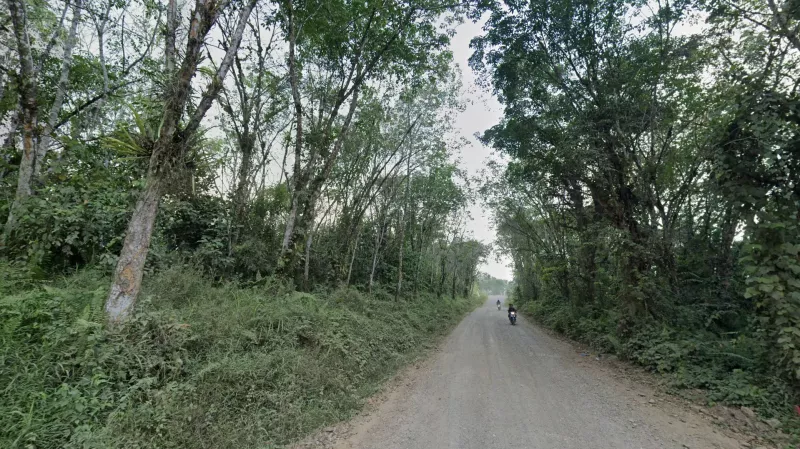

South of Tinompo in Morowali Utara Regency, there are a number of small roads lined with forests of rubber trees, planted in a disorganised fashion
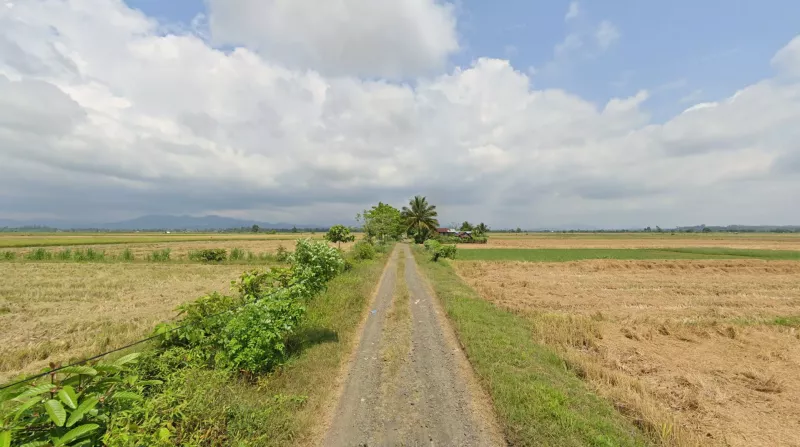

The region around Seluang is the largest rice-producing area in Central Sulawesi. It is characterised by complete flatness, which contrasts with the view of high, prominent mountains towards the northwest. The roads in this area are often very stony and coconut palms are a nearly constant feature of the landscape. In more recent coverage, oil palms are becoming increasingly prevalent as they gradually displace the traditional rice fields.
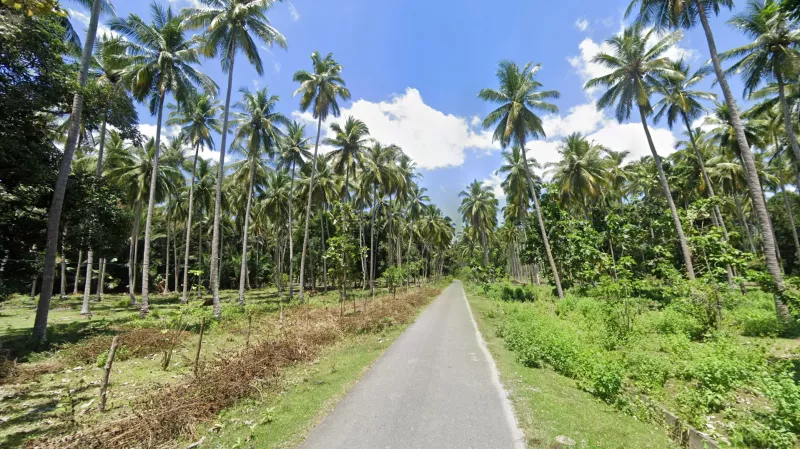

In the north and east of the Banggai peninsula, you will find organised groves of coconut palms with clear ground apart from minimal weed growth.
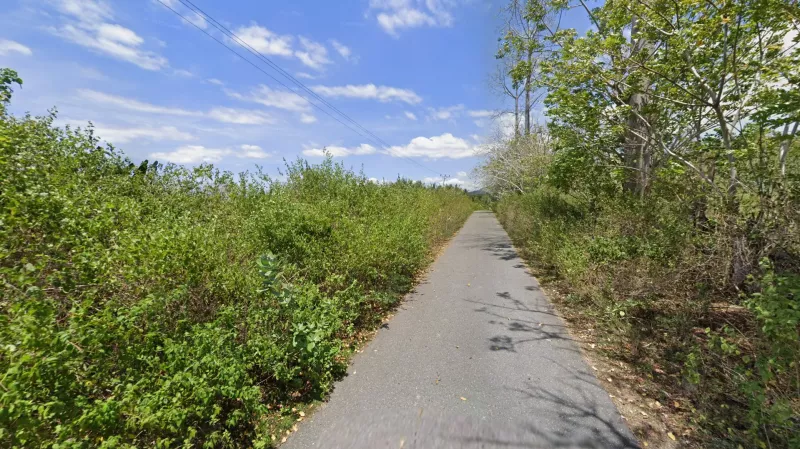

Towards the eastern end of the Banggai peninsula, the landscape becomes very dry and scrubby, resembling the Nusa islands with thin trees, giant milkweed, and white acacia.
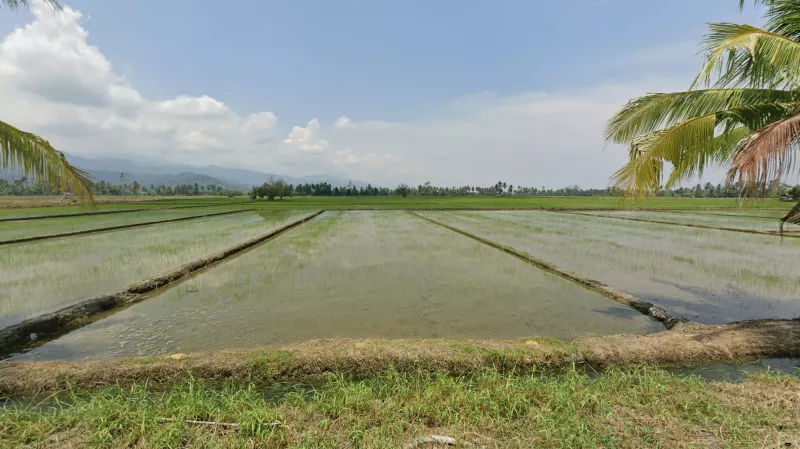

The Parigi region features an unusually wide, flat coastal plain dominated by rice fields.
Gorontalo
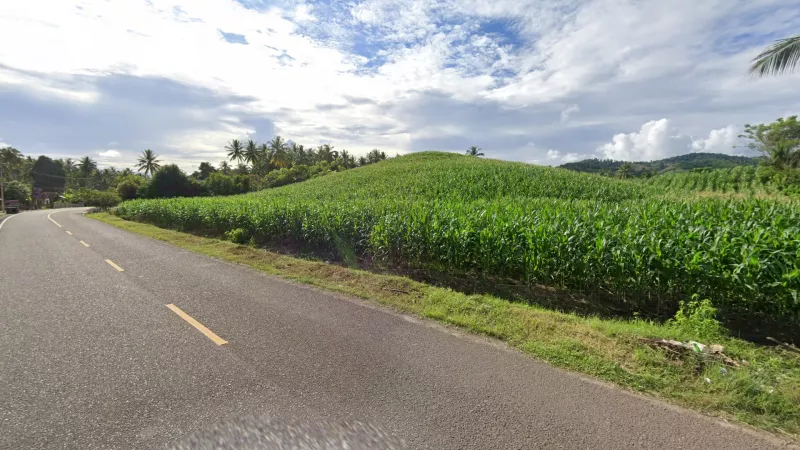

As in North Sulawesi, coconut palms are common in Gorontalo. However Gorontalo has more arable land with corn and sugarcane frequently cultivated. Fields are often surrounded by rows of tree fences.
North Sulawesi
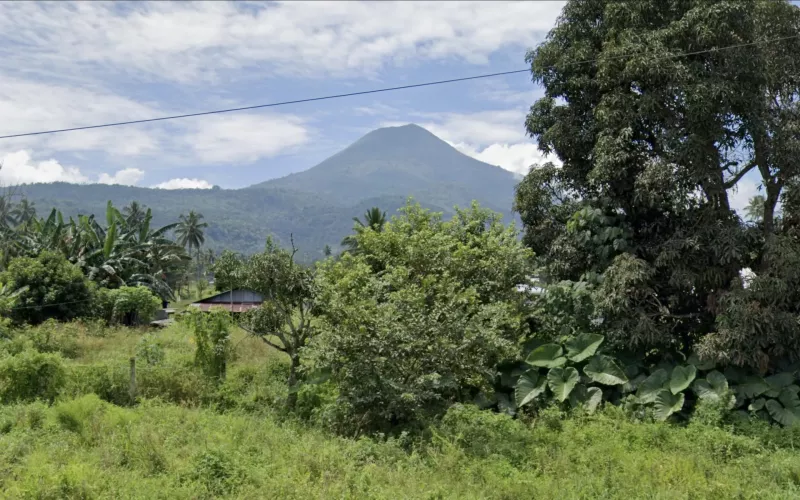

Groups of coconut palms are frequently found in North Sulawasi in fields, on mountains and in the rainforest. Clove trees growing in groups on mountain slopes are also a common sight. The often rainforest-like landscape includes bamboo, lianas, and large-leaved taro plants in the understory.
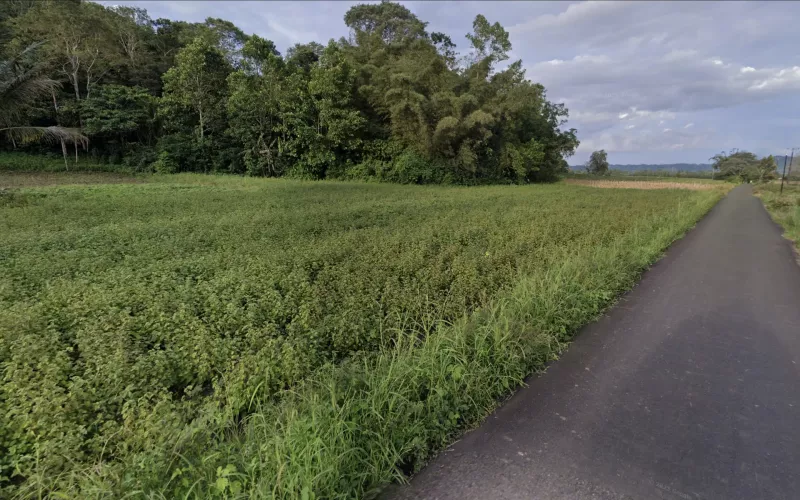

Lake Tondano is surrounded by mountains. Near the lake there are fields where patchouli, a small plant similar to mint, is cultivated.
Selayar Island
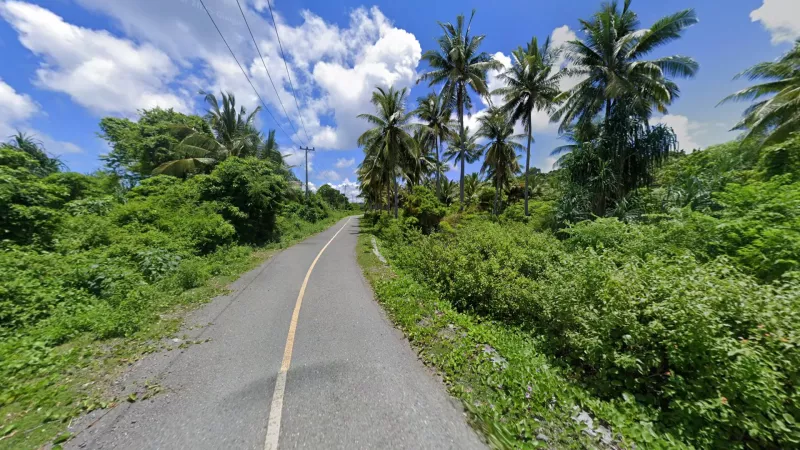

Along with numerous coconut palms, the vegetation of Selayar Island is characterised by various bushes with distinctive blossoms: lantana bushes with small orange blossoms and teak tree blossoms. You will also see easily identifiable fan-shaped gebang palms.
North Maluku
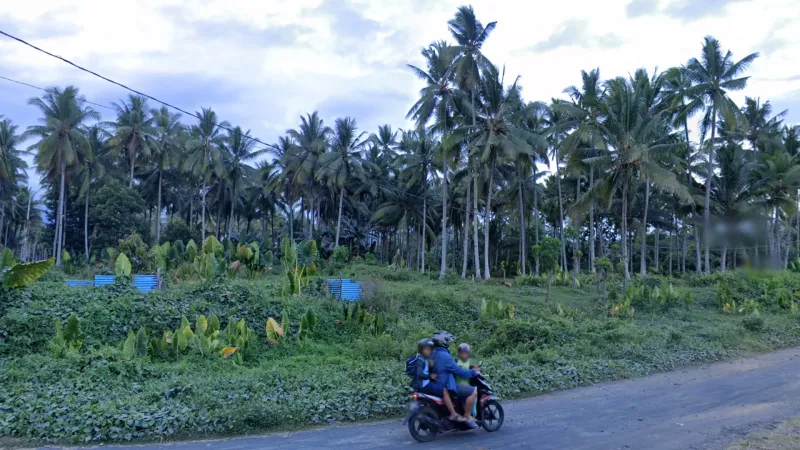

Most of Halmahera island is sparsely populated but densely forested by coconut palms and a wide expanse of vines and ferns underneath the canopy. Clusters of Alocasia in the wild are mainly found on Halmahera, although they are not unique to the island.
Architecture
Buginese Architecture


Bugis houses are typically elongated wooden stilt houses elevated well above the ground. They are topped by a simple gabled roof. The front gable often features a distinctive finial. The houses also have a gable end formed from panels and with a distinctive shape. The number of overlapping panels indicates the social status of the owner. Access to these houses is via a steep, usually single-flight staircase leading directly to a protruding open or semi-open veranda.


Bugis stilt houses with the wooden staircase perpendicular to the road, as opposed to parallel to it, are much more common in the very south of mainland South Sulawesi. They also occur in the far south and north of West Sulawesi and are the dominant type of staircase on Selayar Island.


Meanwhile, Bugis houses with staircases running parallel to the road are widespread throughout Sulawesi, with the exception of Gorontalo and North Sulawesi. Their main distribution area is South Sulawesi and West Sulawesi.


The third type of Bugis house staircase has a 90-degree turn. This type occurs in central South Sulawesi and the southern part of West Sulawesi.
South Sulawesi
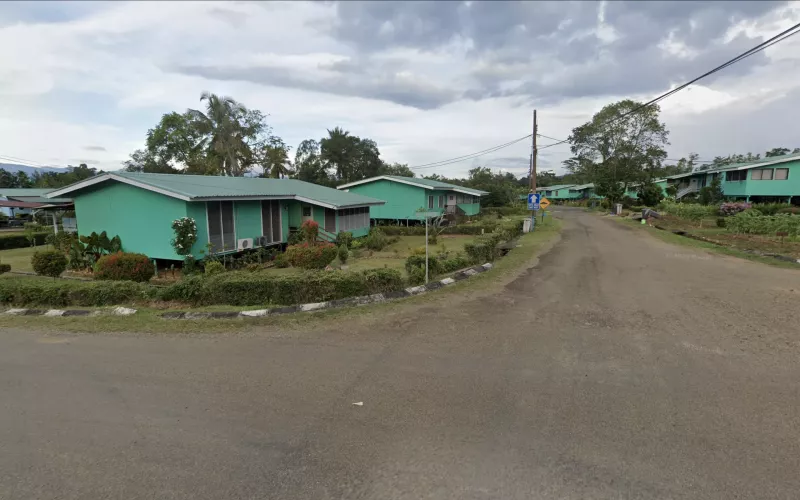

In the Sornako area of Luwu Timor Regency, you can see many prefabricated houses, often on stilts.
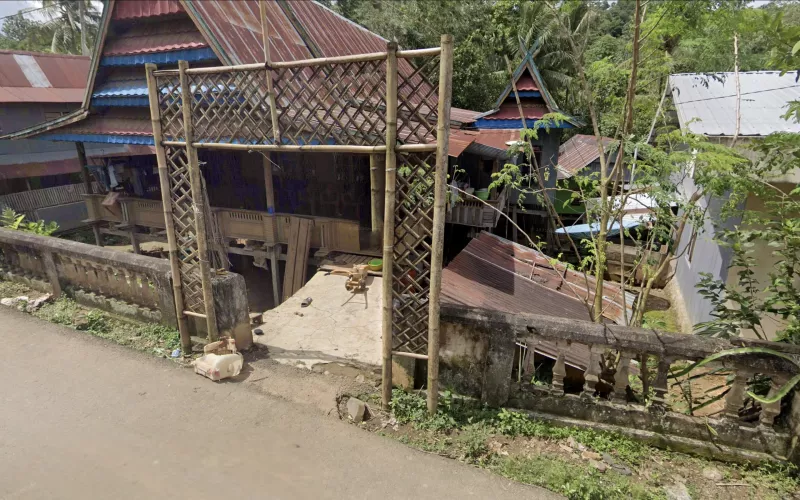

In the southern part of South Sulawesi, including Selayar Island, you can sometimes find bamboo-lattice pavilions. These mark the entryway from the roadside to a household property and range from simple flat arches to small roofed pavilions.
South Sulawesi & Central Sulawesi
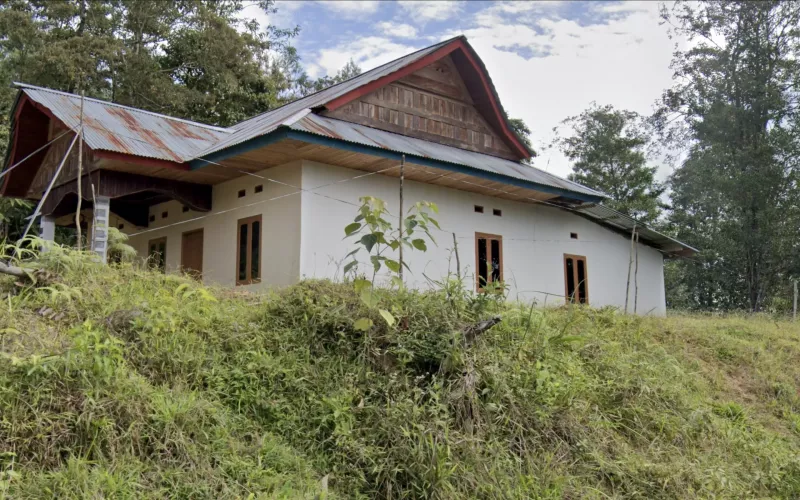

As well as the traditional Tongkonan houses with saddle-shaped roofs, the area around Tana Toraja contains houses influenced by both the local traditional architecture and Buginese architecture. These commonly feature multi-layered gable roofs with a slight bulge at the end. This roof type can also be found in two other areas: one south of Lake Matano and another east of Lake Poso in Central Sulawesi.
West Sulawesi
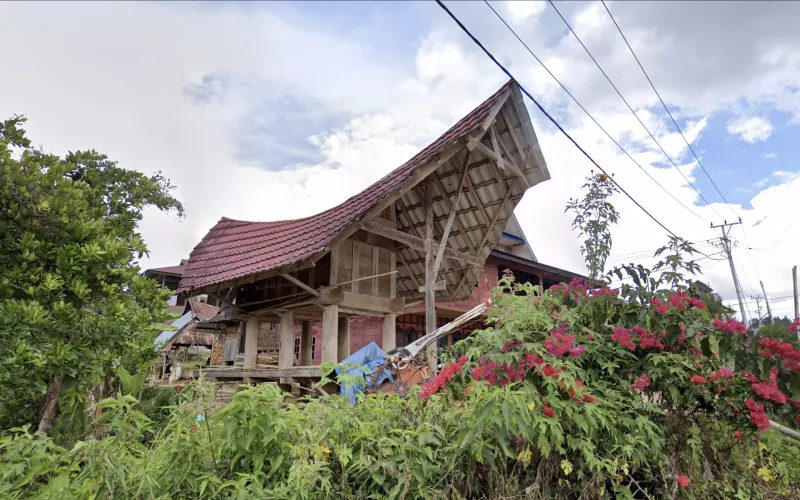

Banua, the traditional houses of the Mamasa people in West Sulawesi, have distinctive roofs. These are arched with curves upwards at both ends. They are usually asymmetrical, with one of the ends taller than the other. Ordinary houses can also have an asymmetrical slight upward curve.
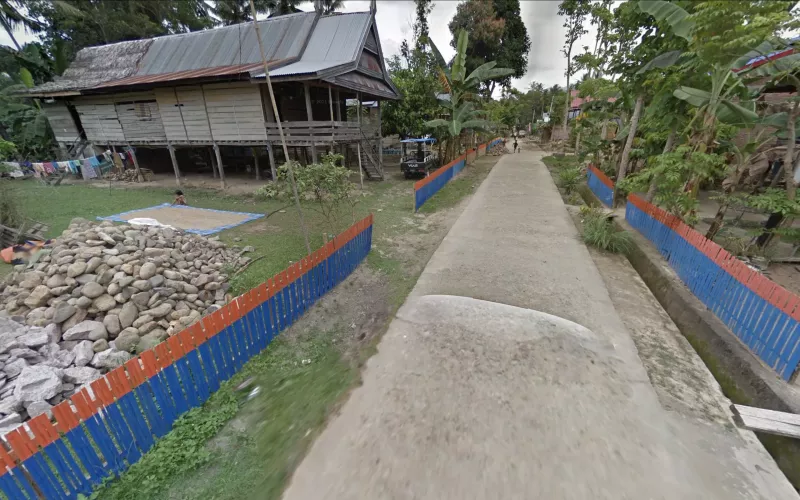

In Polewali Mandar Regency, you can find Sula fences in an orange-blue colour combination.
Central Sulawesi
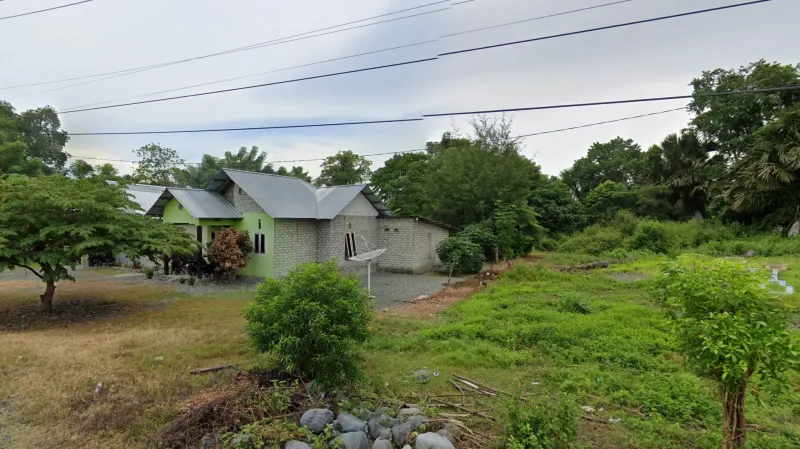

Architecture in Central Sulawesi is defined by its simplicity. Throughout the province, simple wooden houses are very common, but the most widespread building material is unplastered grey brick, which is far more prevalent than red brick. It is common to see houses where the front facade has been painted while the sides remain exposed and unplastered.
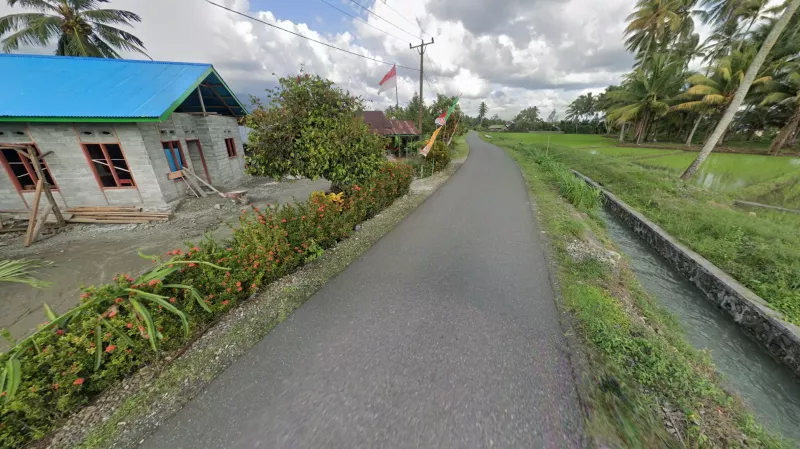

Throughout Central Sulawesi, villages are characterised by neatly maintained, low-growing hedges that frequently feature blooming pink flowers.
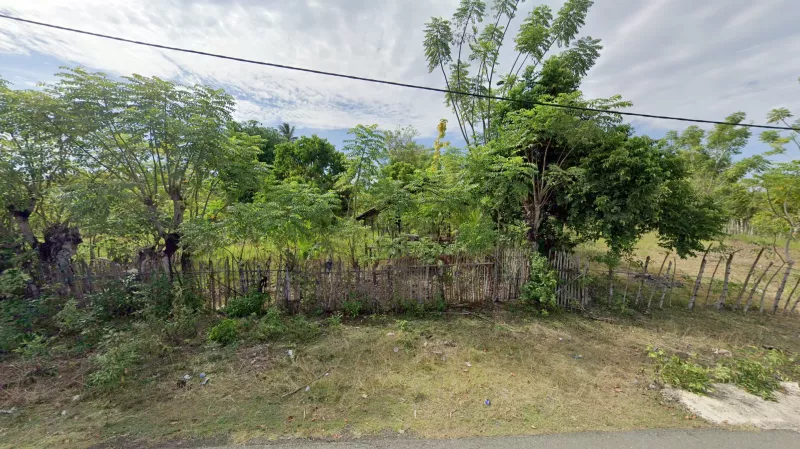

It is common in Central Sulawesi to see fences that directly incorporate tree stumps, similar to those found in Mexico.
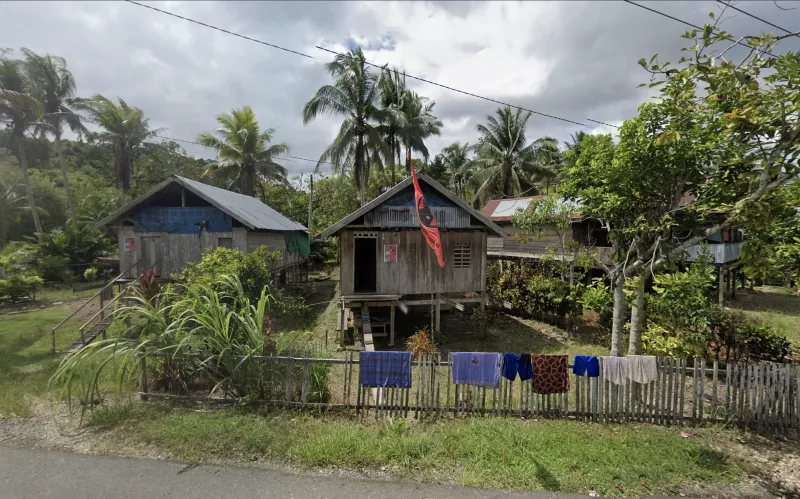

Toli-Toli Regency is the home of the Dondo people. Their traditional dwellings are very simple, rustic-looking wooden houses built on stilts. These structures are typically longer than they are wide and are built from raw, untreated wood. They also feature gable roofs and simple wooden bridges leading to the entrance.
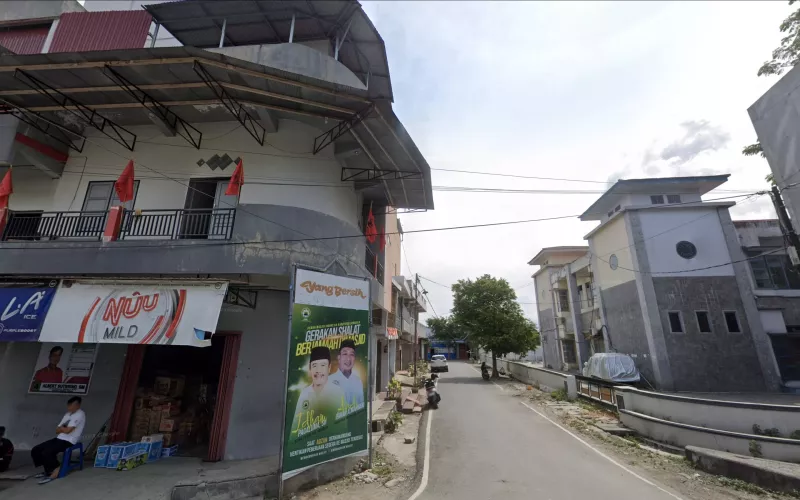

The old town area around the harbour of Donggala featured well-preserved Dutch colonial architecture. Most striking are the buildings with rounded corners, a design element rarely seen elsewhere in Indonesia.
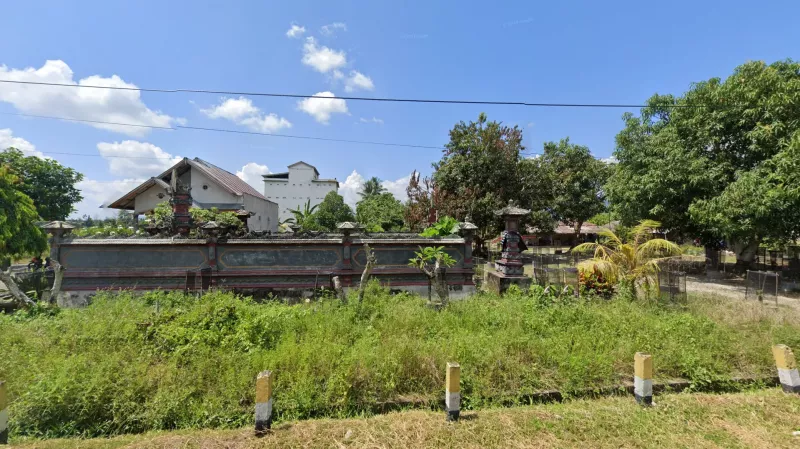

Cultural influences are also visible in the landscape; small Hindu gardens featuring statues are present throughout the province, with particular hotspots located on the Banggai Peninsula and along the coast south of Parigi.
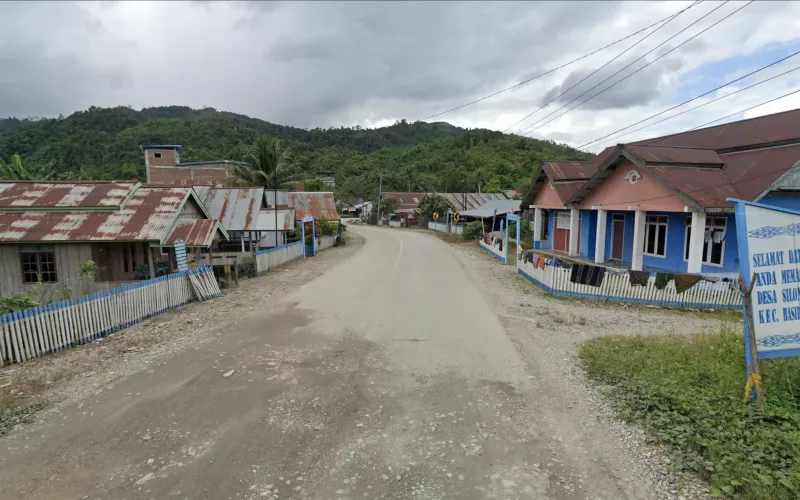

Toli-Toli Regency also has a higher density of Bugis-style stilt houses than any other part of Central Sulawesi. A defining characteristic of Toli-Toli Regency is the colour blue. You will see blue utility poles, signs, entrance gates, and even the Sula fences are mostly painted blue and white.
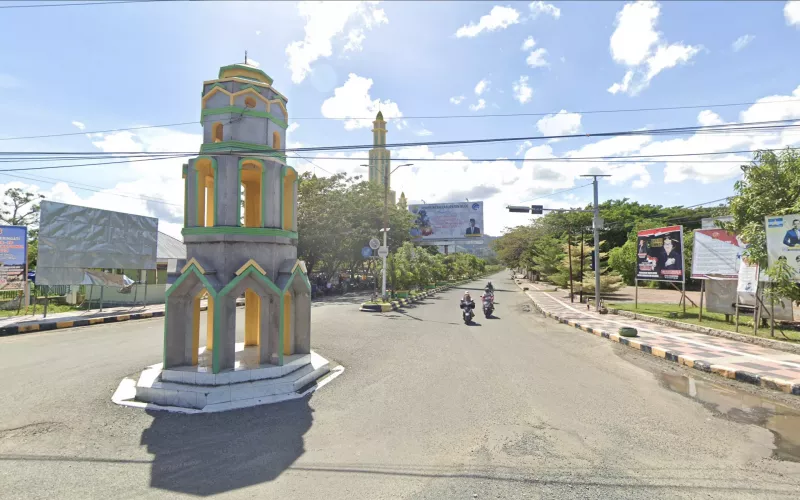

Meanwhile, Buol Regency favours a green and yellow colour scheme. You will see these colours on political posters, official buildings, fences, and monuments. However, keep in mind that the majority of Sula fences here remain mostly blue and white, similar to those in Toli-Toli Regency.
North Sulawesi
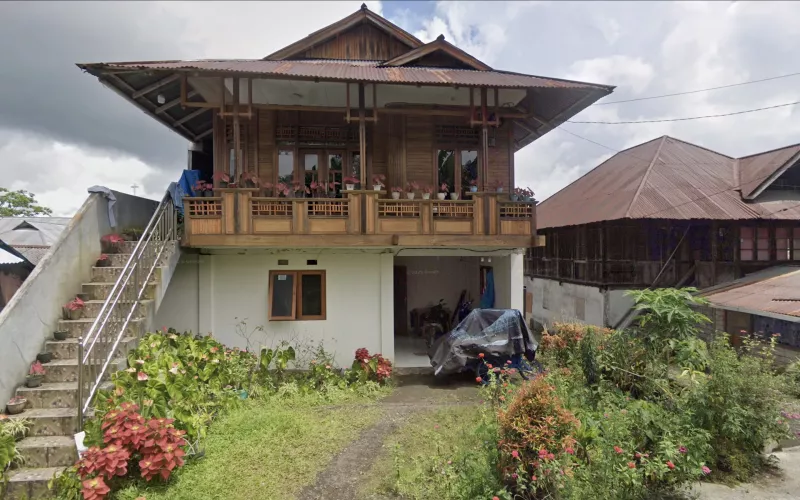

The houses of the Minahasa people are the most distinctive architectural feature of North Sulawesi, constructed entirely of light orange-brown wood and featuring a unique roof shape with triangular elements similar to stacked Bangla roofs. The classic Minahasa house is a two-storey building on stilts, although single-storey houses also exist.
Selayar Island


The architecture of Selayar Island is characterised by the large number of Bugis-style houses. These sometimes have thatched gables. Modern houses typically have fibre cement roofs with sheet metal lining the edges.
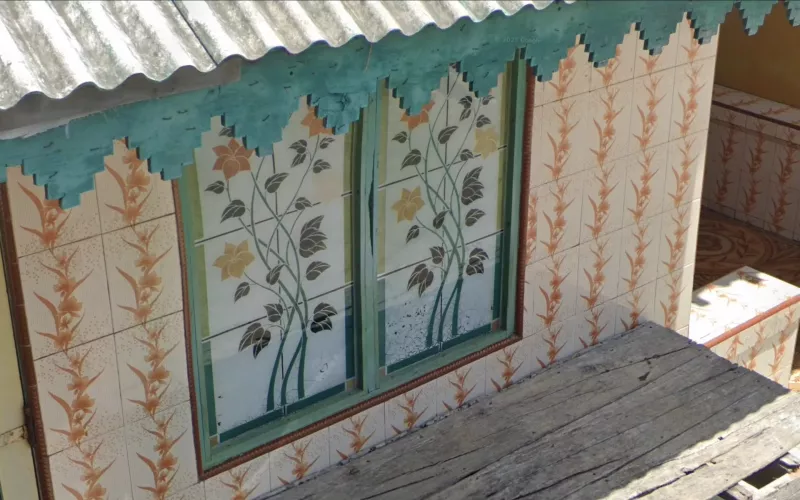

Windows of modern dwellings on Selayar Island sometimes feature colourful floral decorations.
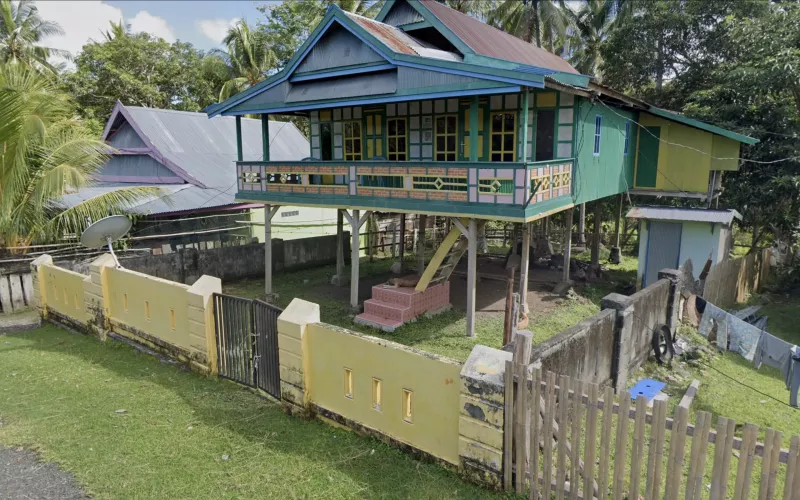

Sula fences and low concrete walls are common on Selayar Island. On the outskirts of the city of Bentang, you can find fences made of rows of trees.
Muna Island & Buton Island
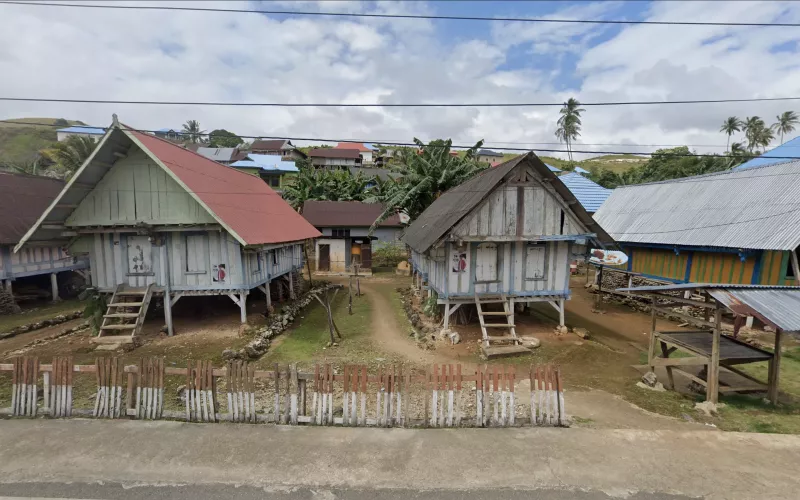

On Muna Island and Buton Island, you can see houses built from vertical wooden planks painted in alternating colours. Unpainted houses built from vertical planks are also generally indicative of the area, but less reliable.Many of the houses are built on stilts. Often there are support beams connecting the stilts to the main body of the house. Some houses also have foundations.
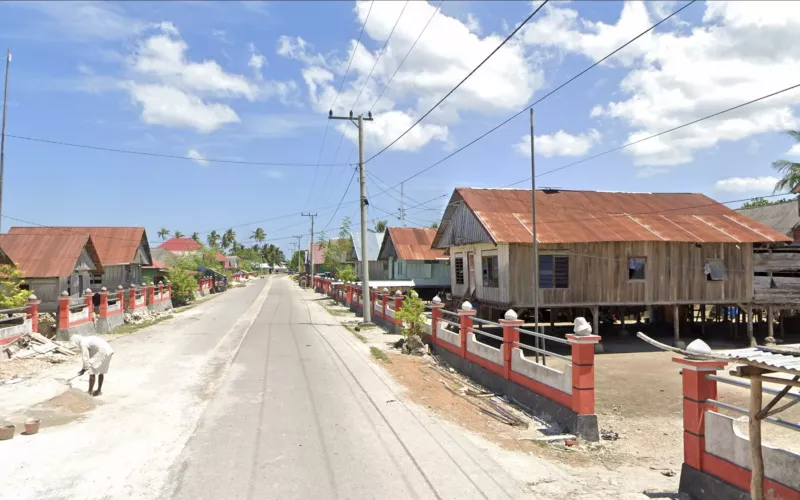

A good identifying feature of Muna Island and Buton Island is white and red walls. The posts of the wall are often topped with a rounded finial in a shape reminiscent of the dome of a mosque.
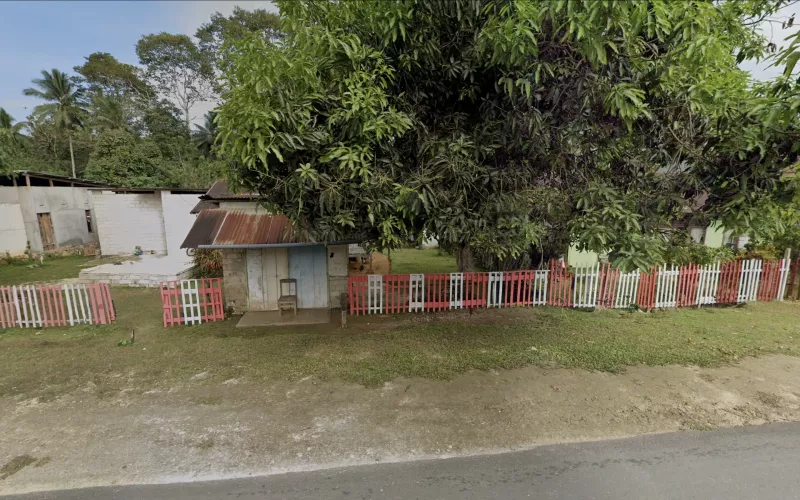

Sula fences painted in alternating white and red sections are the most common type of fence on Muna Island. They can also sometimes be found along the west coast of Buton Island. Outside of these two islands, the fence variant may also occur.
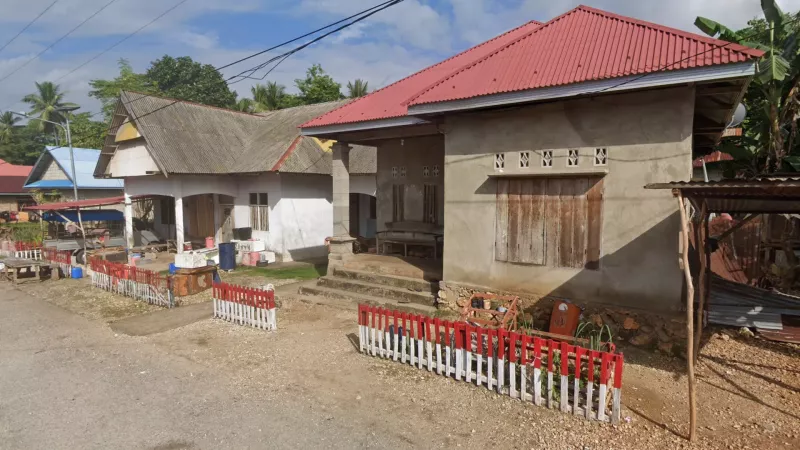

Sula fences painted red-and white horizontally, on the other hand, are common on Buton Island. These can also rarely be found on Muna Island.
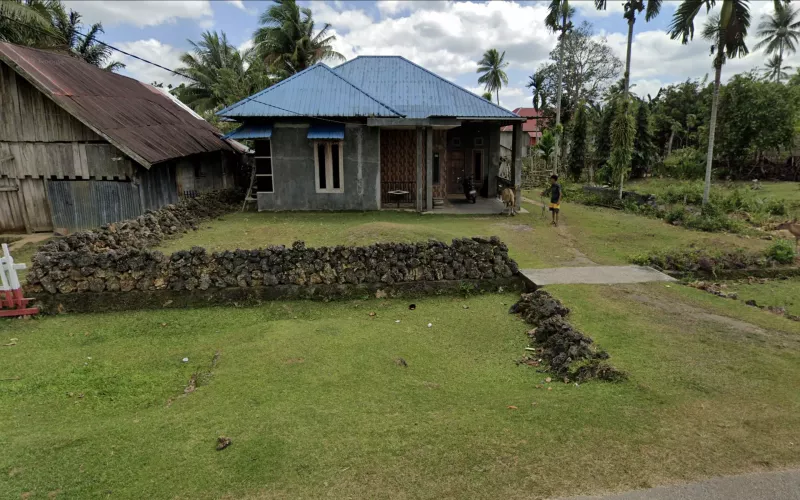

Walls made of dark rough-textured lava rocks are common on Muna Island and Buton Island. You will also see lighter but similarly shaped rocks in walls on these islands.
Peleng Island & Banggai Island
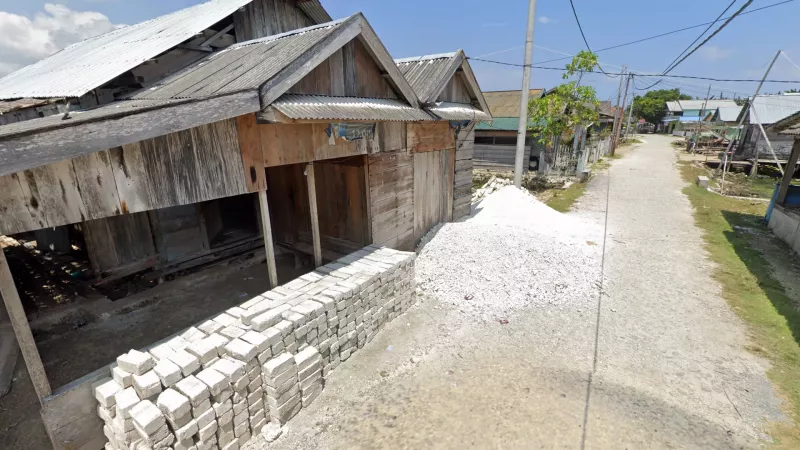

Brick manufacturing is common across Peleng Island. White bricks and sometimes the sand needed for their production, can be seen stored along the narrow roads.
North Maluku
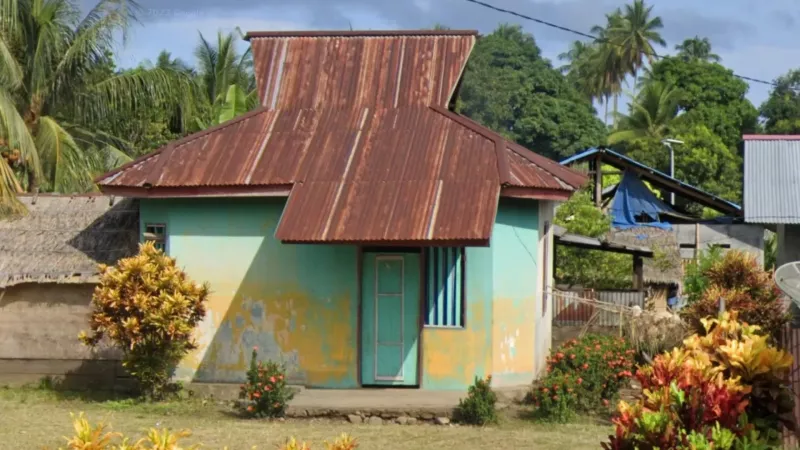

At the northern tip of North Maluku, modern versions of the traditional Sasadu house with a highly recognisable metal roof construction can be found. The roof shape consists of a Bangla roof with a particularly protruding gable.
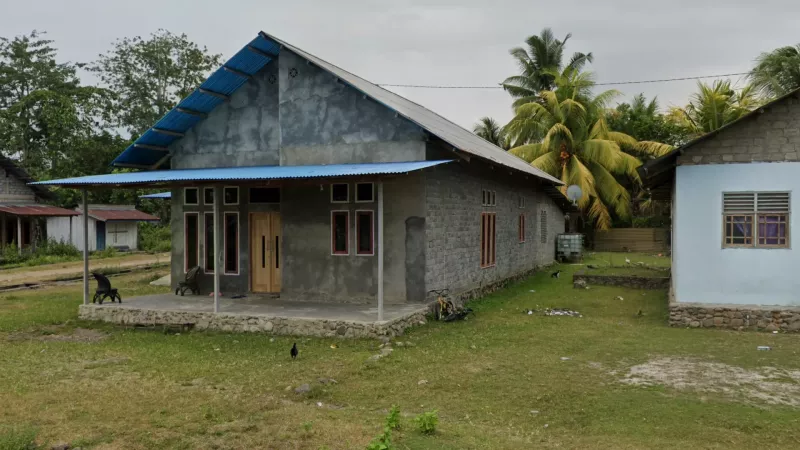

Houses in North Maluku often have large canopies and visible stone foundations. Note that most houses in the province are more recently-built, so exposed cinder blocks and shiny or coloured metal roofs are common.
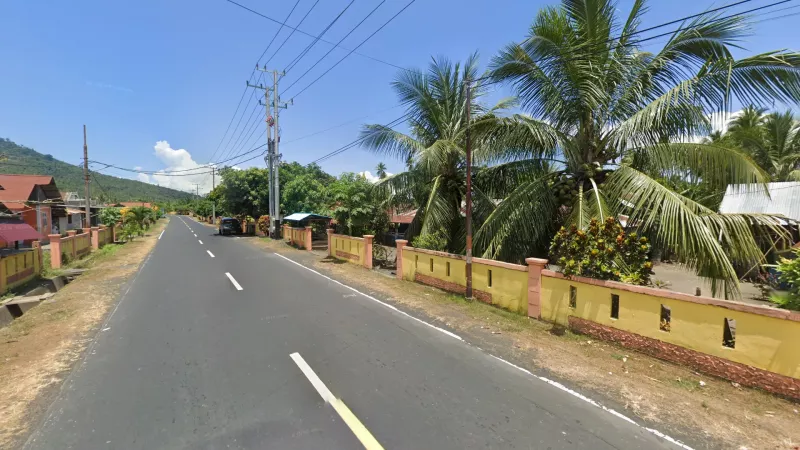

Low concrete walls in various colours with vertical slots in the middle are very common in North Maluku. Sula fences can also occur, but less frequently.
Infrastructure
South Sulawesi
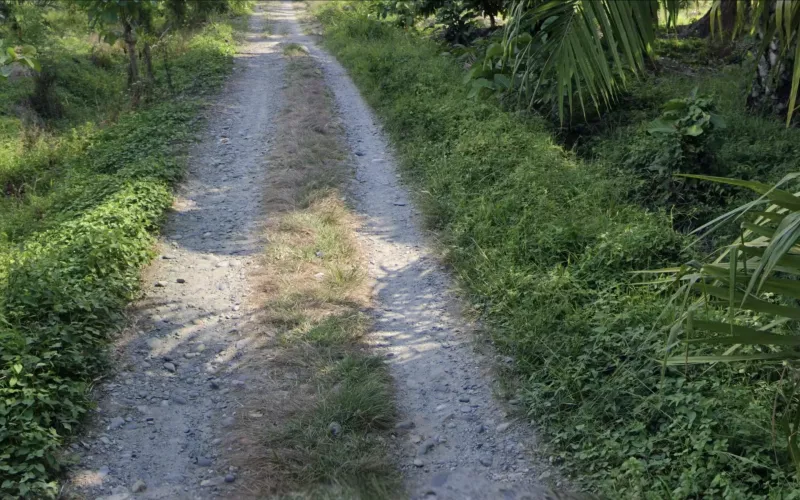

Completely flat areas in the Luwu regencies can be recognised by the extremely common pebble roads there. These often have grass growing by the sides and occasionally down the middle of the road. Even paved roads are likely to have pebbles or sometimes gravel along the sides of the road.
West Sulawesi
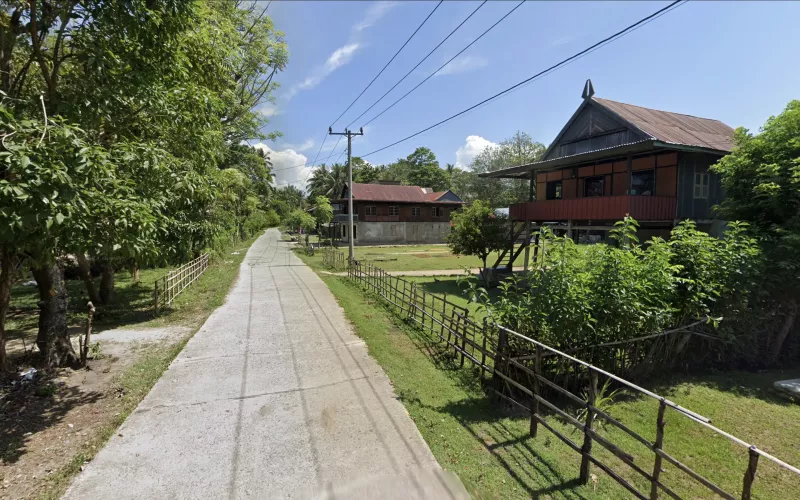

Narrow concrete paths are common in Polewali Mandar Regency.
Central Sulawesi
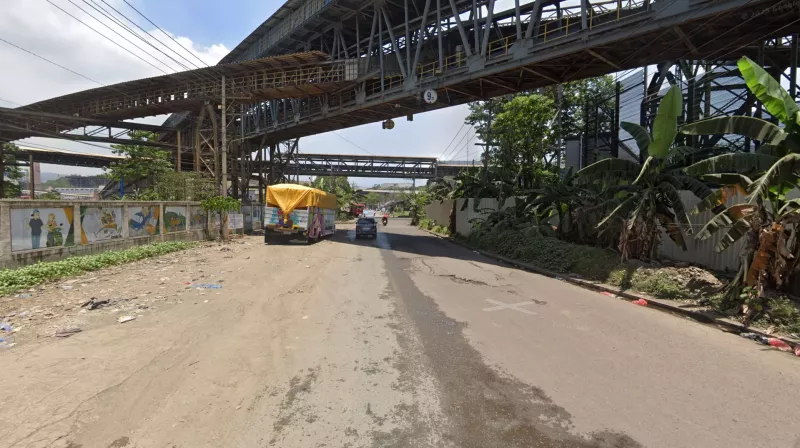

The Morowali regencies are particularly unique. Morowali Regency itself is heavily defined by the massive nickel production facilities in Labota.
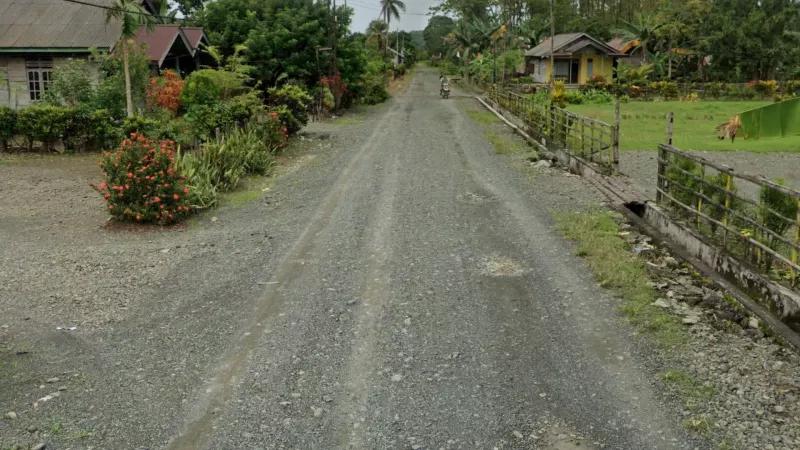

The Banggai Peninsula features many grey unpaved roads composed of fine gravel. The southern coast of the peninsula is marked by large oil palm plantations.
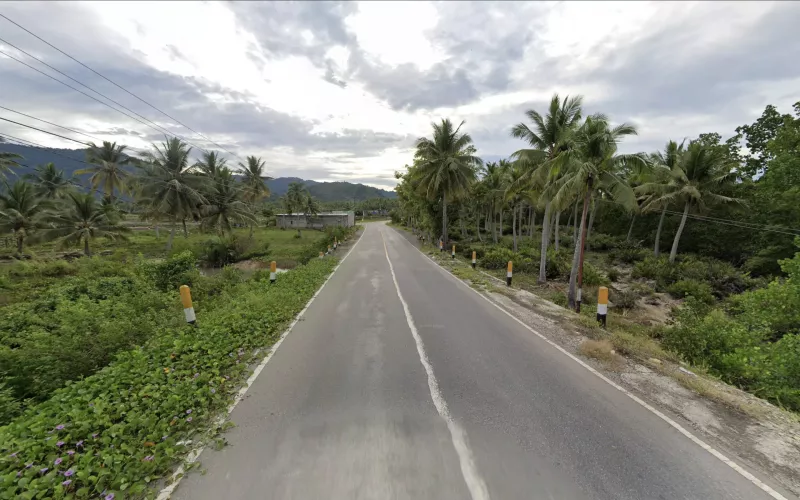

The infrastructure of Central Sulawesi is quite distinctive. The province has unique bollards with a yellow-white-black colour scheme. White flaps are attached near the top of utility poles and secured by two horizontal clamps. Furthermore, spiky possum guards are a frequent sight across the region, typically mounted with a noticeable downward angle.
Muna Island & Buton Island
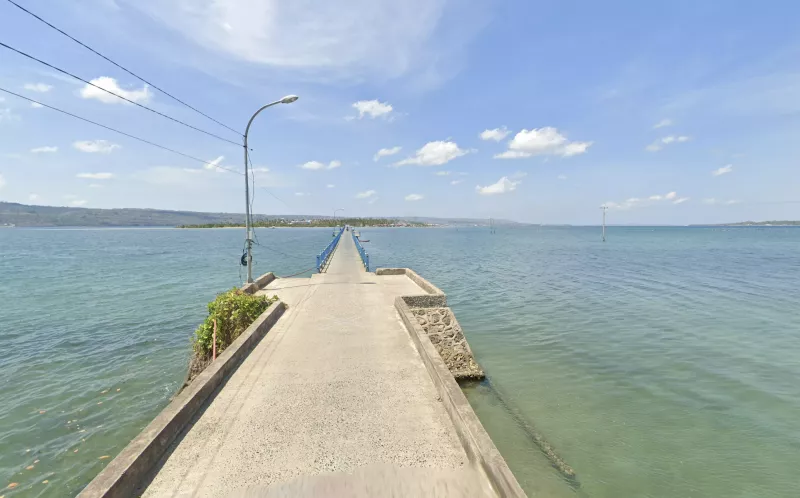

Pulau Makassar and Buton Island are connected by a strikingly narrow concrete bridge with blue railings.
Peleng Island & Banggai Island
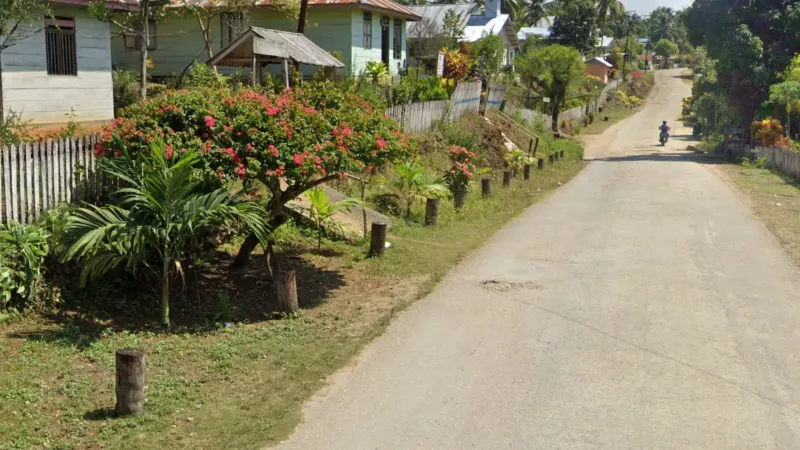

In some villages on Peleng Island, you can find bollards made from tree trunks.
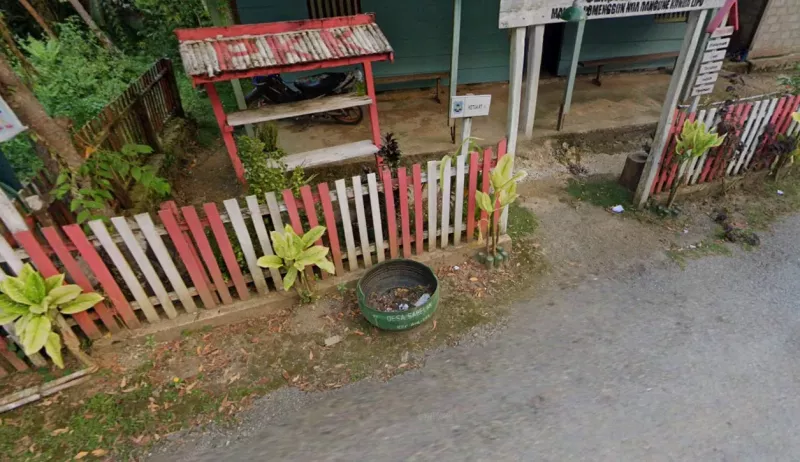

In some towns and villages on Peleng Island, you will find low green pots placed in front of properties, serving as a type of rubbish bin.
North Maluku
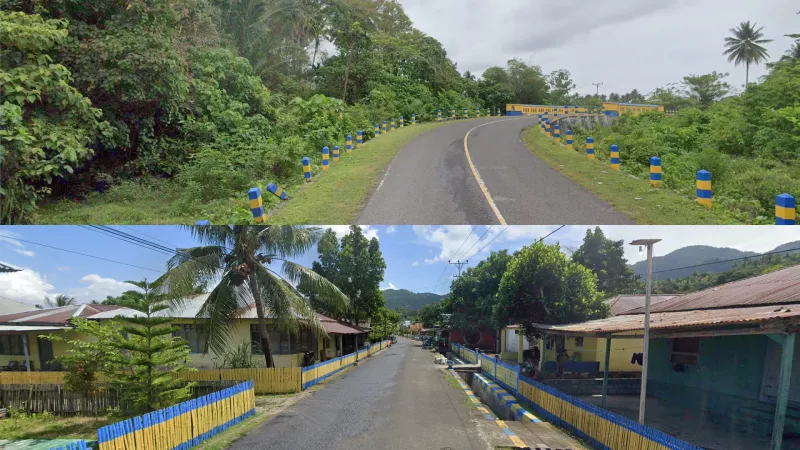

Yellow-and-blue bollards and fences are a strong indication of North Maluku. They are less commonly found in North Kalimantan (and extremely rare on Adonara and in East Java). You can also see other miscellaneous items with this colour scheme in North Maluku.