
 Nusa Islands
Landscape
Bali
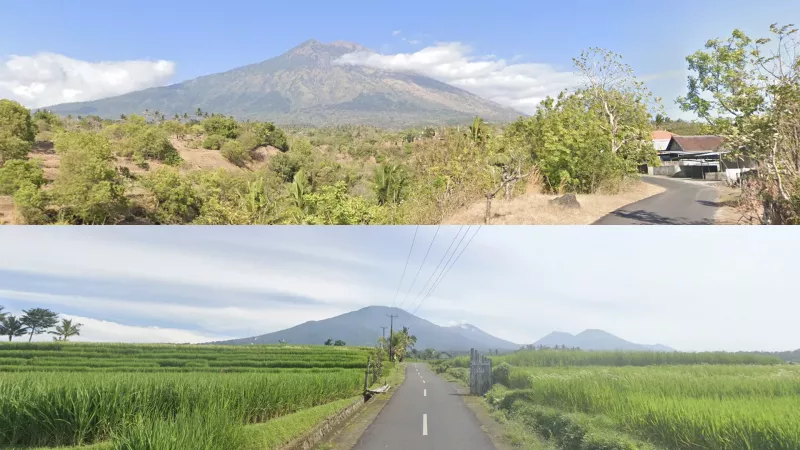

Bali is home to several volcanoes, with the two most prominent being Mount Agung in the north-east and Mount Batukaru in the centre. Mount Agung is the island’s highest peak, easily identifiable by its massive, symmetrical cone that towers over the surrounding landscape. Mount Batukaru, by contrast, consists of a complex of multiple peaks.
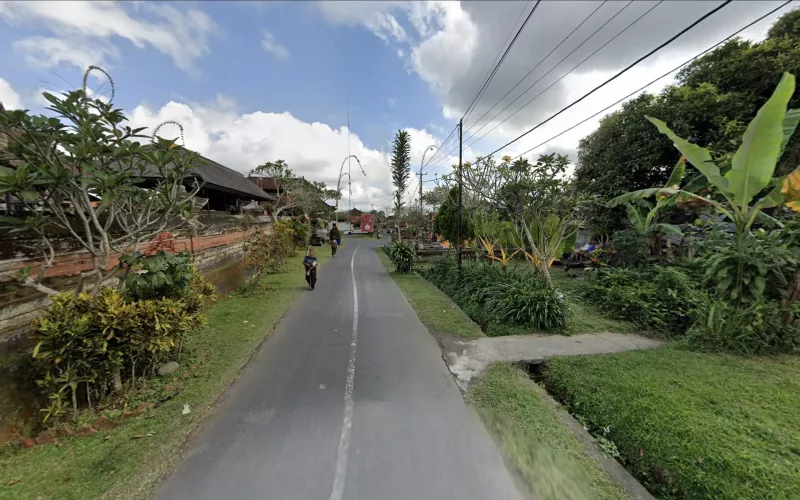

Extending north from Denpasar, the land slopes gradually upwards to the volcanic peaks. This area is dominated by residential compounds and rice terraces.
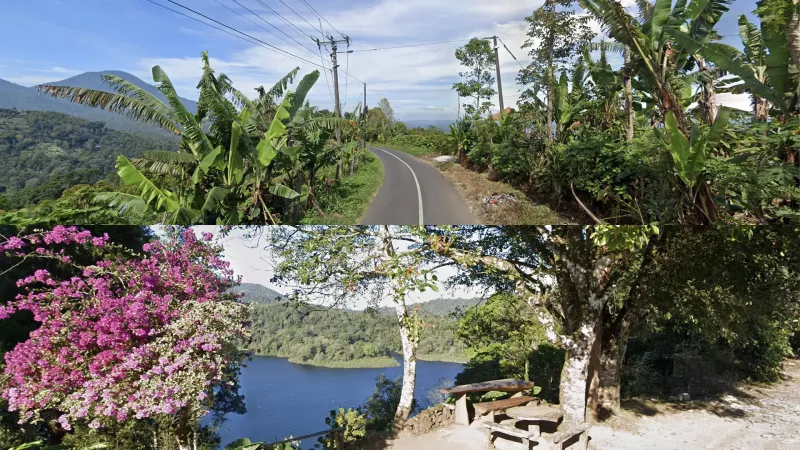

Central Bali is a mountainous region, famous for its fruit cultivation. The rugged terrain is often shrouded in mist, creating a cool climate where coniferous and eucalyptus forests thrive. Several crater lakes add to the scenic beauty of this area.
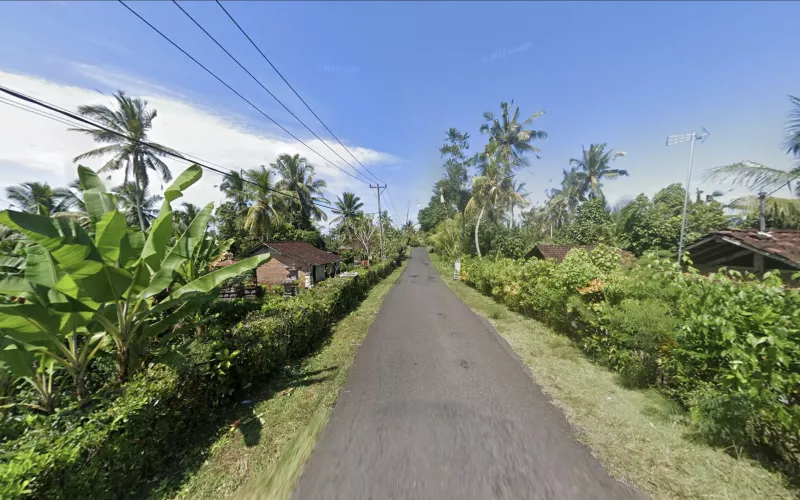

Jembrana Regency in the west is more remote, with a lower population density. Roads are lined by dense, wild greenery rather than continuous construction and the area feels much more spacious and less enclosed. A defining feature of this region is the mown grass verges flanking the roads.
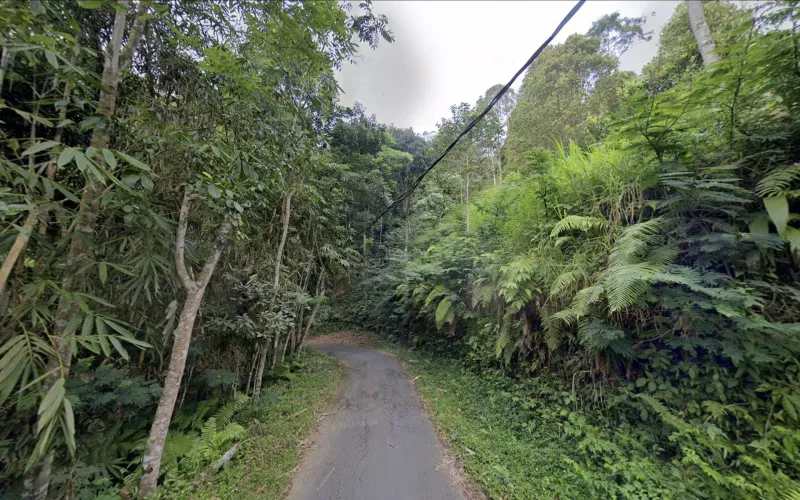

The inland region of Karangasem Regency, located in eastern Bali, consists of steep volcanic hillsides cloaked in dense, lush rainforests and thick tropical vegetation, giving the area a dark green appearance.
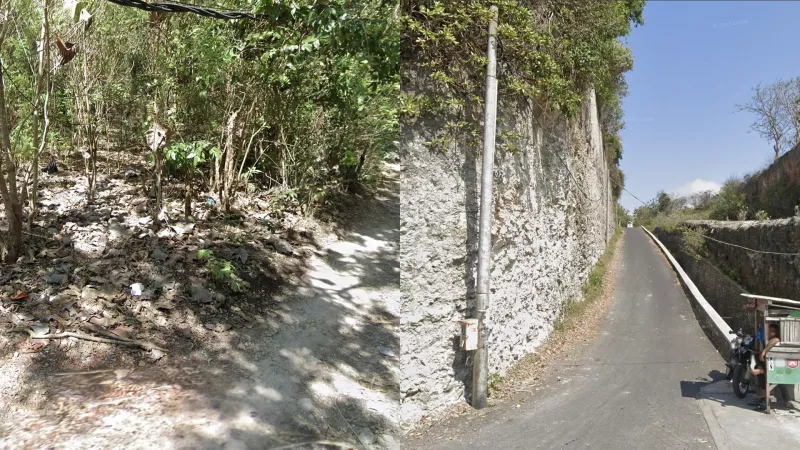

The peninsula south of Denpasar is characterised by arid monsoon forests. The terrain consists largely of white, powdery limestone. Roads are frequently cut directly into this rock, resulting in steep limestone embankments that flank the streets.
Penida
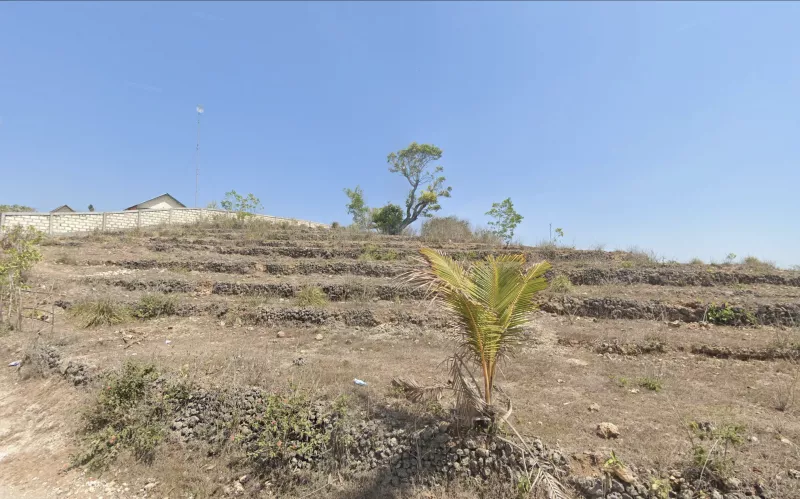

Limestone walls and terraced slopes are ubiquitous on Penida, whereas they are non-existent on Bali.
Lombok
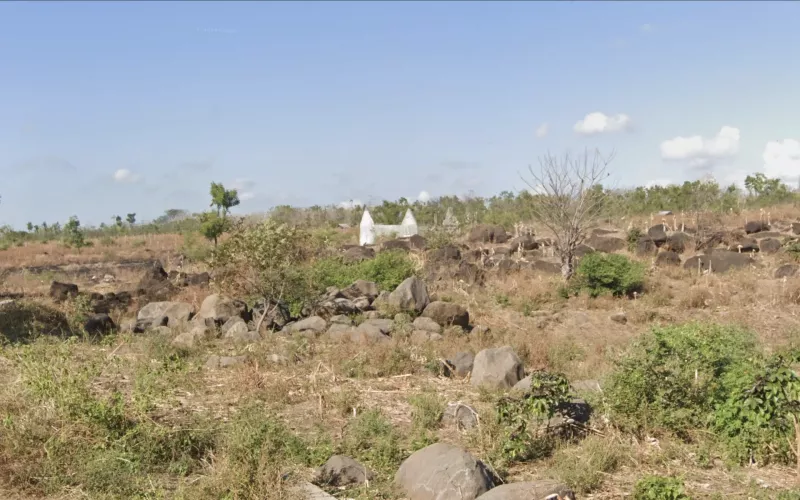

The eastern slopes of Mount Rinjani in Lombok can be identified by dark volcanic boulders and grey ash.
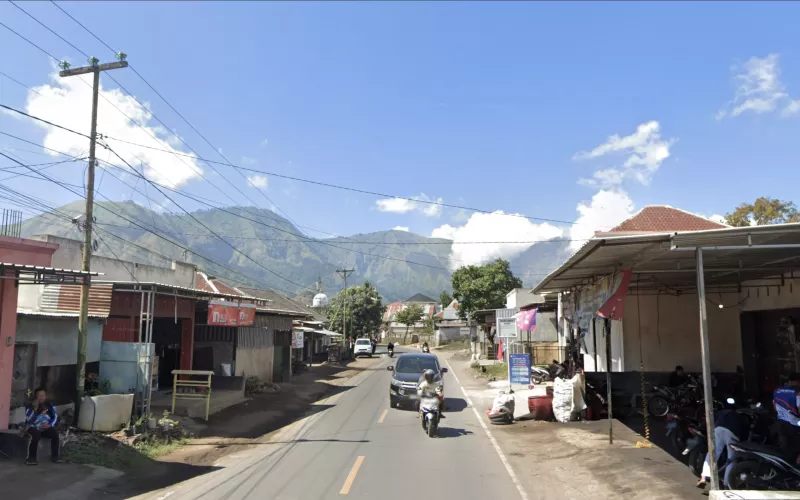

The high altitude village of Sembalun sits in a valley between the rugged green mountains of the Rinjani caldera. The landscape is easily recognisable due to the barren and treeless slopes.
Sumbawa
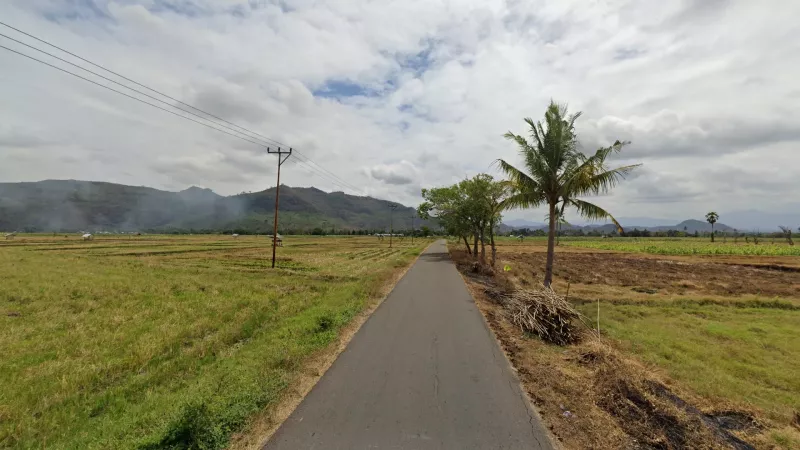

Most roads on Sumbawa are on very flat terrain. However the island has lots of mountains that are always visible from these plains. Flores in contrast is entirely hilly.
Komodo Island
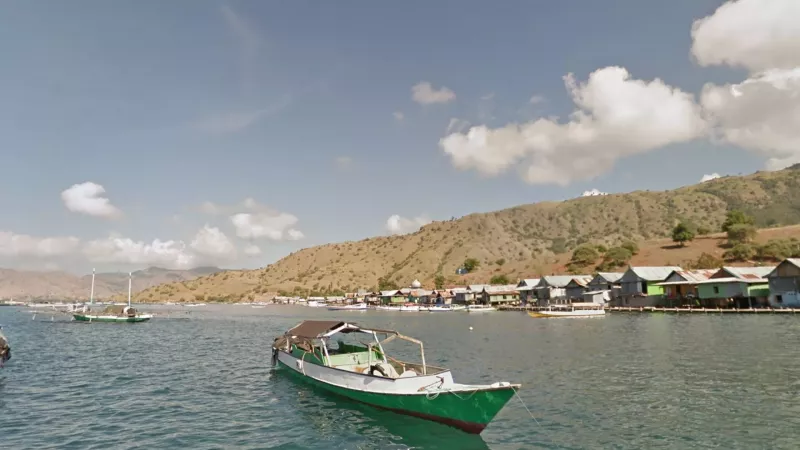

Komodo Island lies between the larger neighbouring islands of Sumbawa to the west and Flores to the east. Mountains surrounding Komodo Town are bare and covered with small trees.
Sumba
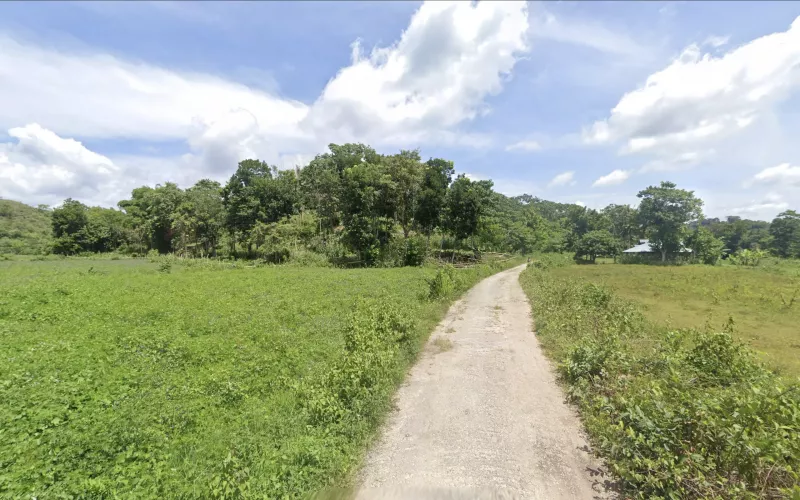

The west side of Sumba meanwhile is quite humid with fields surrounded by hills and poor road quality.
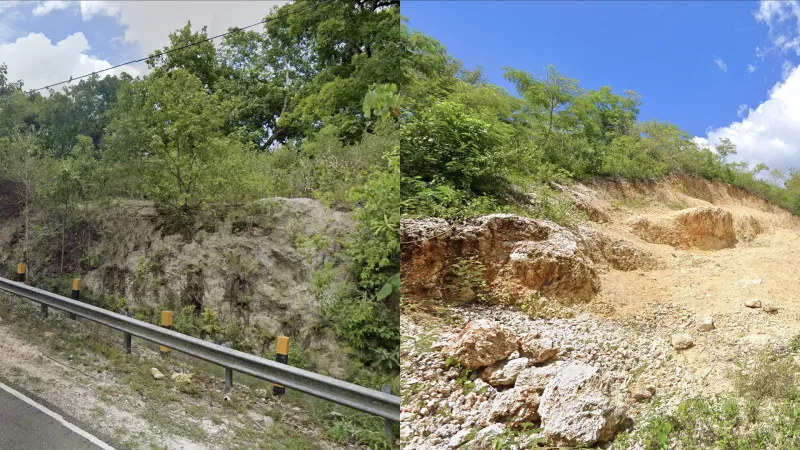

Sumba has exposed limestone formations, particularly in the northern coastal areas. These were formed from ancient coral reefs. Deeper inland, they may contrast with reddish soil.
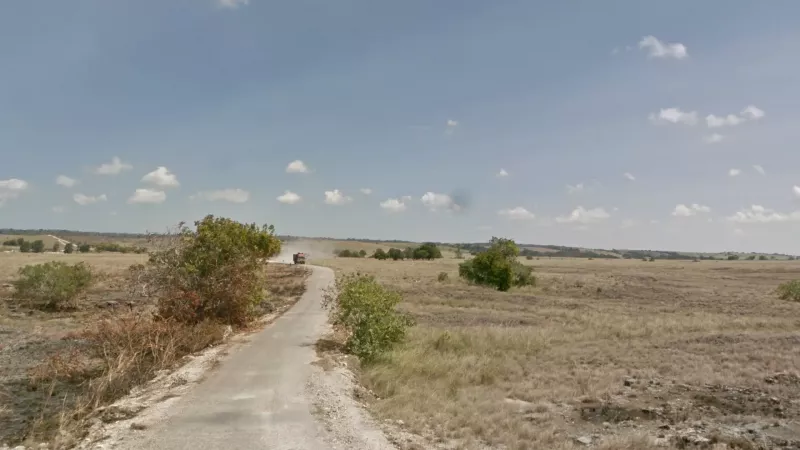

The north-east coast of Sumba is the most arid part of the whole country, with a highly distinctive savannah landscape with few trees.
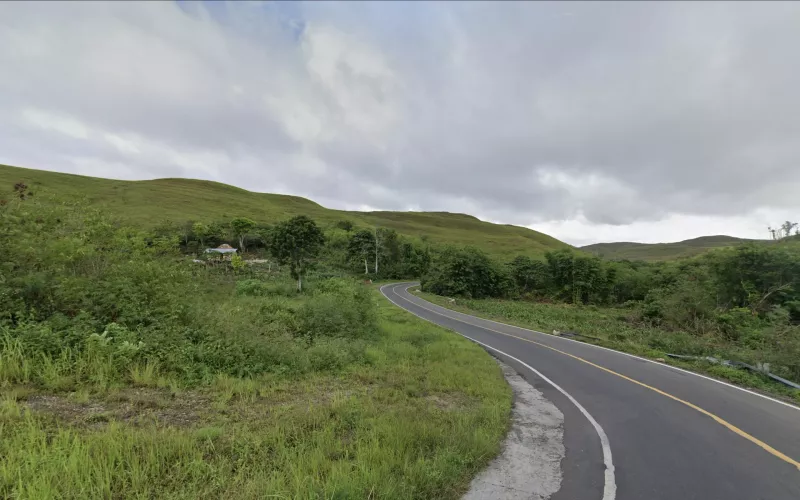

Hills covered in matcha-green grass stretch from central Sumba towards the east coast. Trees are very rare and, when present, only cover parts of the hills. The further east you go, the more common this type of hilly landscape becomes.
Flores
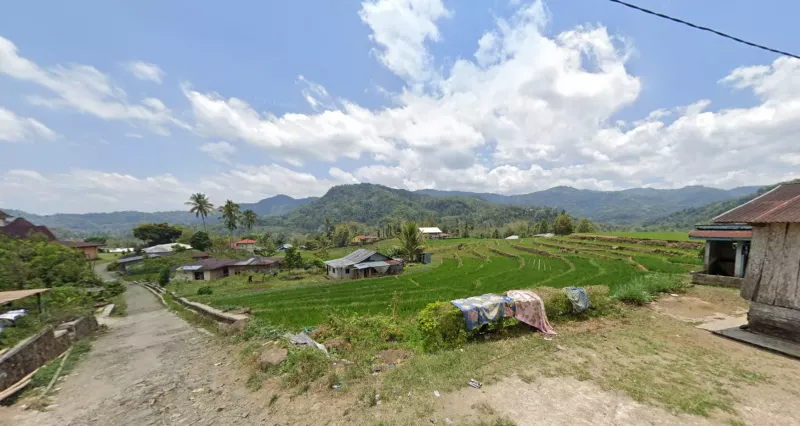

In western Flores you can also find rice terraces in a mountainous setting. Rice terraces in such a setting are not found on other islands in the Nusas.
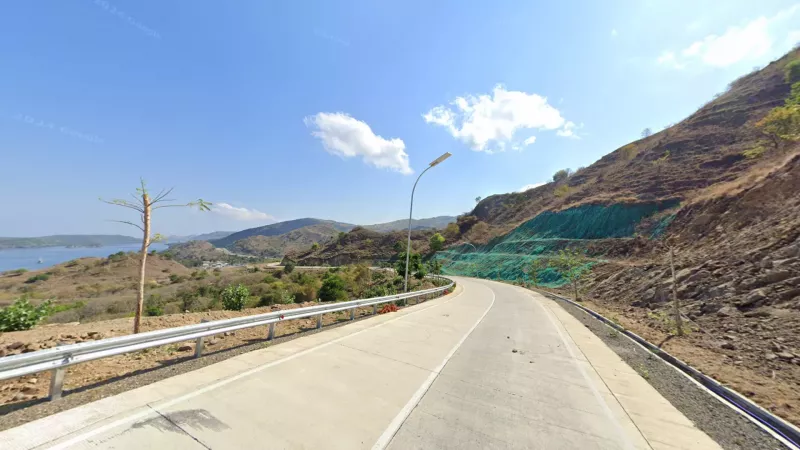

The western tip of Flores has a unique dry landscape of undulating hills. In addition, the main road passing through here is distinctive for its concrete paving and green plastic netting on the cliffy roadsides.
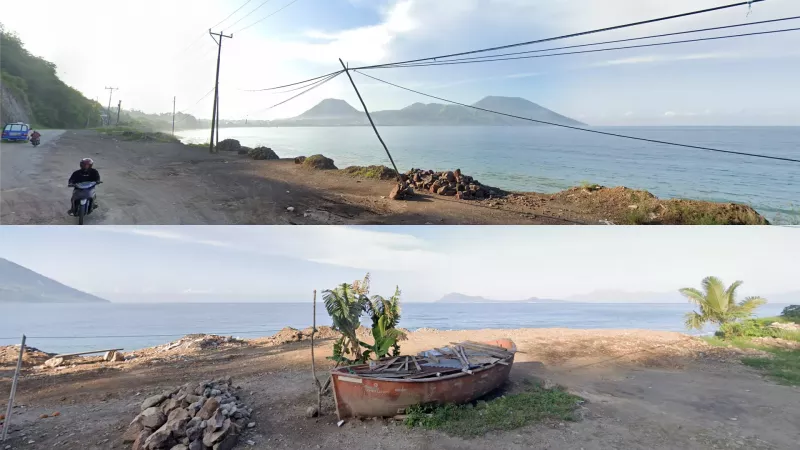

The bay near Pulau Ende on Flores is one of the most recognisable bodies of water in Indonesia. It is sandwiched between tall mountains to the west and the majestic Gunung Meja and Iya to the east, with Pulau Ende sitting in the middle.
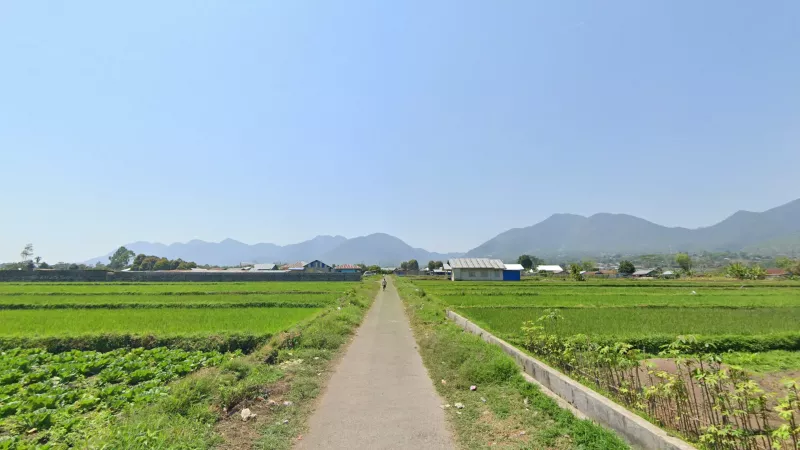

The Ruteng valley in western Flores is marked by a series of volcanoes forming a wall to its south.
Lembata
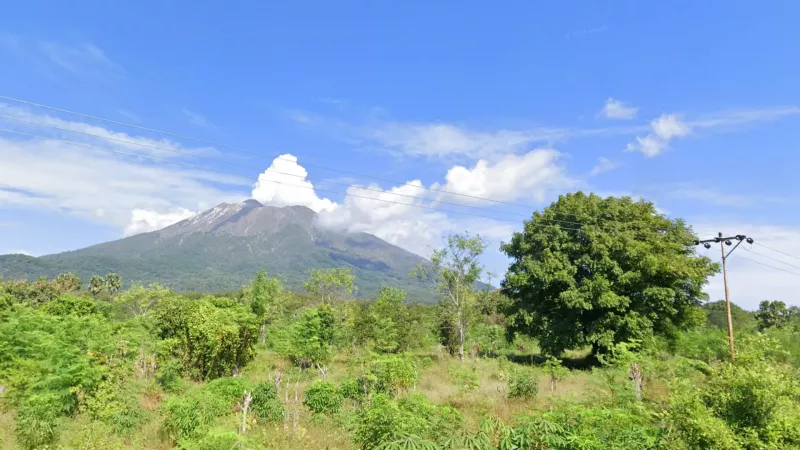

Situated on the northern shore of Lembata, the Lewotolo volcano can be recognised by a heavy layer of white volcanic ash near its peak. The volcano is becoming increasingly active over the years and you can see volcanic ash erupting from its summit.
Alor
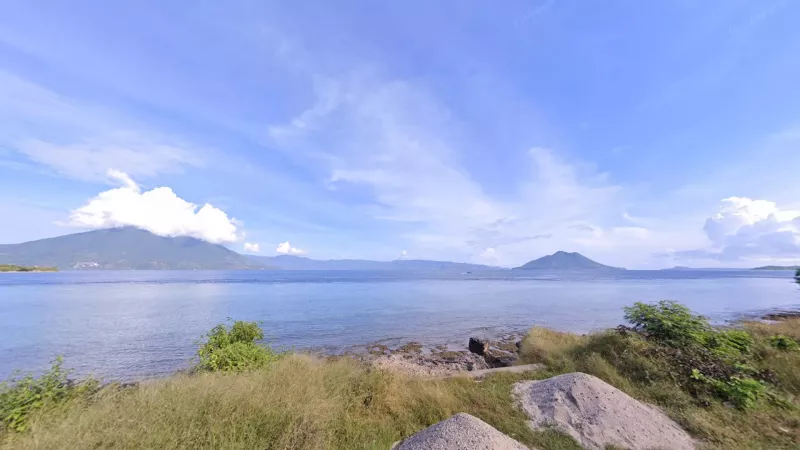

Three islands are clearly visible off the west coast of Alor. The largest of these, Pura Island, is easily recognisable.
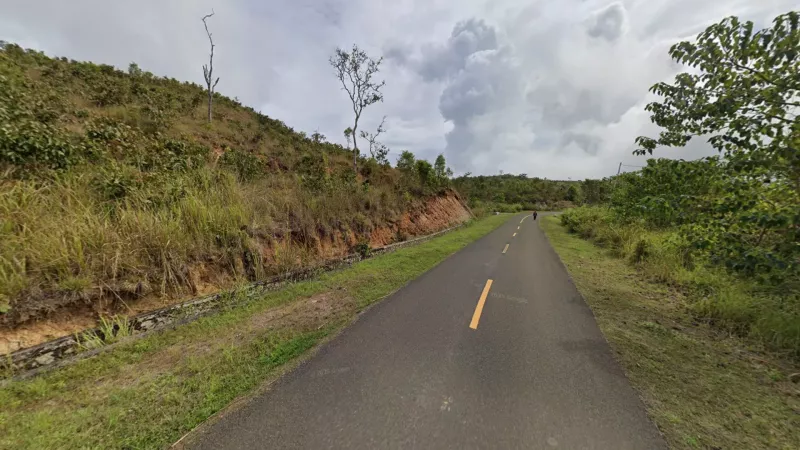

Roads in the eastern part of Alor are surrounded by gentle hills of red soil.
Agriculture & Vegetation
Bali & Penida
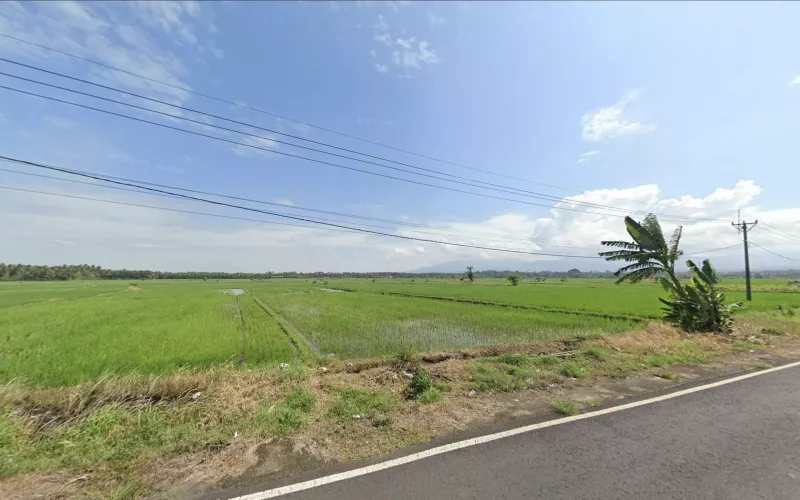

Bali’s flat, expansive farmlands are primarily located in Jembrana and Tabanan regencies in the centre and southwest of the island.
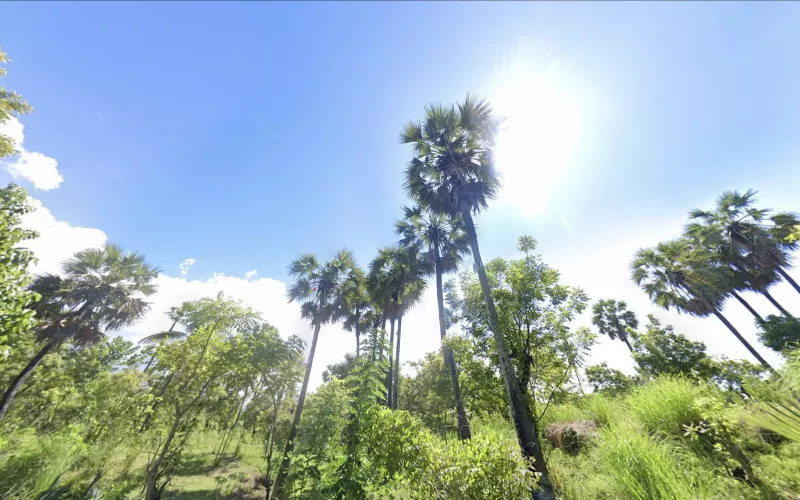

Palmyra palms are predominantly found in the north-east part of the island.
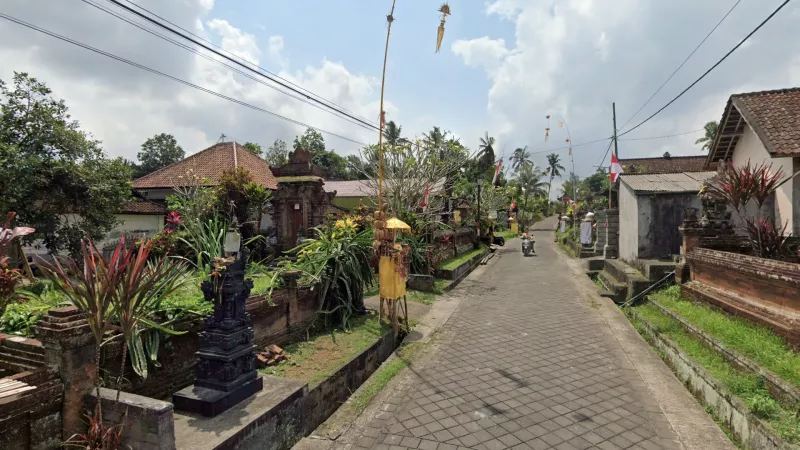

Balinese residents have a strong tradition of cultivating ornamental plants around their homes and along public roads. Consequently, streets are frequently lined with flora such as Cordyline, Frangipani, Hibiscus, Bougainvillea, and the False Areca Palm.
Lombok
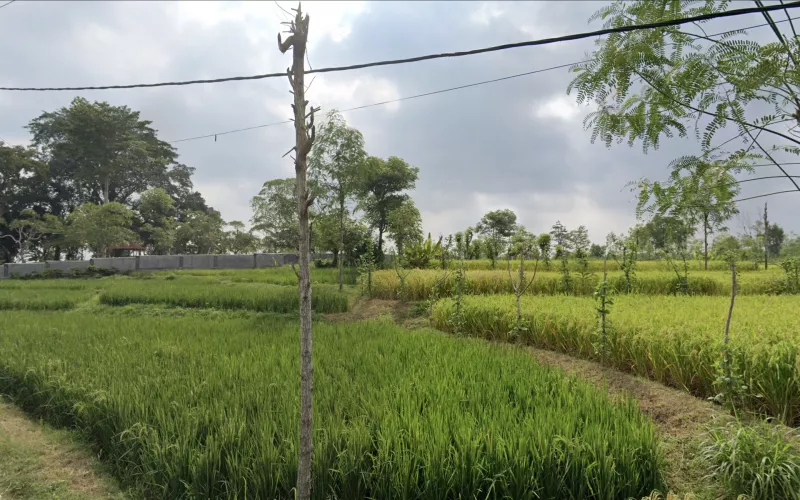

Field boundaries in Lombok are wide and feature neatly cut grass, as well as small trees or other crops, distinguishing them from similar landscapes in Java.
Sumba
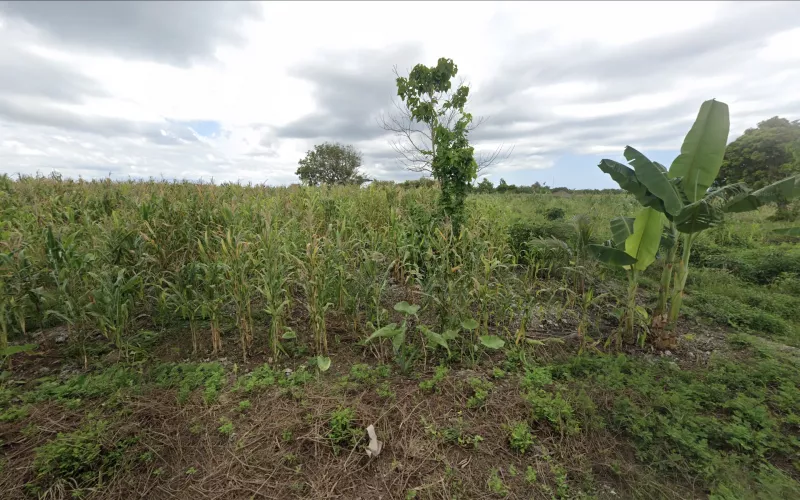

In western Sumba, corn is often cultivated on a large scale.
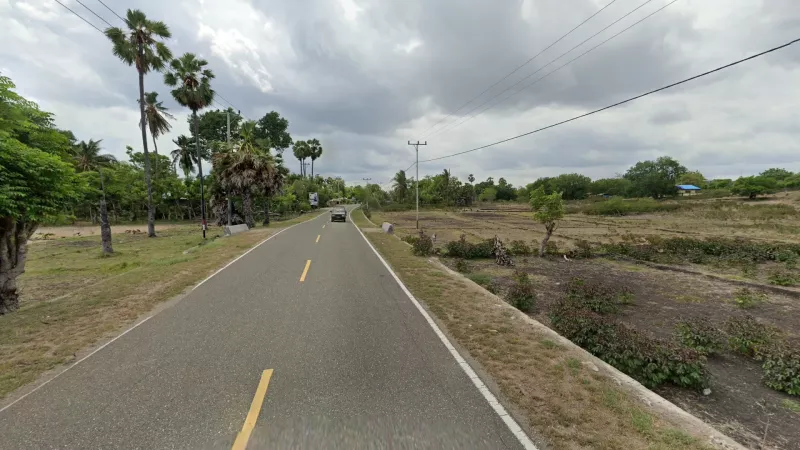

On the east coast of Sumba, you can find Palmyra palms.
Timor
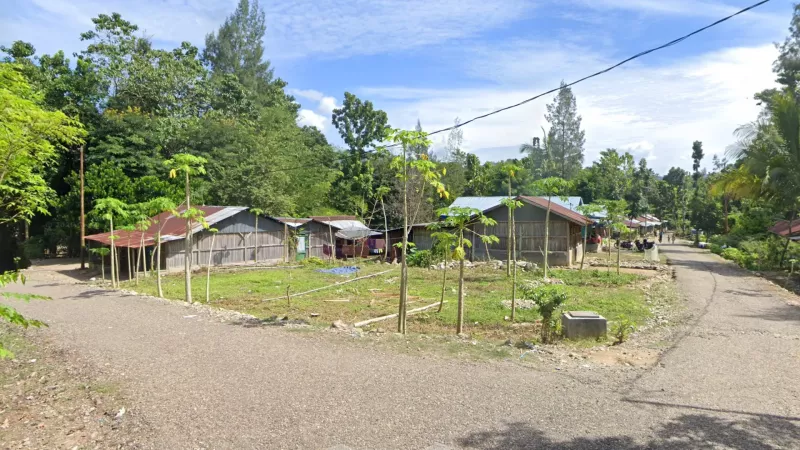

Papaya trees along property boundaries are often visible on Timor.
Rote Island
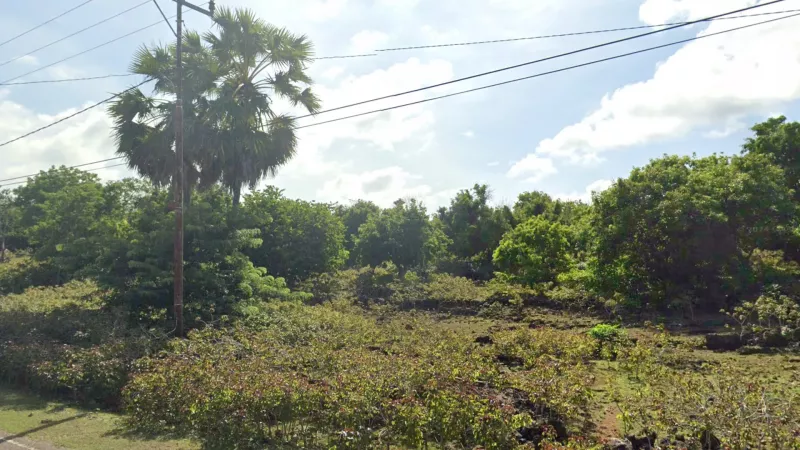

Palmyra palms, banana plants and Bellyache bush are a familiar sight on Rote. Bellyache bush can be recognised by its green and purple leaves.
Architecture
Coloured Bricks


Bali & Penida
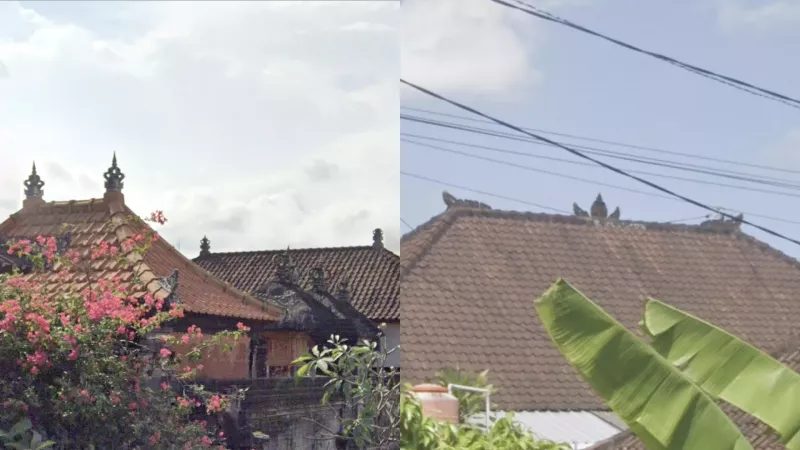

Roof ornaments are a staple of Balinese architecture. Common features include crown-like decorations and wing-like finials at the roof ridge ends, often combined with a central element. These designs are also present in western Lombok and in neighbouring East Java, which have large Balinese populations
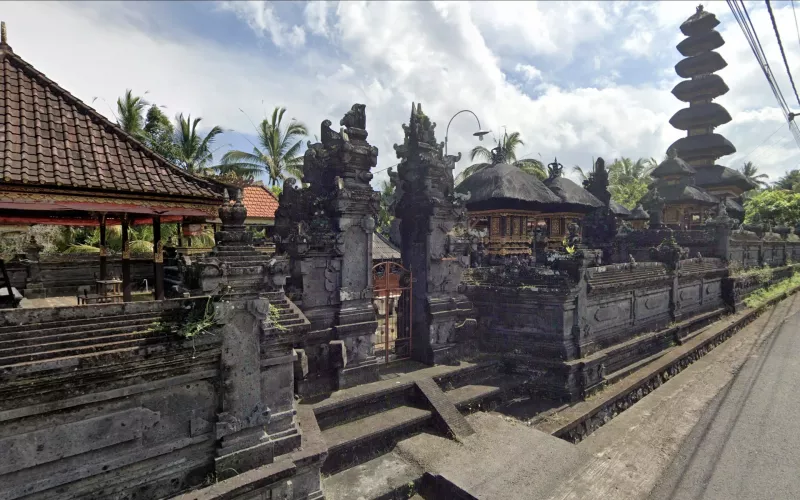

These beautifully carved split gates, known as Candi Bentar, are a quintessential element of Balinese Hindu architecture. On Bali, they are predominantly crafted from dark, volcanic basalt. While they typically mark property entrances, they occasionally appear on public roads as well.
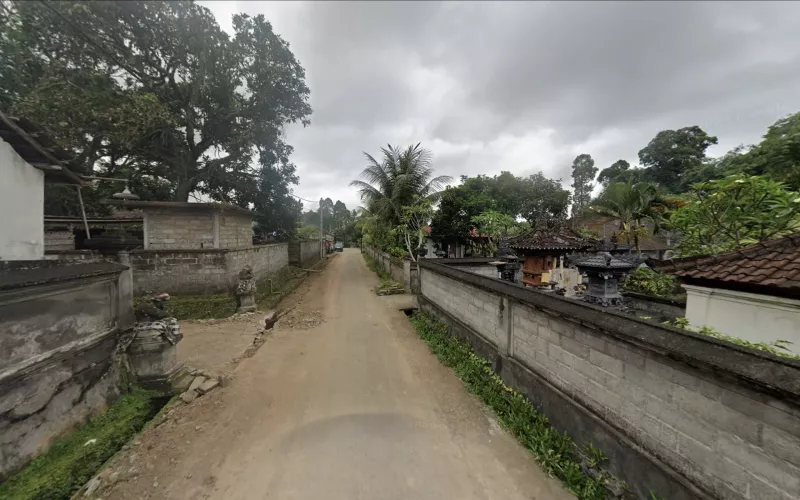

In Bali, properties are typically enclosed by high stone walls, often adorned with basalt ornamentation.
Lombok
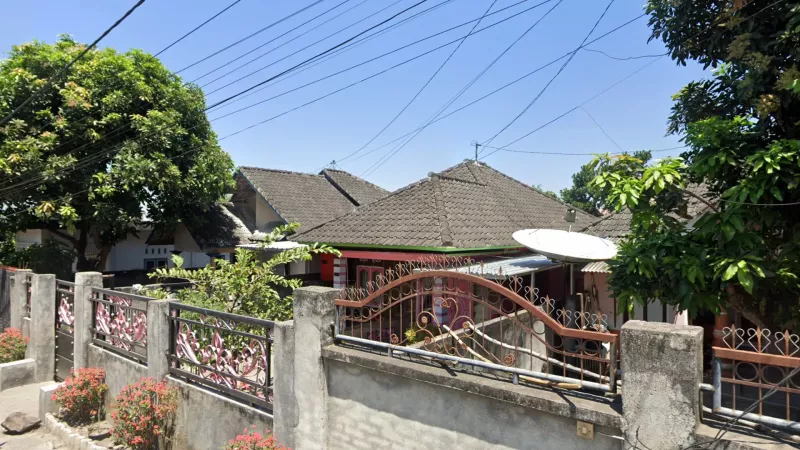

Apart from ordinary Javanese tiles, roofs made of grey tiles are almost exclusive to Lombok. Another feature of Lombok architecture is the grey concrete block walls that surround properties.
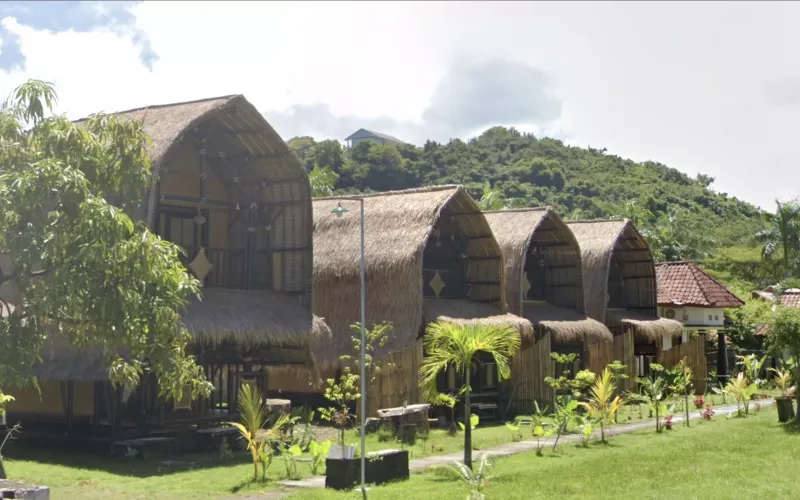

This curved roof shape in Lombok is influenced by the traditional rice barns of the Sasak tribe. Whilst rice barns in their traditional form are rare, their influence can be seen in the shapes of houses, gates and shelters throughout Lombok.
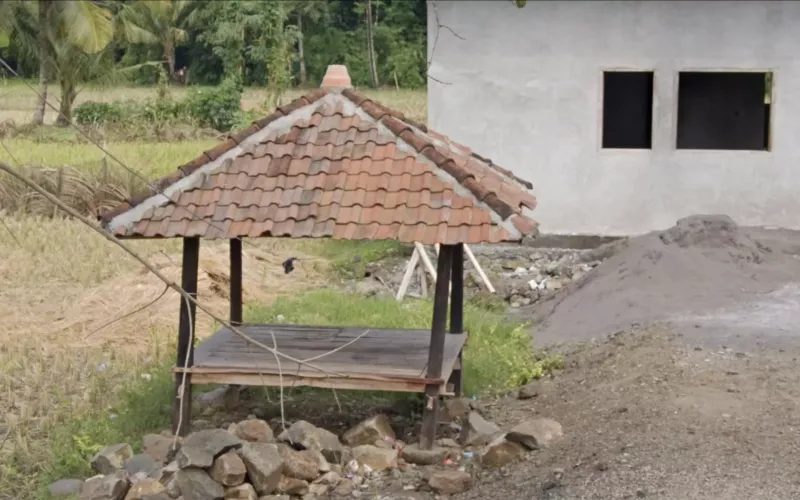

These pavilions on stilts with a pyramidal roof can be found throughout Lombok and Sumbawa.
Komodo Island
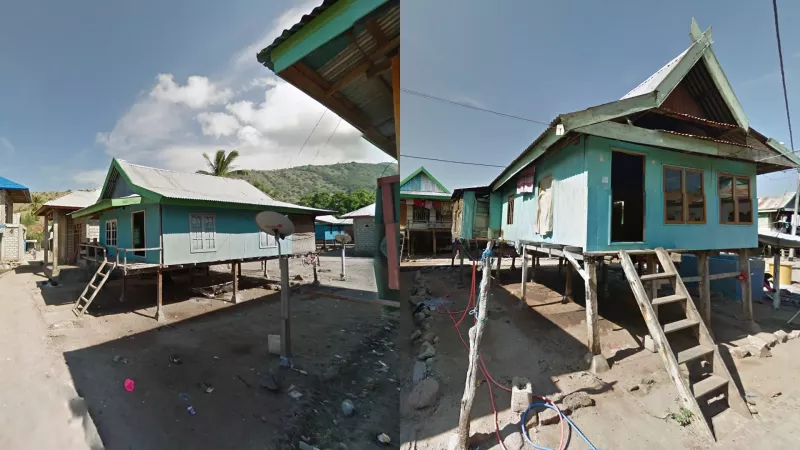

Inhabitants of Komodo Island are descendants of Bugis from Sulawesi and of former convicts who were abandoned on the island. Buginese architecture therefore dominates, with triangular gables and gable horns. Green and blue are the most common colours, and houses are often built on stilts. Property boundaries are sometimes marked with loose rocks.
Sumbawa
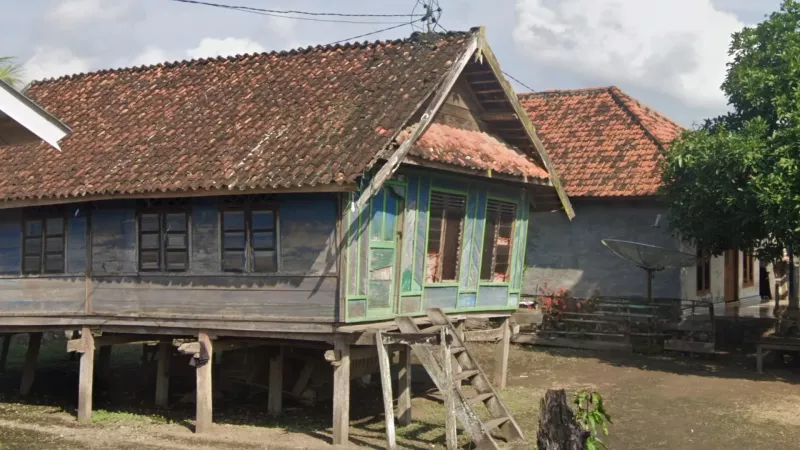

A good indicator for Sumbawa is tiled Buginese houses. These are recognisable by their tiled horizontal roof flap across the gable. The tiles are often the same style that is found on Java. This style of tile is not found on Sulawesi. These houses also typically lack balconies and are surrounded by fences.
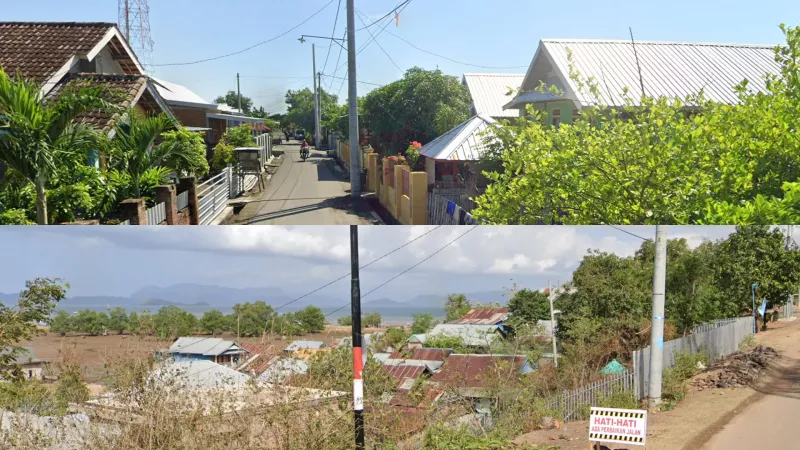

Sumbawa marks the boundary of the transition from tiled roofs to sheet metal roofs. While a mix of both can be found on the island’s west side, the east side is dominated by sheet metal roofing.
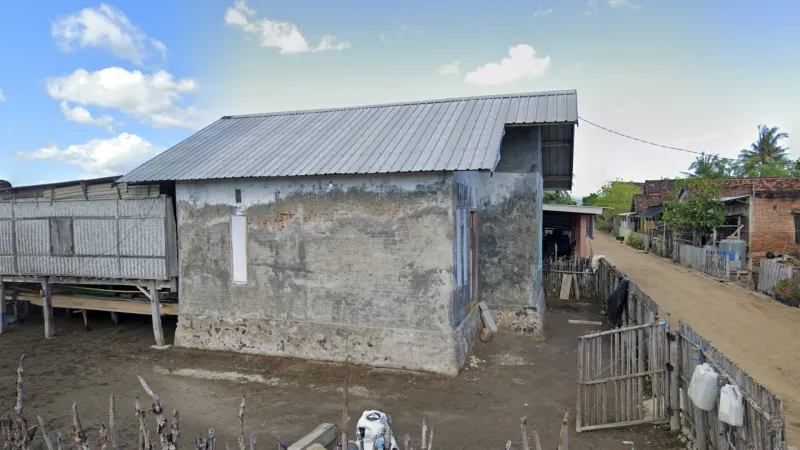

Modern dwellings in West Nusa Tenggara often have silver-coloured sheet metal roofs with wide grooves, similar to those often found on Belitung. They can rarely be seen in South Sulawesi, North Maluku, Bangka, and South Sumatra. In Java, this type of roofing is used for shelters.
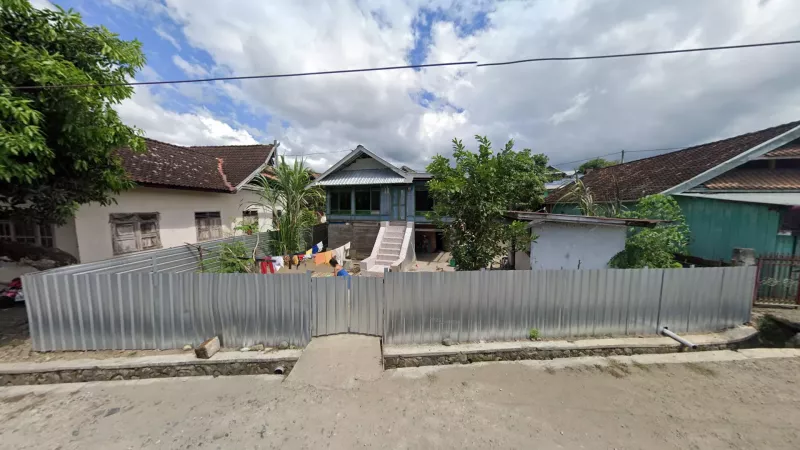

On Sumbawa, you will find an unusually high number of sheet metal fences compared to the rest of Indonesia. Fences and gates made of bamboo are also common.
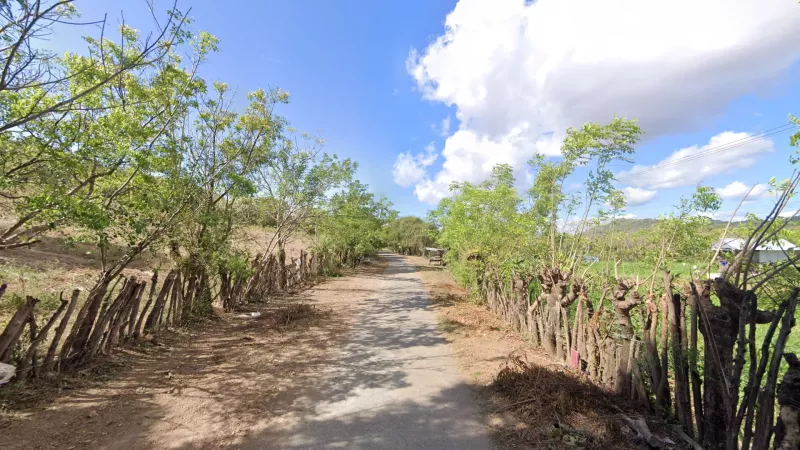

In rural Sumbawa, fields are separated from the road by rows of trees which are often pollarded. These are similar to the rows of trees that can be seen in Colombia.
Sumba
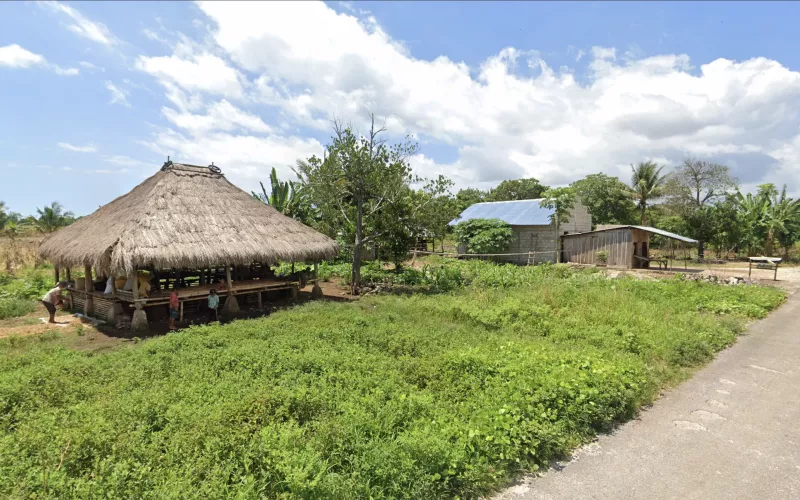

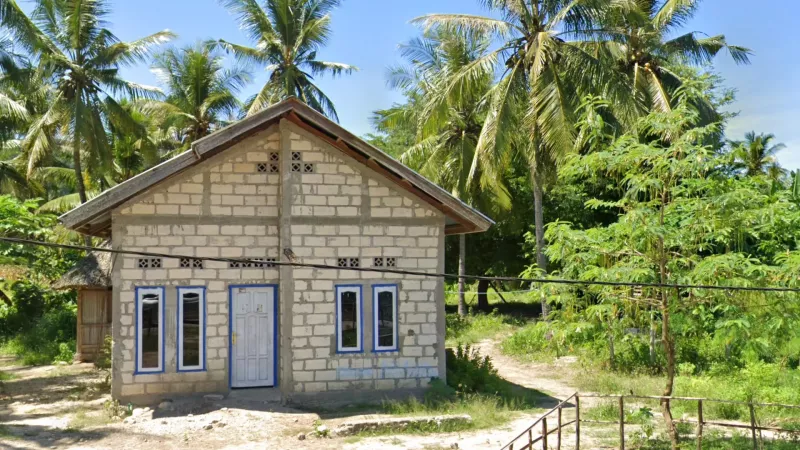
On the western tip of Sumba you can find these types of traditional houses with thatched roofs. The white brick houses typical of the Nusas are also found all over Sumba.
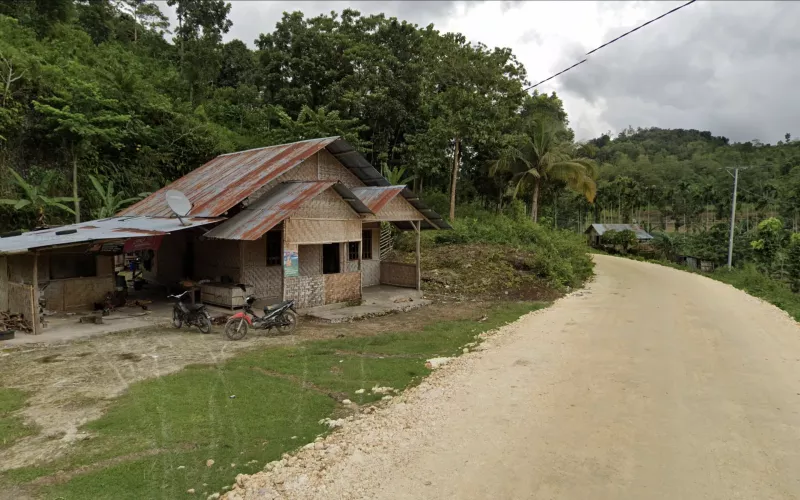

Houses made entirely of bamboo materials with sheet metal roofs are also frequently found on Sumba.
Flores
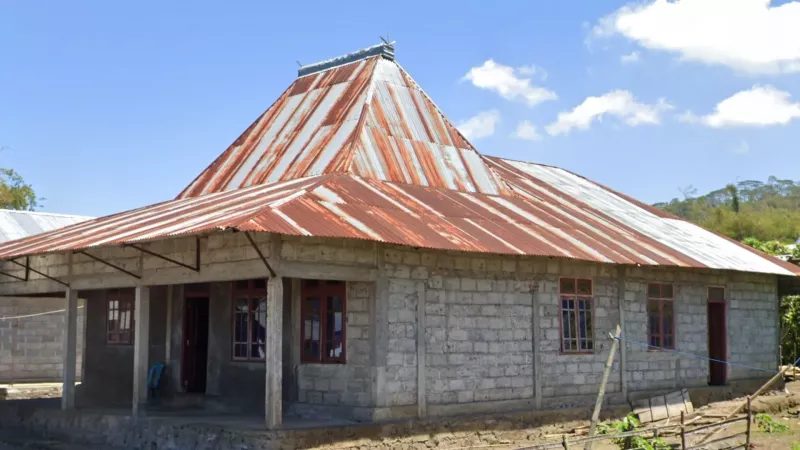

Roofs shaped like hats are common in central Flores in areas that are ethnically Ngada, Nage and Ende. There is a very high concentration in the ethnically Ngada area around Bajawa where the houses also have distinct ornaments on both ends of the top beam.
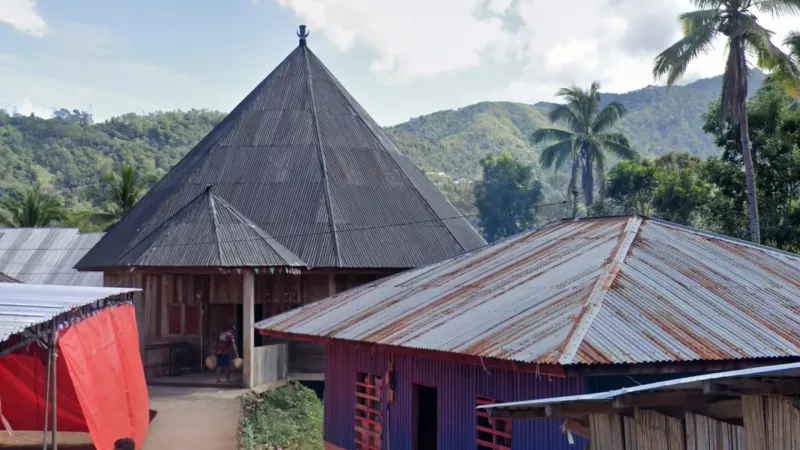

Western Flores is inhabited by the Manggarai people and their villages are usually centred around a traditional chieftain's house with a conical roof and a distinctive finial.
Timor & Rote
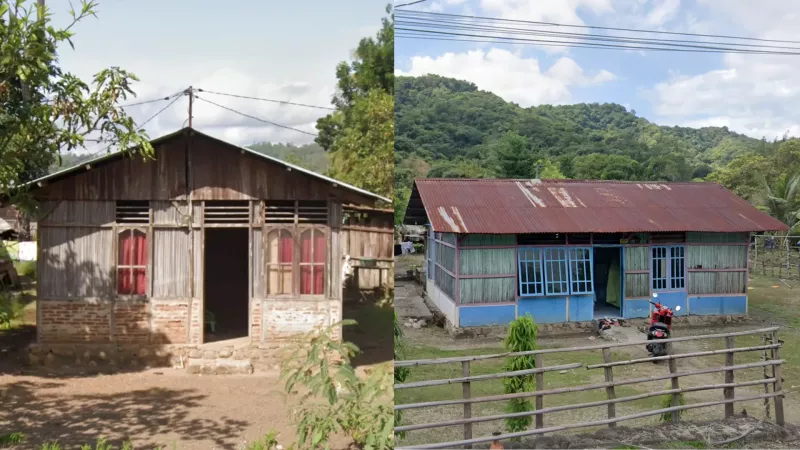

The most distinctive house types on Timor feature a boxy timber frame central section infilled with palm or bamboo. This type of house may also rarely be found on Rote.
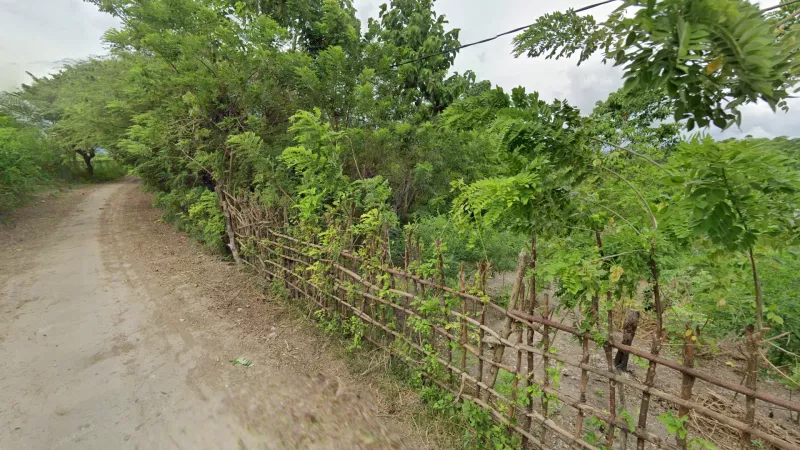

Fences made out of trees, some pollarded, and fences made from horizontally-stacked sticks are found along road sides on Timor and Rote.
Timor
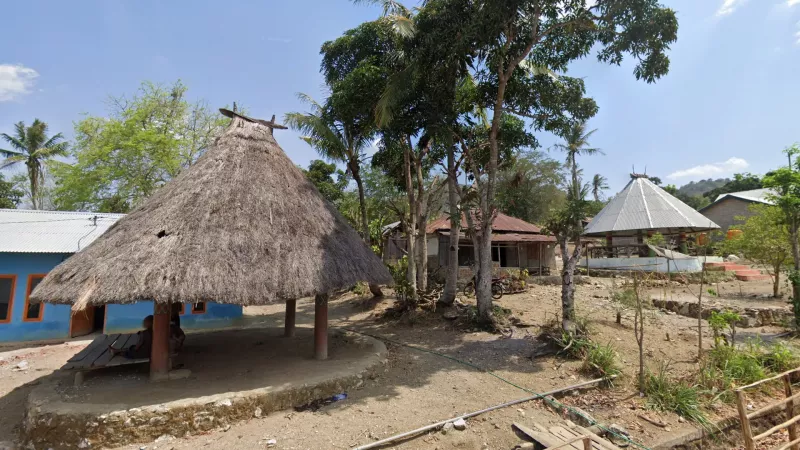

Traditional bamboo houses with thatched roofs are found scattered across Timor. These houses sometimes have a circular shape. Modern versions with metal roofs can also be found. Unlike Manggarai chieftain houses, these often have a short ridge with two small horns along the top.
Rote Island
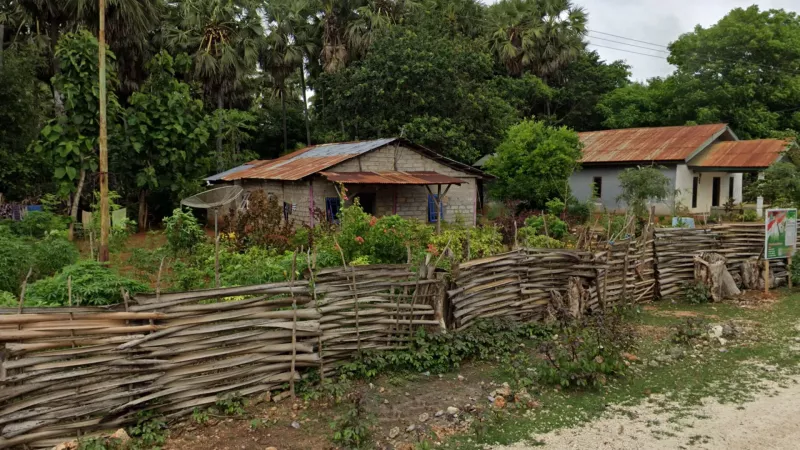

Fences made from palm stalks in a tight wicker-weave pattern are common on Rote.
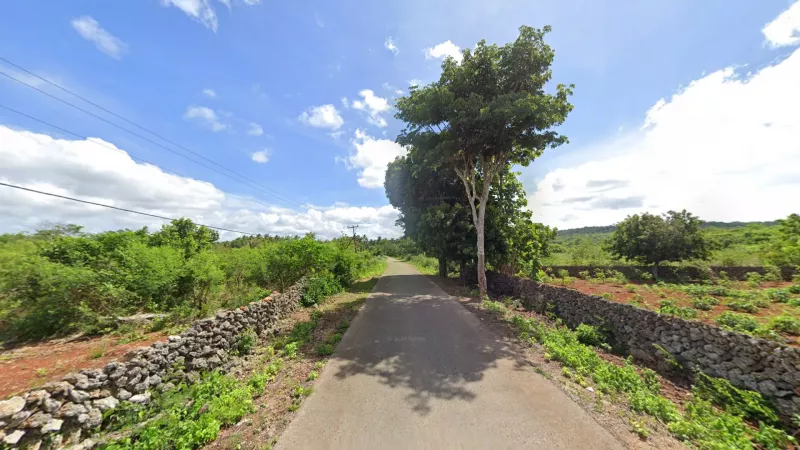

On Rote, plots of land and fields are surrounded by distinctive long walls made from piled-up stones.
Alor
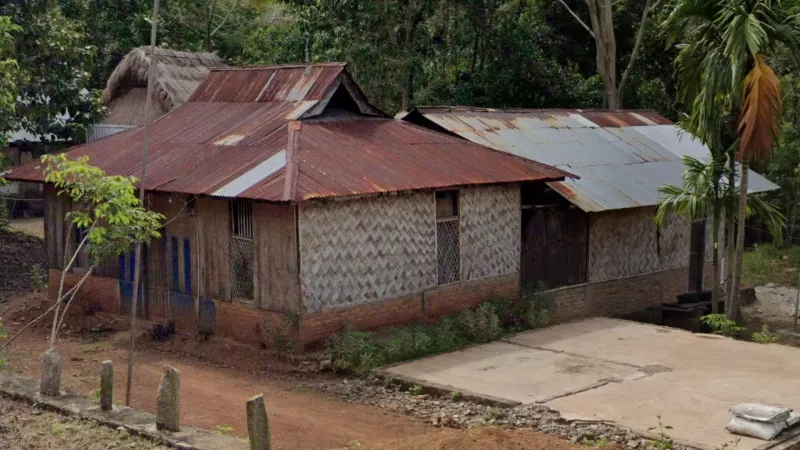

Houses on Alor often have a lower section made of brick and an upper section made of woven bamboo matting.
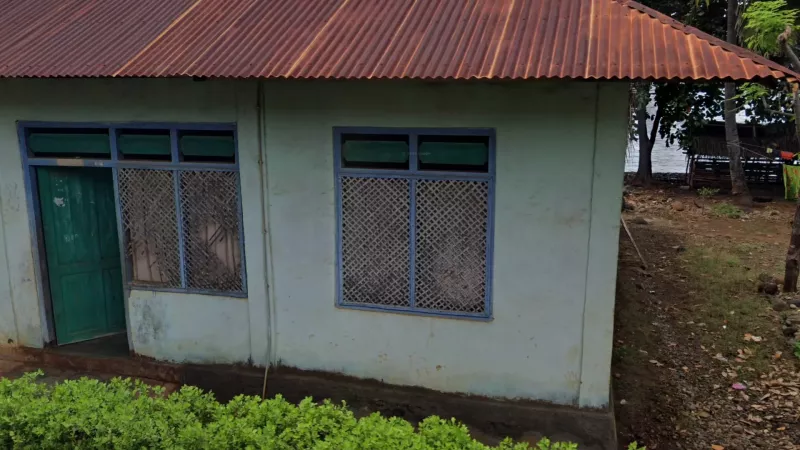

Windows with bamboo mesh coverings are also a distinctive feature of houses on Alor.
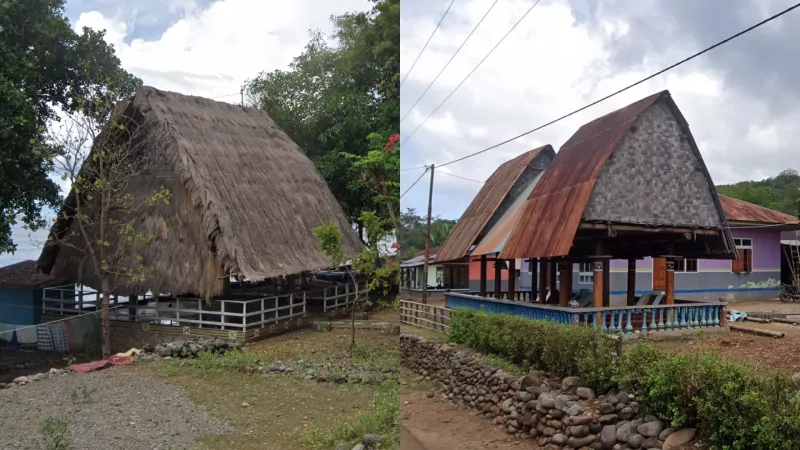

Traditional houses on Alor have a characteristic arrow-tip shape, are raised on stilts and feature thatched or sheet metal roofs.
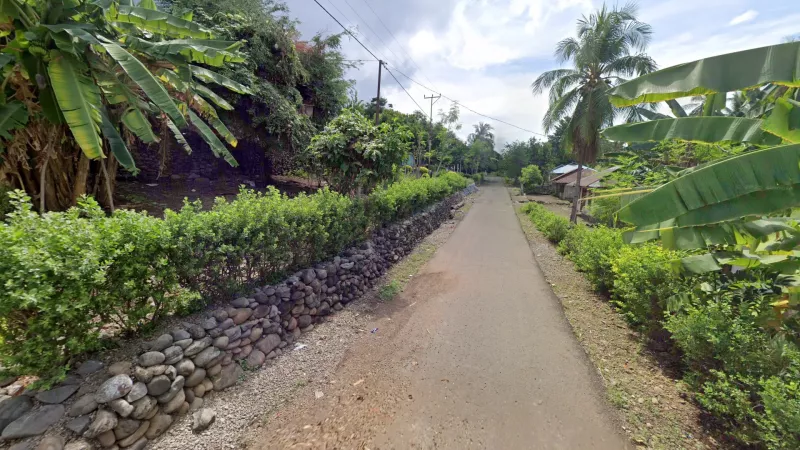

Long rock walls are common on Alor. However unlike those on Rote, these walls are not made from limestone, so the stones are smoother, like large pebbles.
Alor, Lembata & Adonara
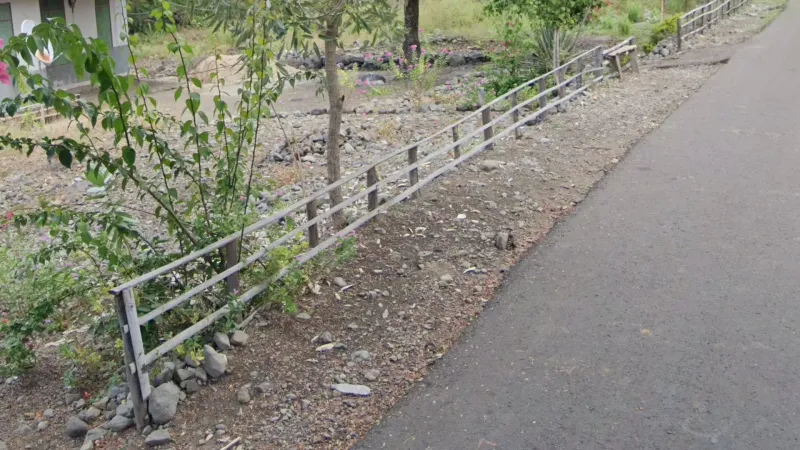

Bamboo fences on Alor, Lembata and Adonara have noticeably large open spaces between both horizontal and vertical bamboo bars.
Culture & Language
Bali-Penida
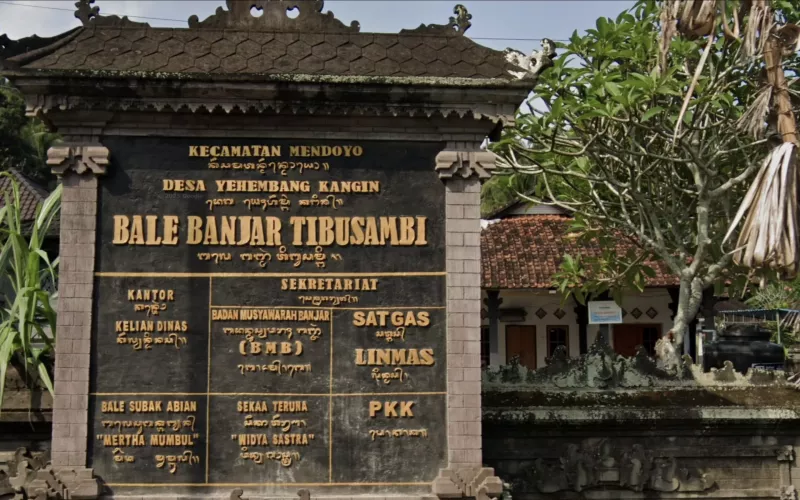

Balinese employs a unique writing system derived from the Brahmi script family. Its characters are ornate and feature intricate, flowing curves, making them visually distinctive. However, with the widespread adoption of the national language, Indonesian, the traditional script is now rarely used in daily life
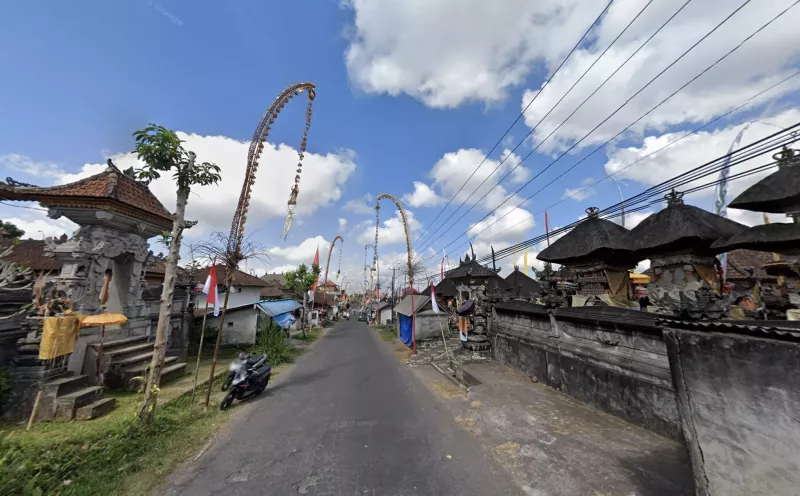

A Penjor is an elaborately decorated, long bamboo pole that serves as an important ritual object in Balinese Hinduism.
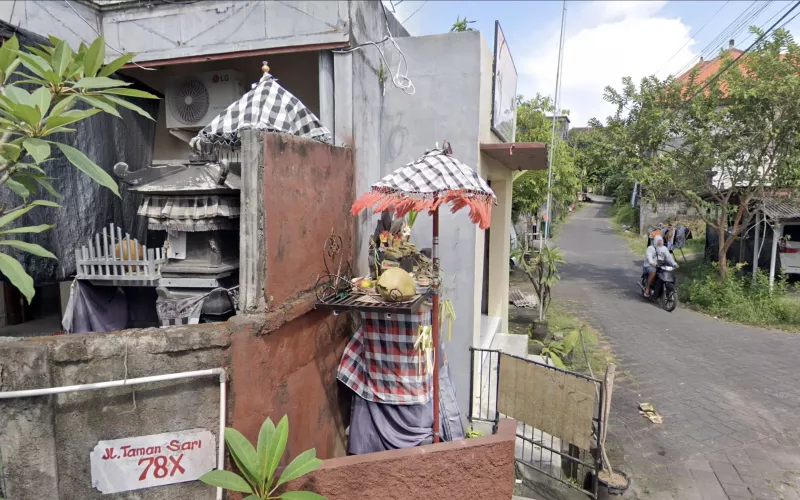

Tedung are tall, slender ceremonial umbrellas decorated with hanging tassels or fringes. They usually appear in bright yellow, white, red or a black-and-white checkered pattern. They are typically found standing next to shrines or temple gates; however, they can also be found in other settings.
Sumba
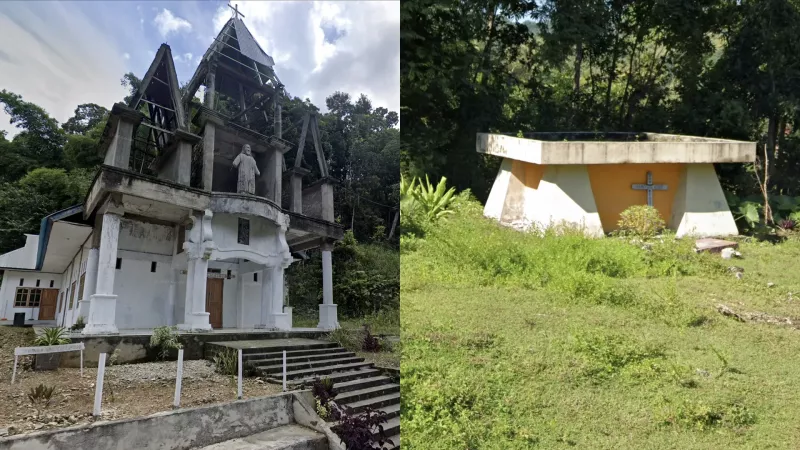

Graves on the predominantly Christian Sumba are often in the shape of a rectangular frustum with a flat table-like top.
Infrastructure
Bali
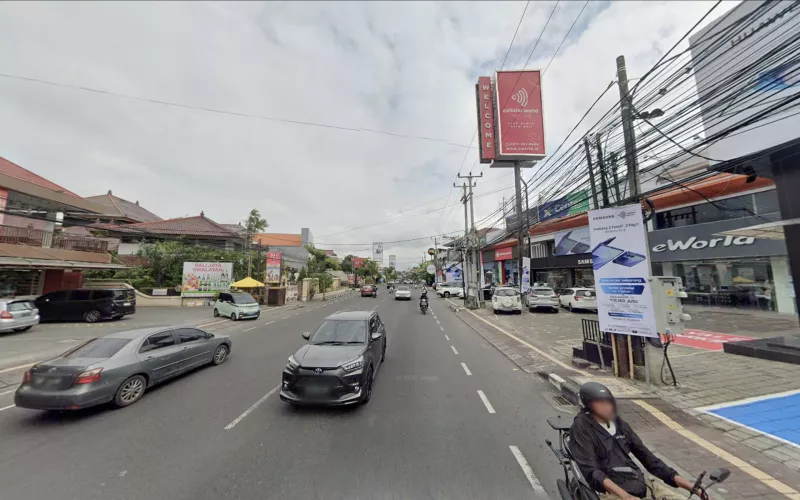

Located in the south, Denpasar is the capital and largest city of the province. Significantly more urbanised than the rest of the island, it features bustling commercial districts and established residential neighbourhoods. Reflecting the thriving tourism industry, commercial signage is frequently multilingual.
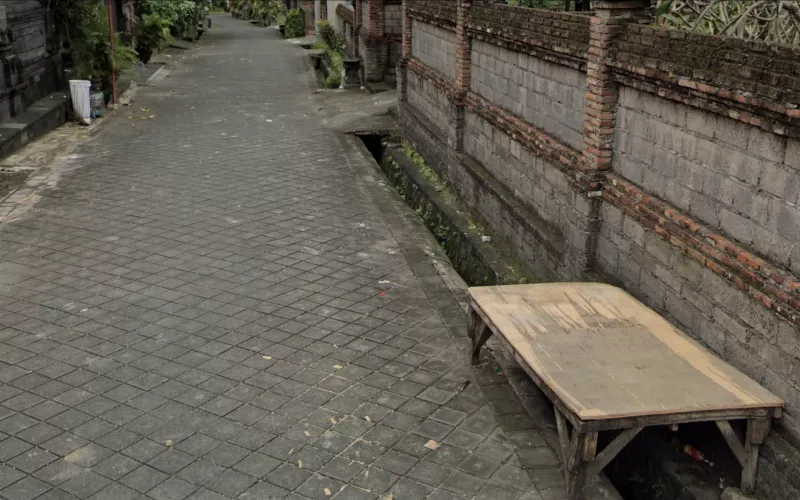

Roads or walkways paved with dark, square paving stones are ubiquitous on Bali. These blocks are typically laid in either a straight grid or a diagonal diamond pattern.
Komodo Island
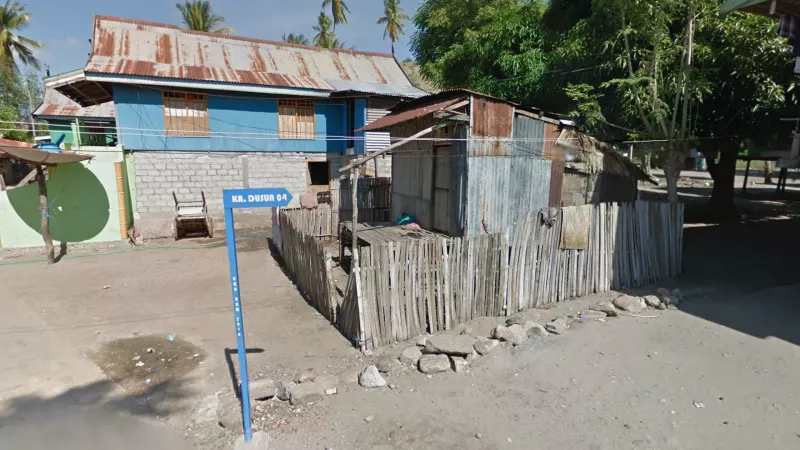

Blue street signs with an unusual font are common on Komodo Island.
Sumbawa
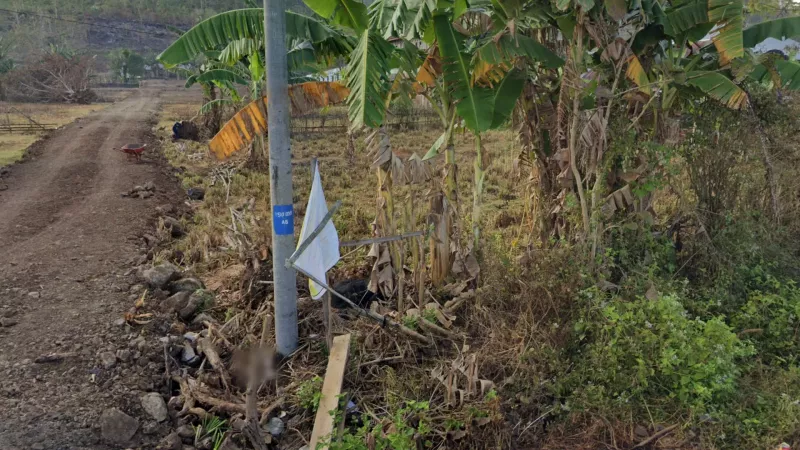

In rare cases, blue pole stickers similar to those on Bali or Lombok are visible on Sumbawa.
Timor, Sumbawa & Alor
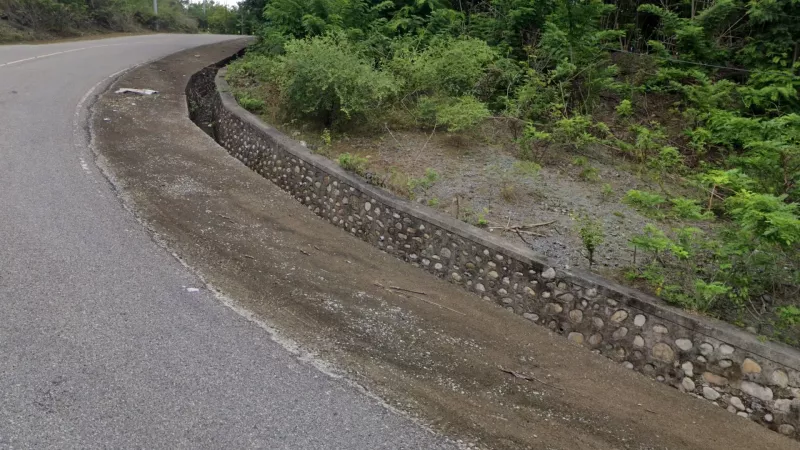

Within the Nusas there is a special type of roadside drainage ditch, that occurs commonly on Timor and to a lesser extent on Flores and Alor. This special ditch type is characterized by its dark mortar, flecked with white stones.