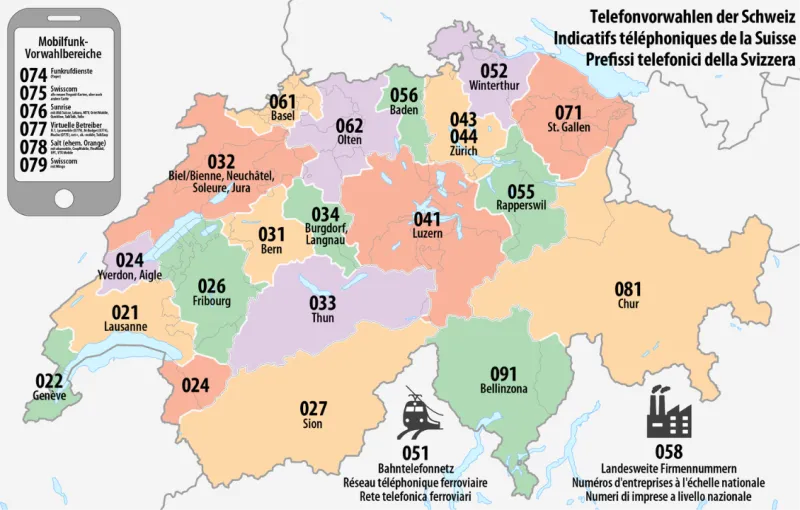
Swiss landline phone numbers have 10 digits, the first three of which are regional. The prefixes 074-079 signify mobile numbers, which are not regional.
Landscape
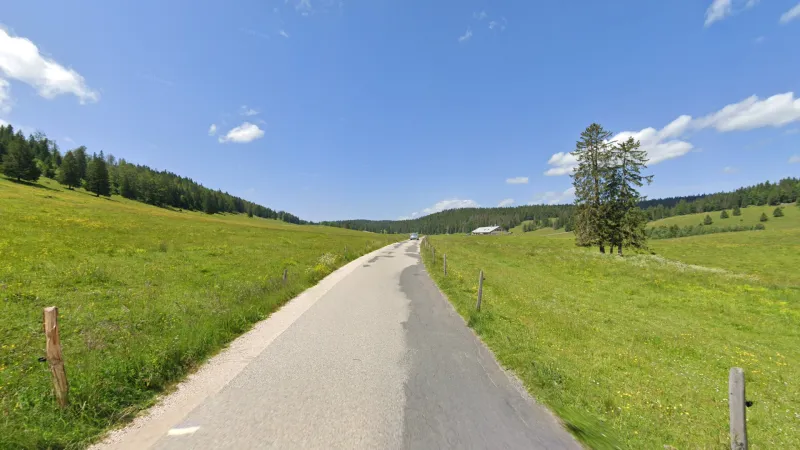
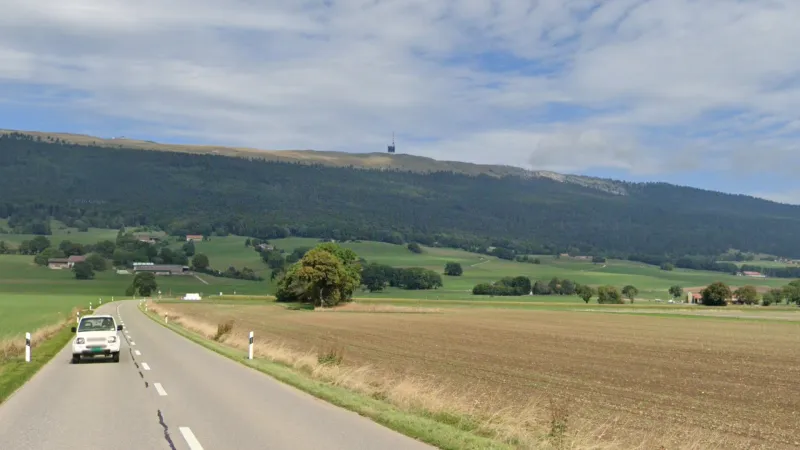
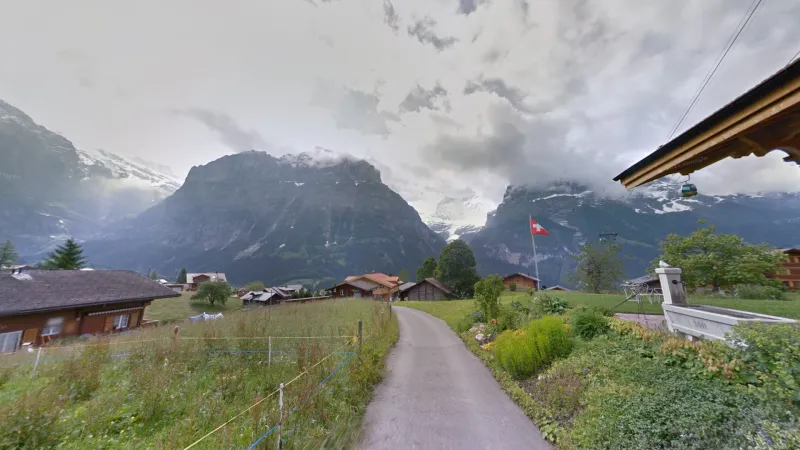
The main part of the Jura Mountains is one of the most distinctive landscapes of Switzerland. Here you will find long, unbroken plateaus flanked by spruce forests in a cold, high-altitude landscape. Long limestone rock walls as well as random limestone rocks are very common. In contrast, landscapes in the Alps and pre-Alps will be hillier without any long, unbroken plateaus.
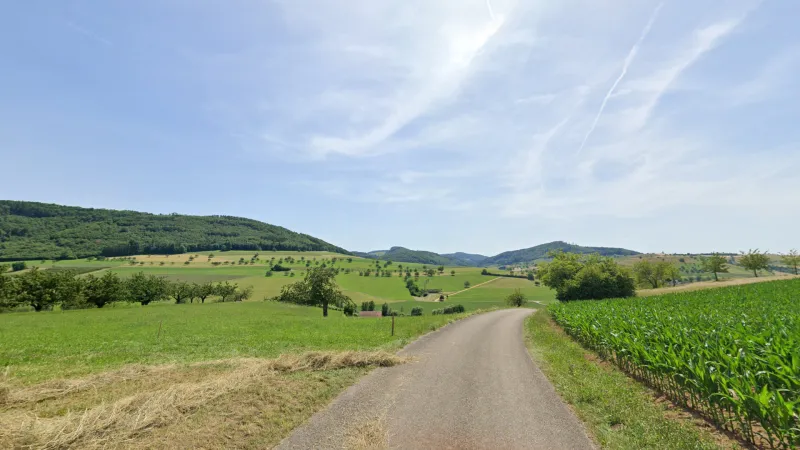
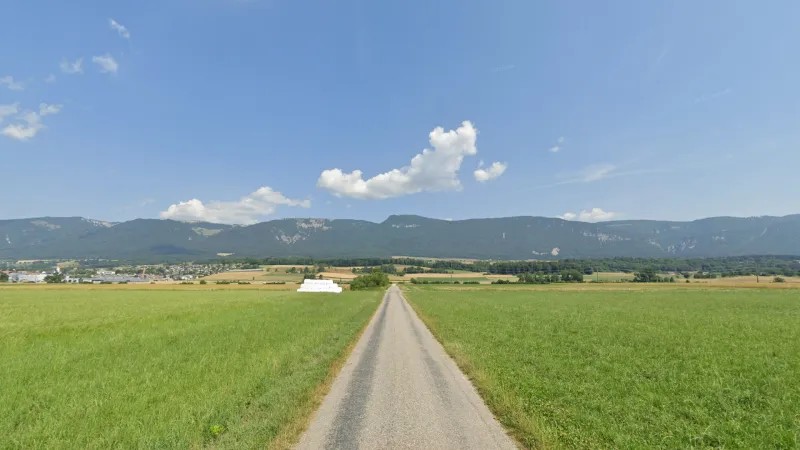
The eastern end of the Jura mountains has a different, but also distinctive, landscape with separate hills rather than the long continuous ridges that you see in the more western Jura. Additionally these hills are often forested, while the valleys between them are wide and often agricultural. The forest here is deciduous, whereas in the foothills of the Alps and the western Jura, spruce is the most common tree.
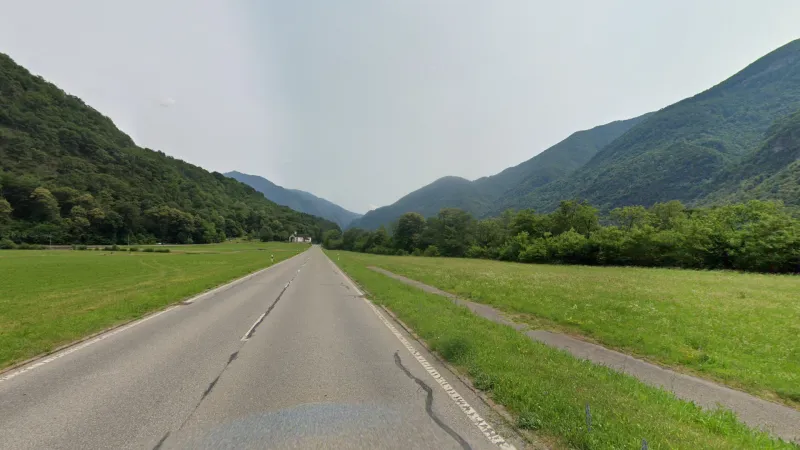
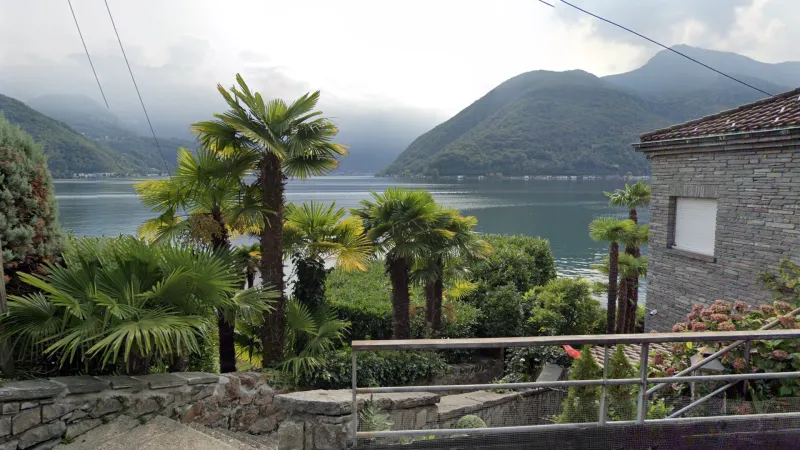
Ticino and some surrounding regions have a much warmer and more humid climate than the rest of Switzerland; as a result the landscape here is lush, vibrant green and almost tropical-looking. The hillsides in this area will be covered in deciduous forest.
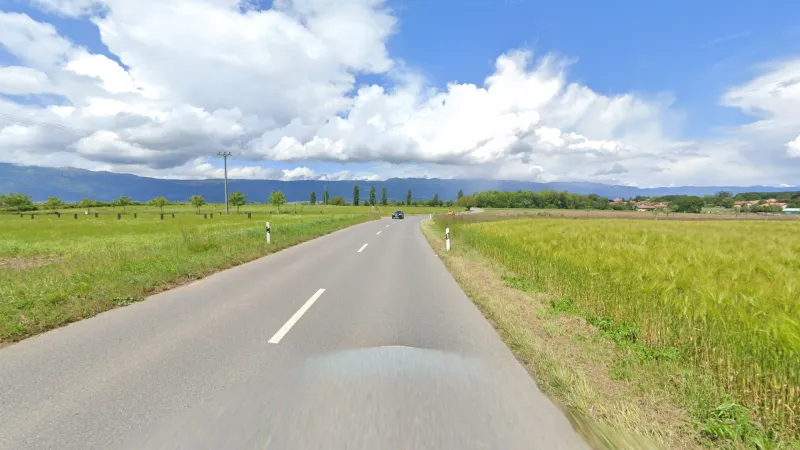
The canton of Geneva lies in a flat basin between two long NE-SW ridges.
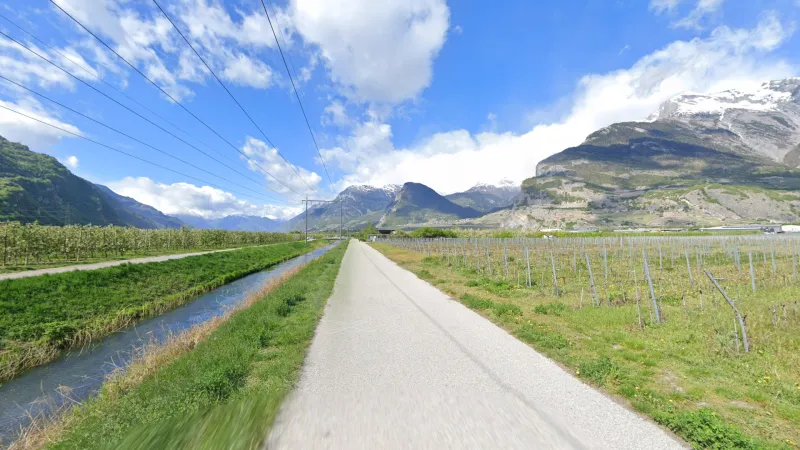
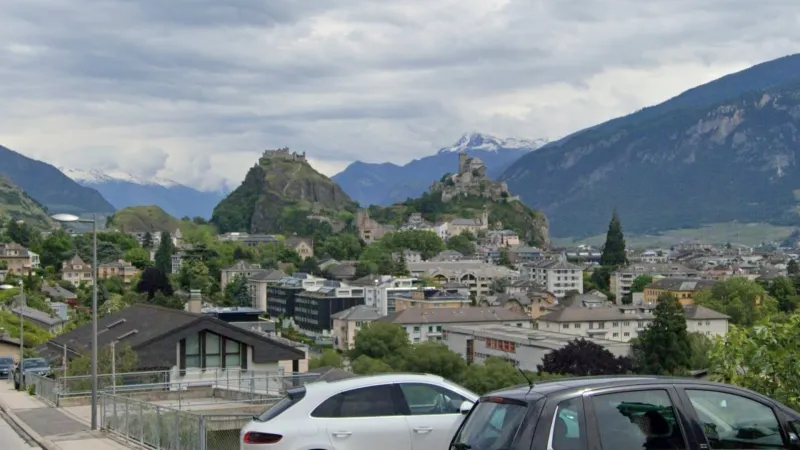
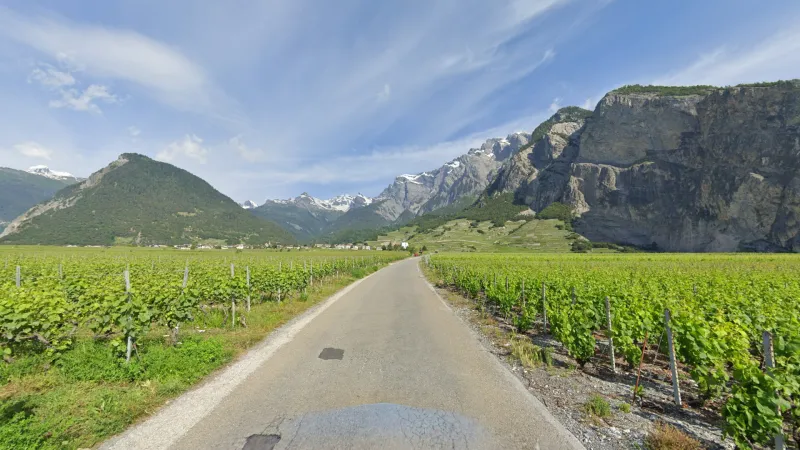
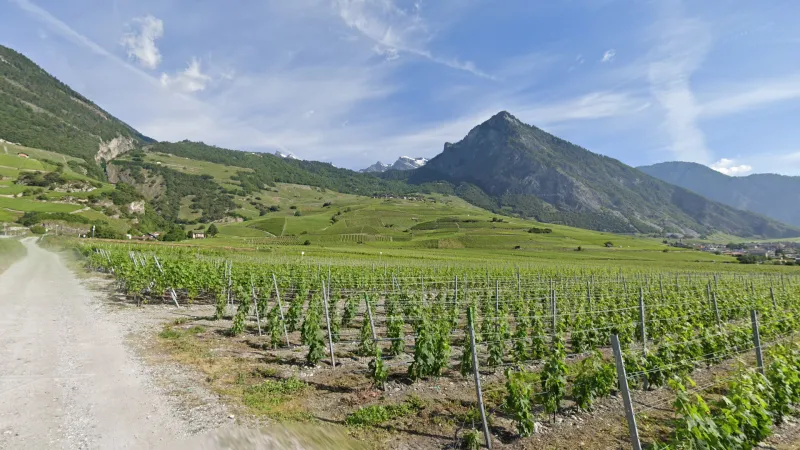
The Rhône Valley is one of the sunniest regions of Switzerland and has a dry climate. It can also be recognised by the width and direction of the valley (mostly NE-SW, becoming NW-SE near Lake Geneva). This valley is far more agricultural than any other valley in Switzerland with vast fruit orchards and vineyards.
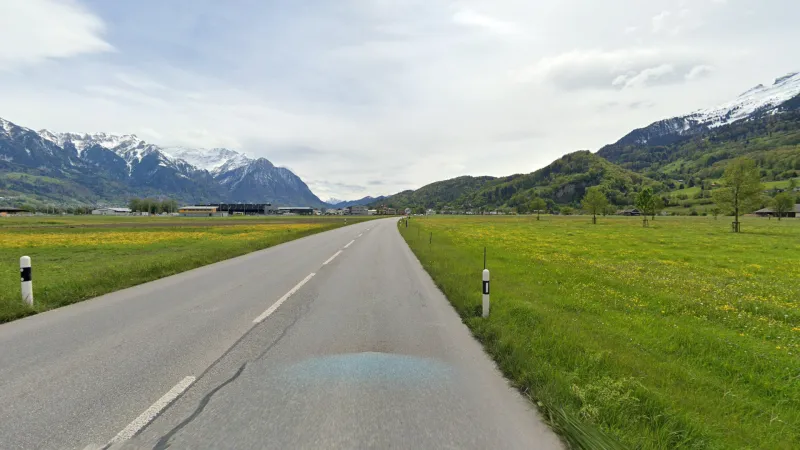
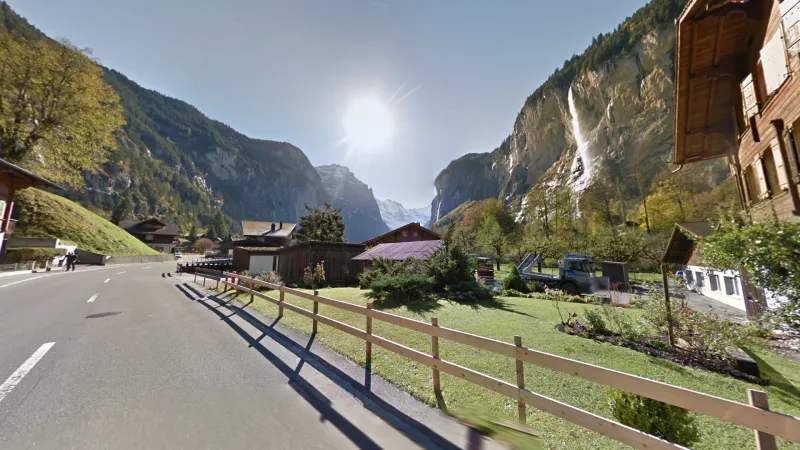
The Rhine Valley is recognisable from its width and also often from the steep, towering mountains on both sides. Drainage channels and rows of trees are a common sight along the whole valley. It mostly follows a N-S angle, although other angles are also common. Towards the north, especially in the region around Altstätten, the mountains surrounding the valley decrease in elevation and give way to low hills.
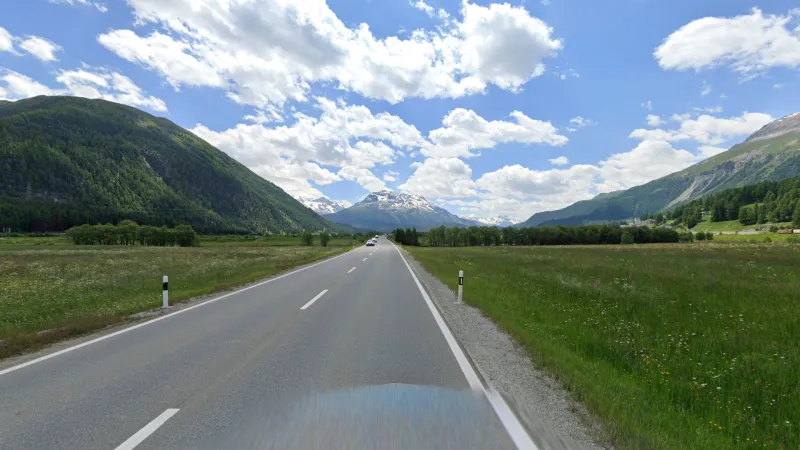
The Engadine Valley in southeastern Switzerland is a pristine high plateau valley with meadows of wildflowers and gentle forested mountain slopes being key features. The valley feels very natural, with very little agriculture, and has a NE-SW orientation.
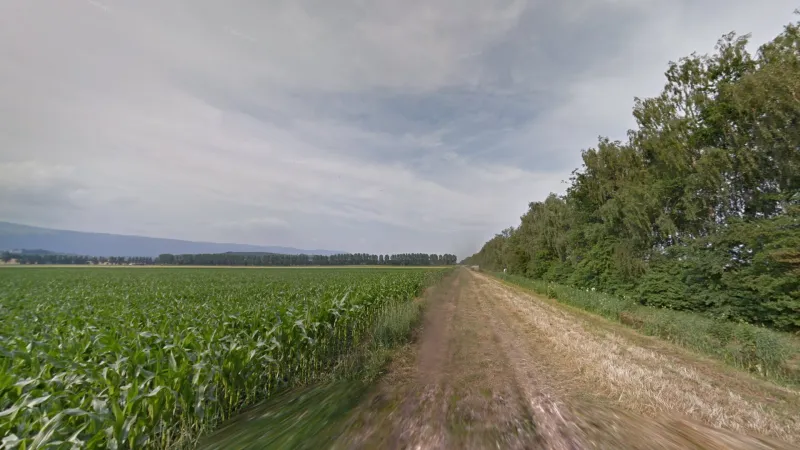
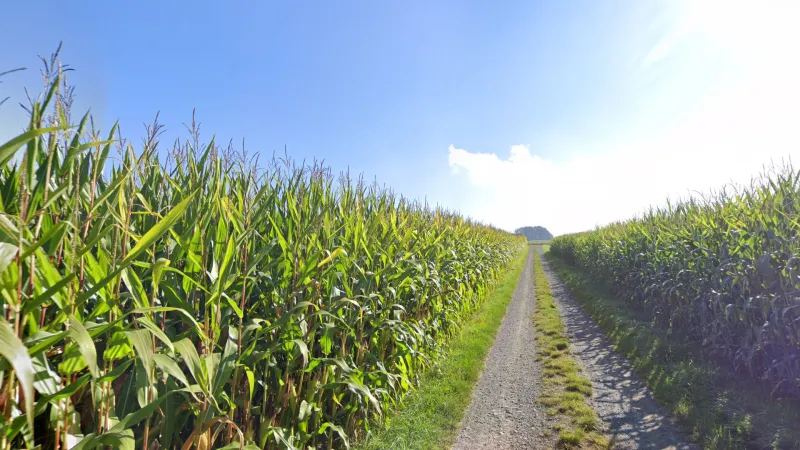
Southwest of Yverdon-les-Bains and, to a lesser extent, near Lake Morat, you will find a dead-flat landscape with rows of trees.
Mountains and Landmarks
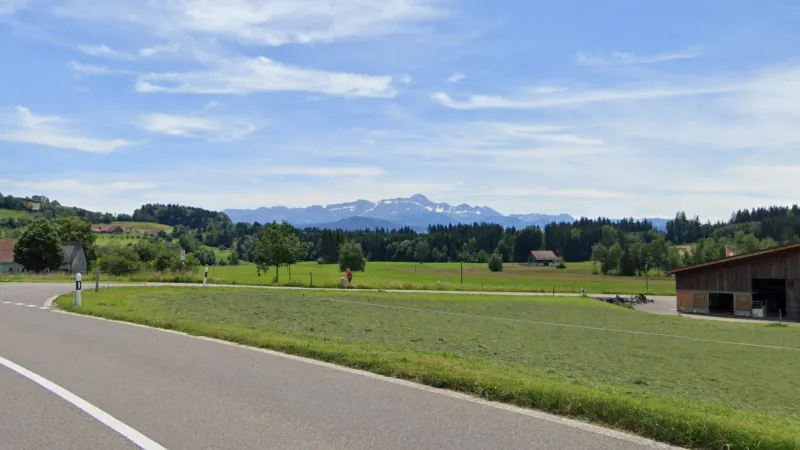
The Säntis, situated southwest of Appenzell, is a mountain with a very distinctive shape that on clear days can be seen from large parts of northeastern Switzerland. A communications tower is often visible on the summit. When viewed closer up, the Säntis resembles a craggy wall.
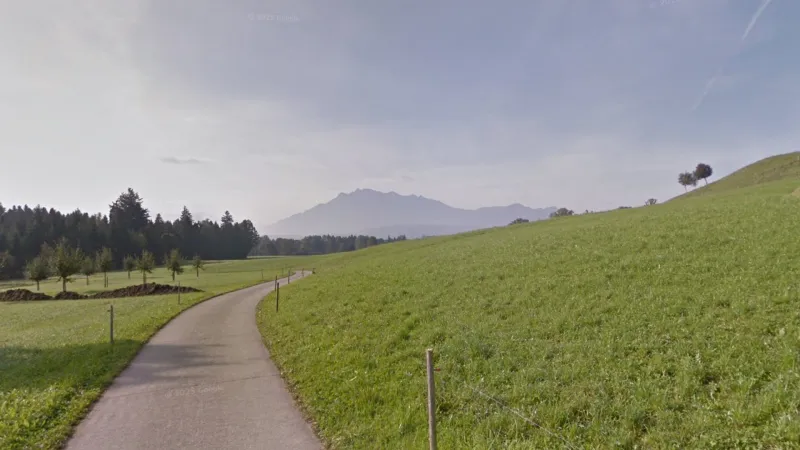
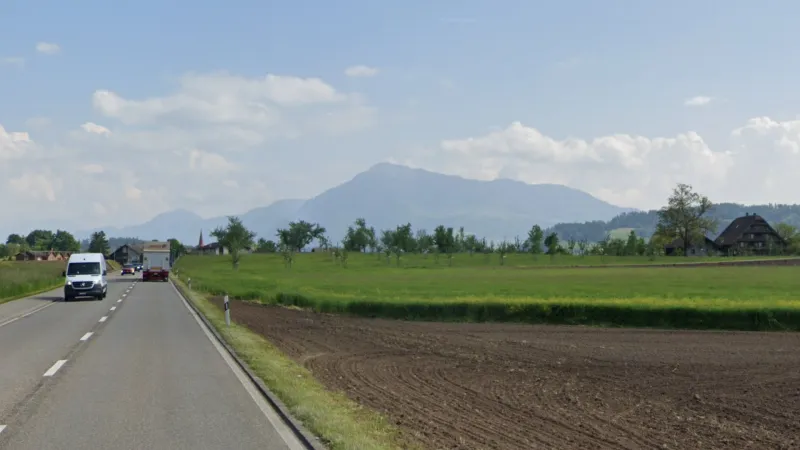
The Pilatus is a wide, bulky mountain with a distinctive outline that can be seen from many locations in the cantons of Lucerne and Aargau, rising up like a wall in the otherwise flat landscape. A different perspective of the mountain can be seen from near Lake Lucerne.
The Rigi is another recognisable mountain of central Switzerland and, like the Pilatus, can be seen from many locations in the cantons of Lucerne and Aargau. It has a wide, pyramidal shape and a communications tower on its peak.
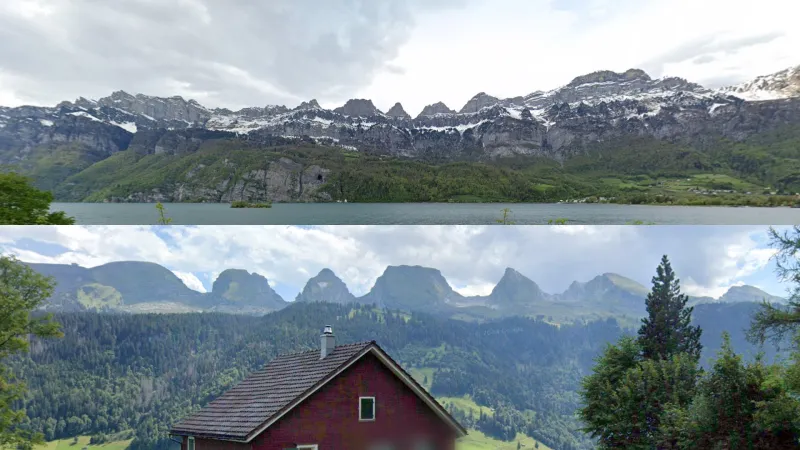
The Churfirsten are a mountain range consisting of very pointy and stony peaks. The mountains can mainly be spotted from the region around Lake Walensee, though their silhouette is also visible from the valley to the north of the range.
The Stockhorn is the most prominent peak of the Bernese Alps, lying south of Thun. Its rounded summit can be seen from a wide area within the canton of Bern.
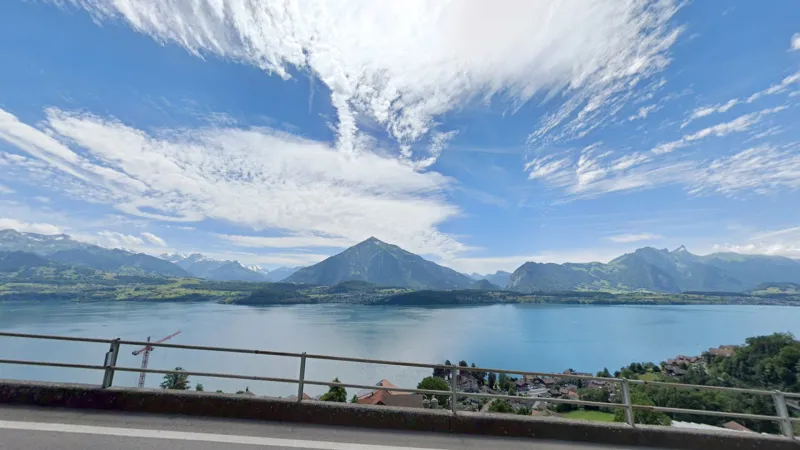
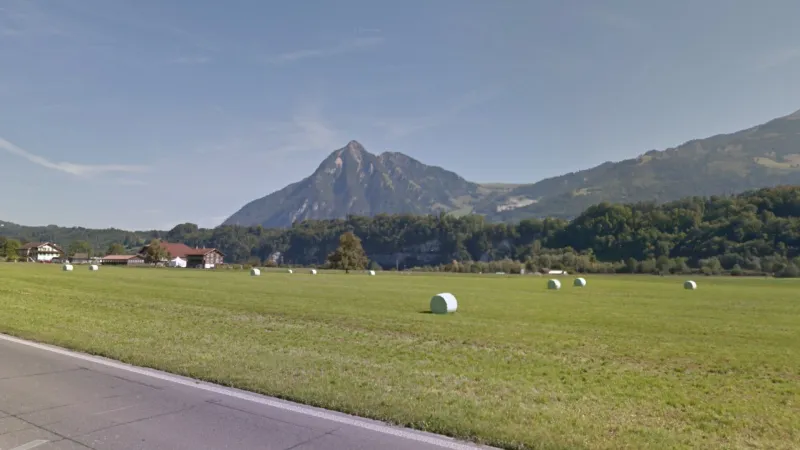
The Niesen is a near-perfect pyramidal mountain, west of Stockhorn, rising from the southern shore of Lake Thun. There are many locations where you can see both the Niesen and the Stockhorn.
The highest peak of the Swiss Jura mountain range, the Chasseral is visible from a long distance in the flat Three Lakes Region. A wide-based communications tower can be seen on its bare, treeless summit.
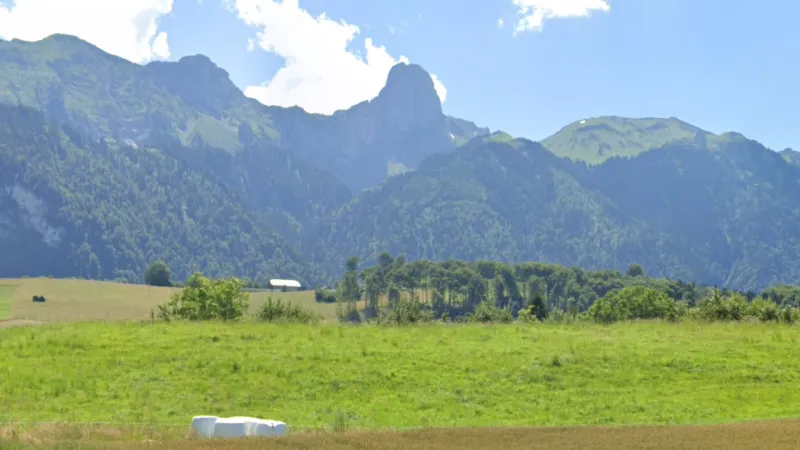
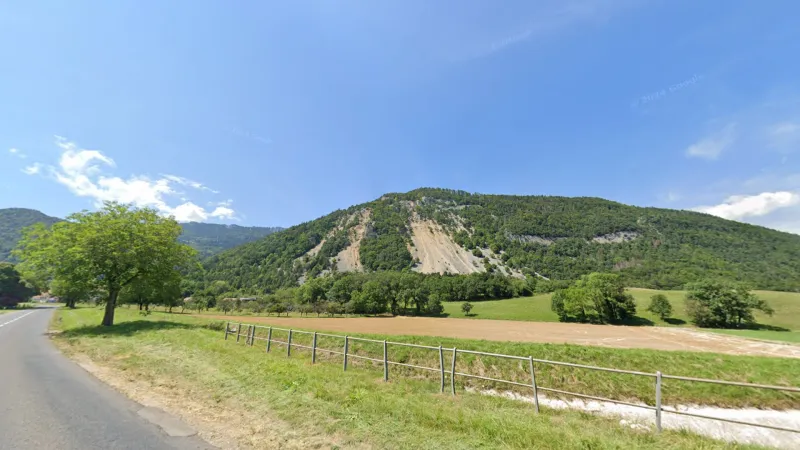
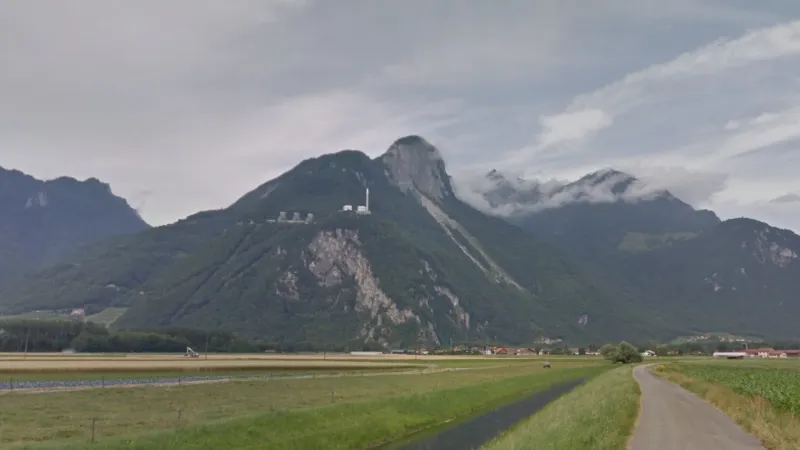
Another useful reference point in the Jura ridge is the landslide scar above the town of Baulmes, which can often be seen from many places in the flat, rolling landscape of Vaud.
Situated northwest of Solothurn, the Hasenmatt is the highest summit of the eastern part of the Jura ridge, forming a crest that rises slightly above the surrounding ridges.
The distinctive profile of the Stanserhorn can be seen to the northeast from nearly anywhere in the valley surrounding Lake Sarnen.
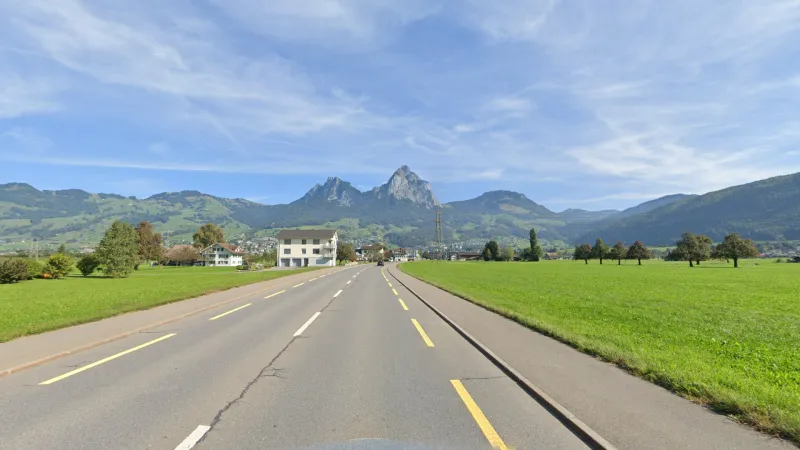
One of the most distinctive mountains of the country, the Mythen, with its twin peaks, rises above the town of Schwyz and the encircling valley.
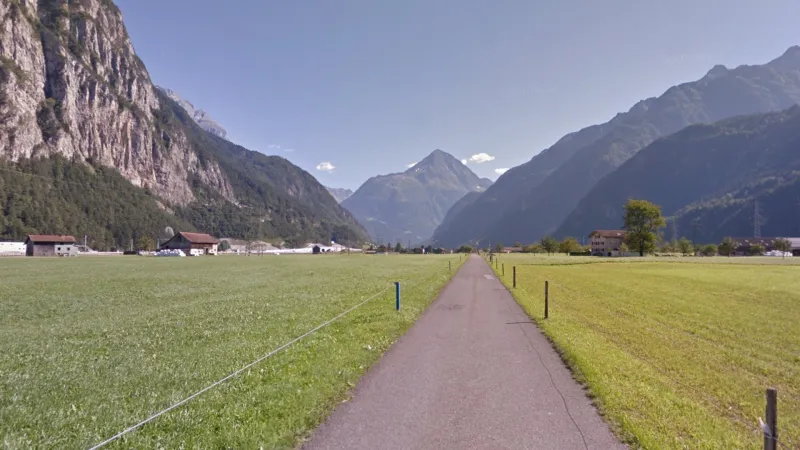
The main valley of the canton of Uri can be recognised by the Bristen at its southern end, which has a distinctive semi-pyramidal shape.
While palm trees can occasionally be found planted all throughout the country, they are incredibly abundant in Ticino due to its more tropical climate.
Vineyards
Vineyards can only be found in very specific regions of Switzerland. As a general rule, the largest vineyards are in Valais and on the shores of Lake Geneva and Lake Neuchâtel, while smaller vineyards are found in Geneva, Ticino and the northeastern cantons.
Valais is the top wine-producing region of the country with vast vineyards. A distinctive feature of this area is that the vines will be grown on the mountain slopes.
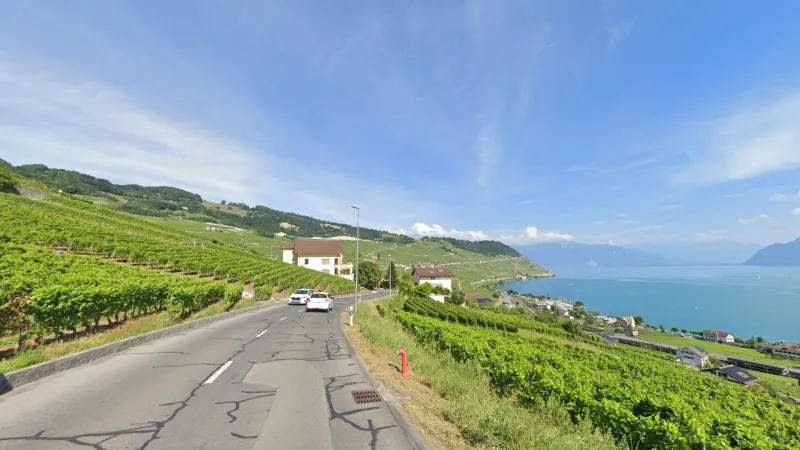
Wine is grown all around Lake Geneva; however, the Lavaux wine region, due east of Lausanne, is one of the most distinctive wine regions with gently sloping vineyards commanding an impressive view of Lake Geneva to the south.
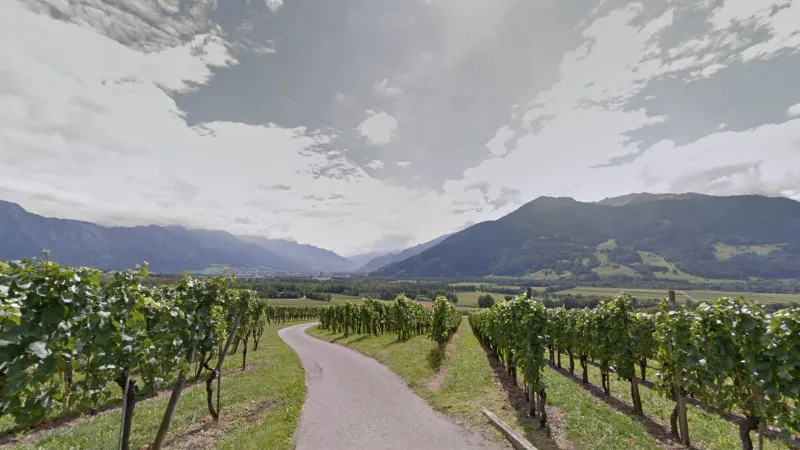
The Bündner Herrschaft wine region around the towns of Fläsch, Maienfeld, Jenins and Malans in the Rhine Valley can be recognised by the distinctive Rhine Valley mountains surrounding it.
Architecture
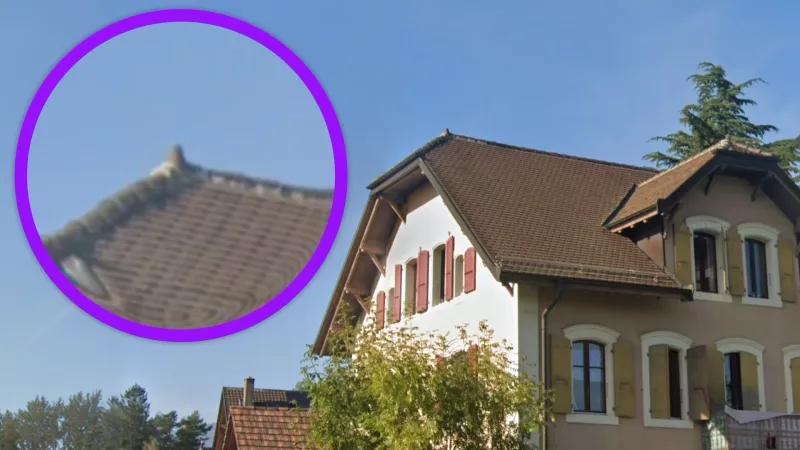
Finials in the form of a small bump on a roof can be found in the areas shown on the map, being common in the cantons of Vaud, Fribourg, Geneva and Neuchatel and also in western Valais. They can also very rarely be found in the canton of Bern.
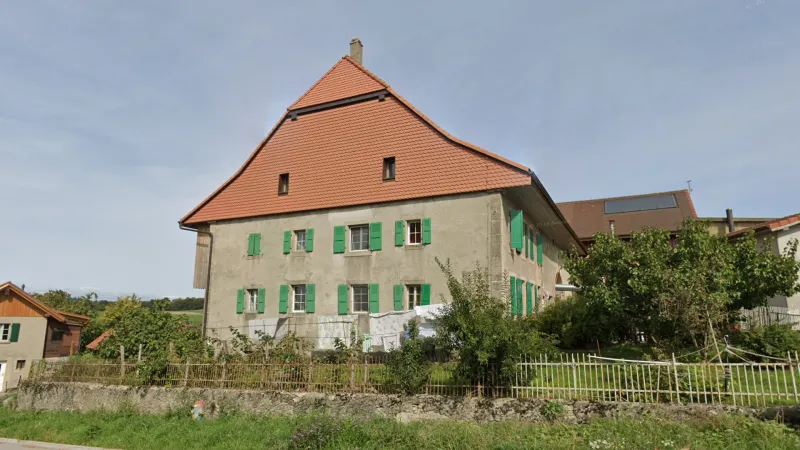
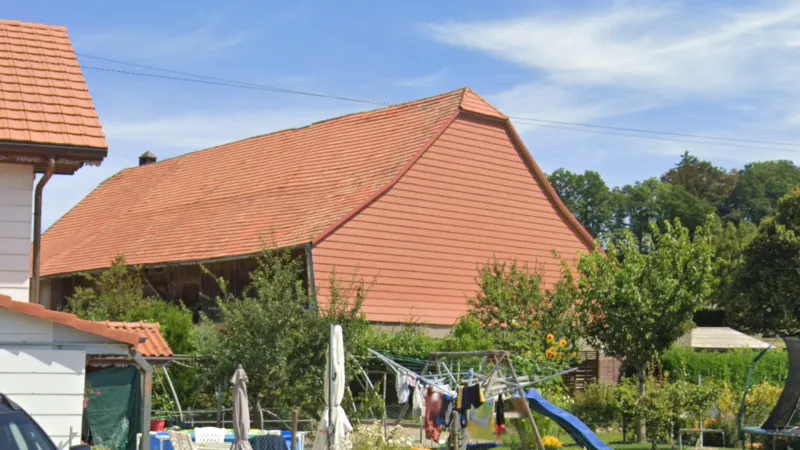
Houses with gables covered with striking red tiles are frequently found in northeastern Vaud and the west of the canton of Fribourg. In exceptional cases, similar tiled gables can be found outside these regions however.
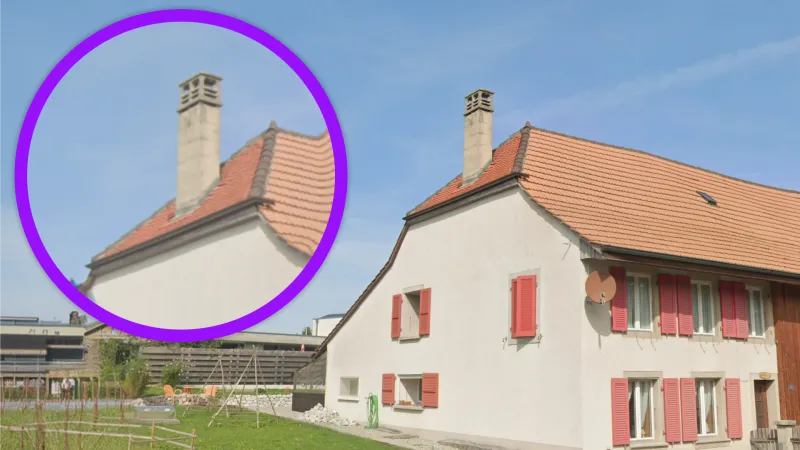
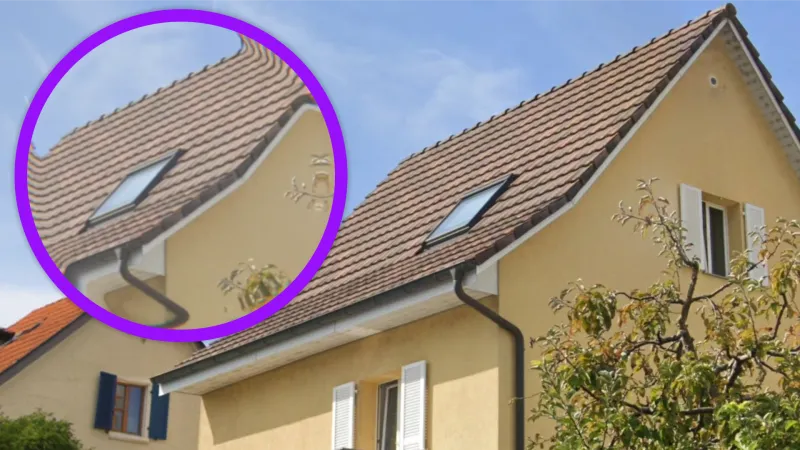
Chimneys located on the small gable roof of half-hipped roofs or very close to the gable on hipped roofs are particularly found in western Switzerland, especially in the cantons of Vaud and Fribourg, although exceptions can rarely be found elsewhere.
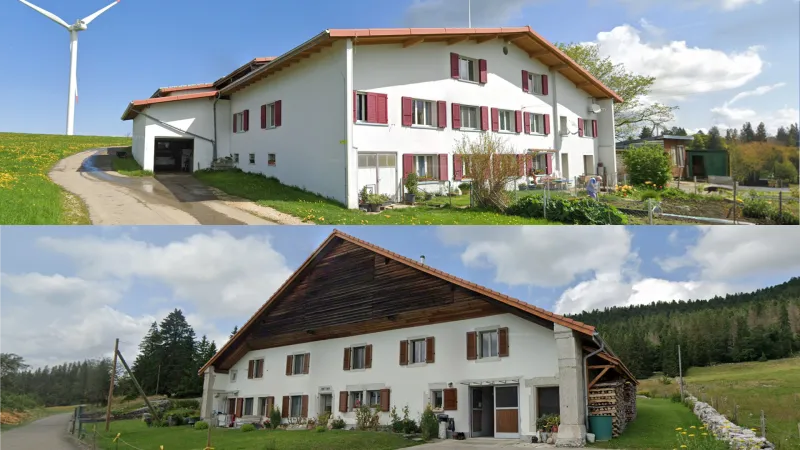
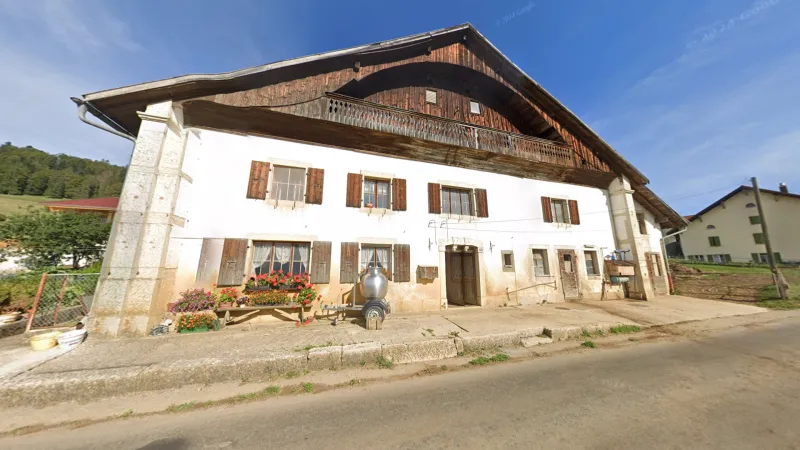
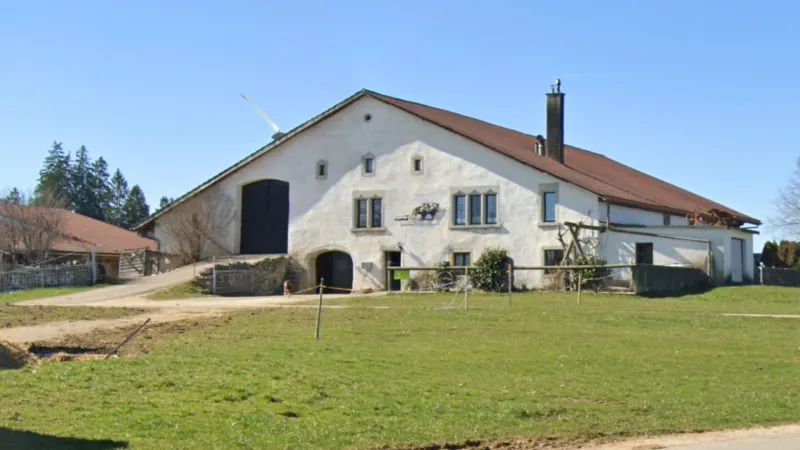
Wide houses with strikingly low-pitched roofs and often a large number of windows are frequently found in the cantons of Jura and Neuchâtel, as well as in the northern part of the canton of Bern. A variant with a half-hipped roof also exists.
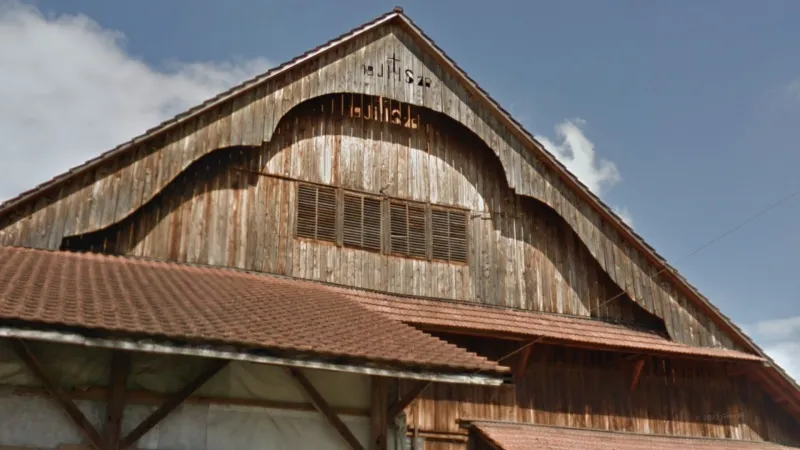
In the canton of Neuchâtel, these wide houses with low-pitched roofs will sometimes have a balcony integrated into the gable. You will also sometimes see wood-clad gable arches on these houses.
A devant-huis is a traditional, wide, recessed entranceway of a building found in the canton of Jura. There will often be vertical timber plank cladding above the entrance.
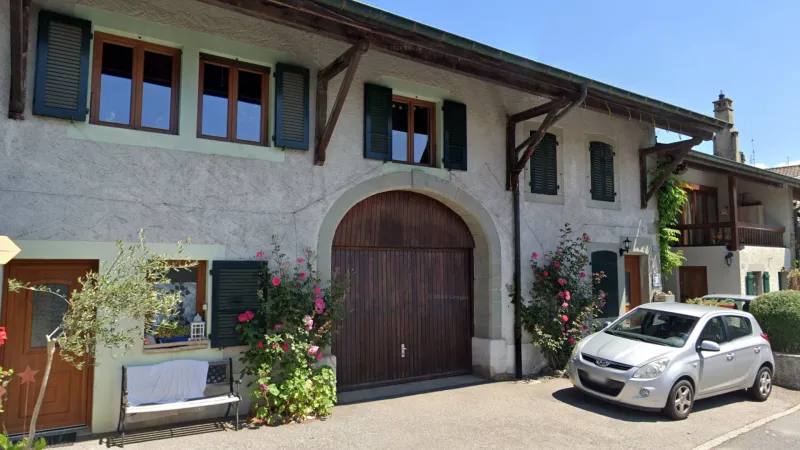
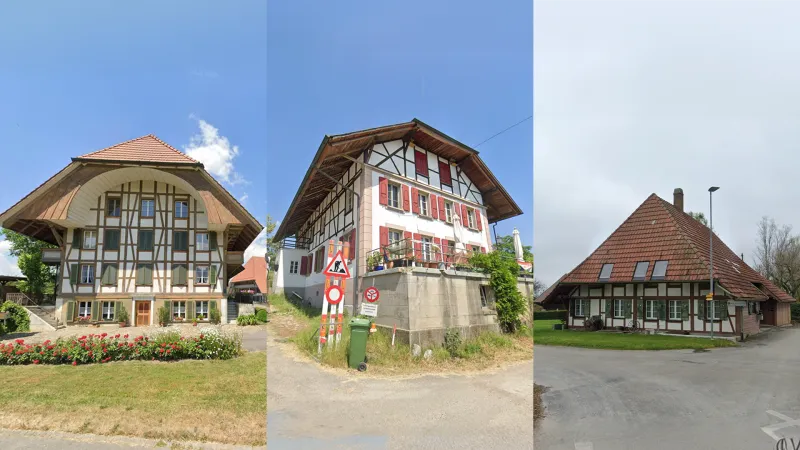
Houses with arched gates can be found in the north and west of the country as shown on the map. Traditionally serving as entrances to farmhouses and barns, they now often conceal modern apartments, shops or restaurants.
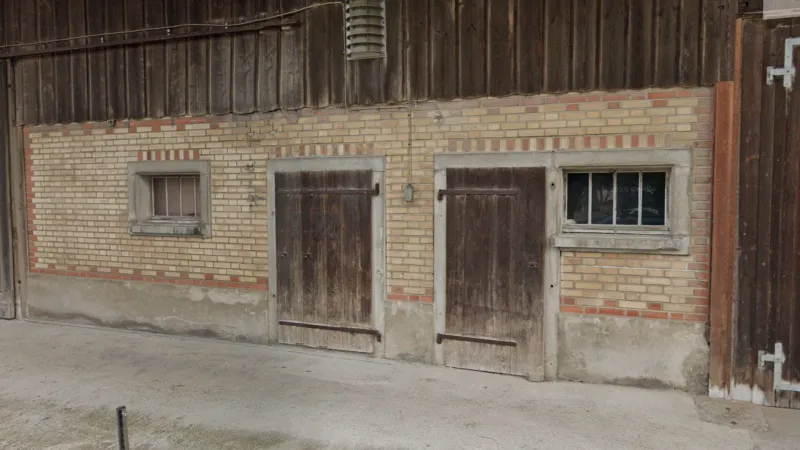
Pale yellow bricks are found in a broad strip stretching from Bern in the west to St. Gallen in the east. Buildings can be entirely constructed from these bricks. However, you can also often see the bricks used in conjunction with decorative red bricks and in otherwise wooden buildings.
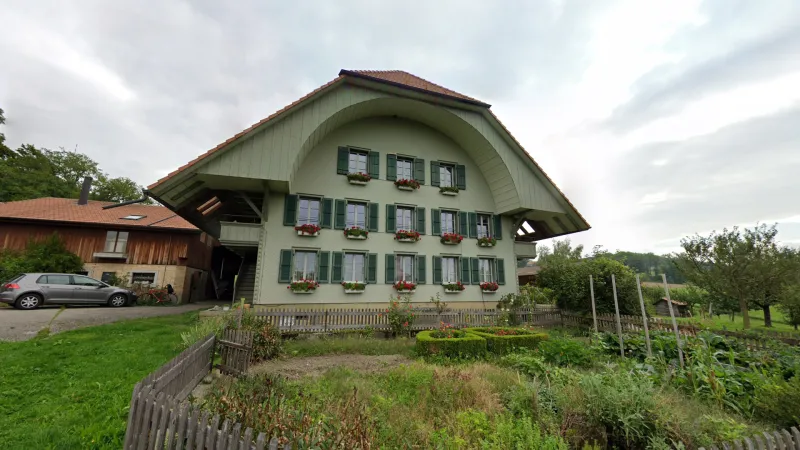
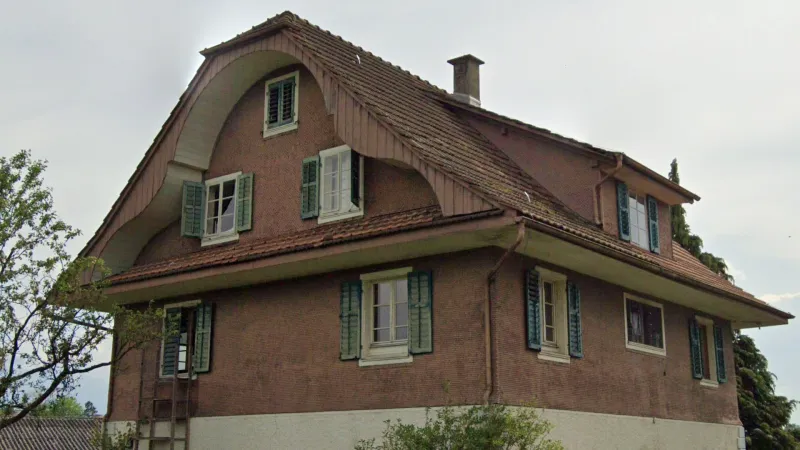
In the canton of Bern and neighbouring cantons, houses featuring half-hipped roofs with a thick arch under the gable, giving the house a bulky appearance, can be found.
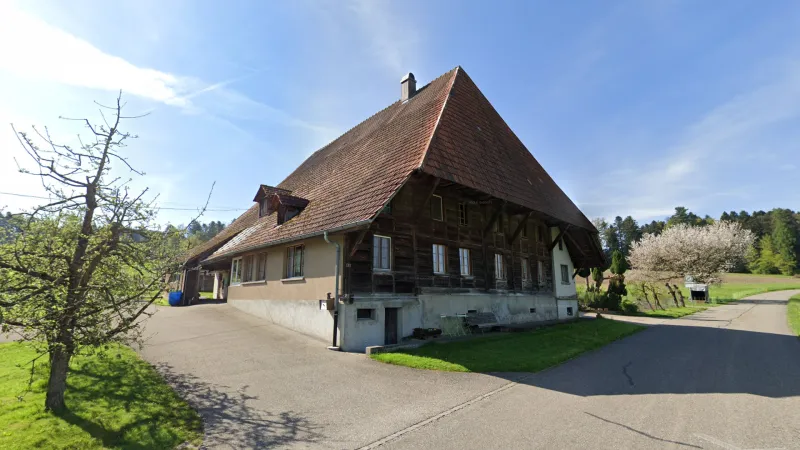
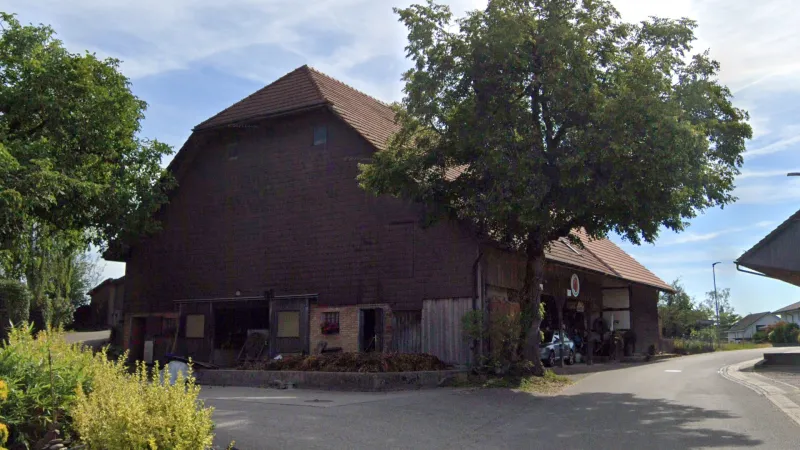
Strikingly wide houses resembling tents, with deeply overhanging roofs and a bulky overall appearance, can be found in the northern half of the canton of Bern.
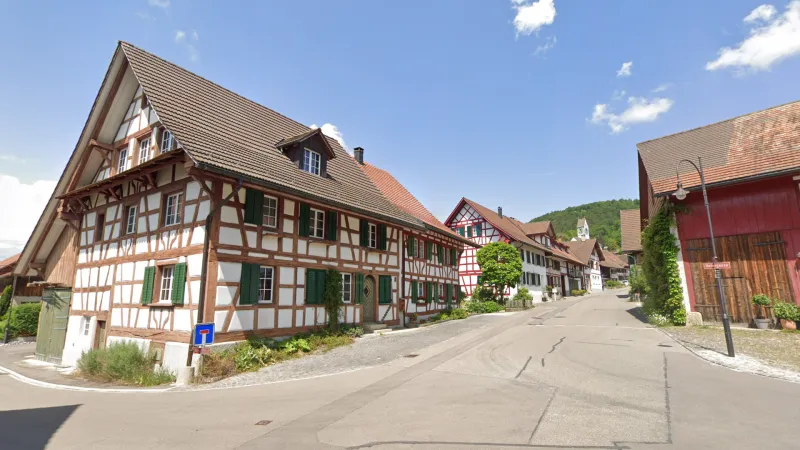
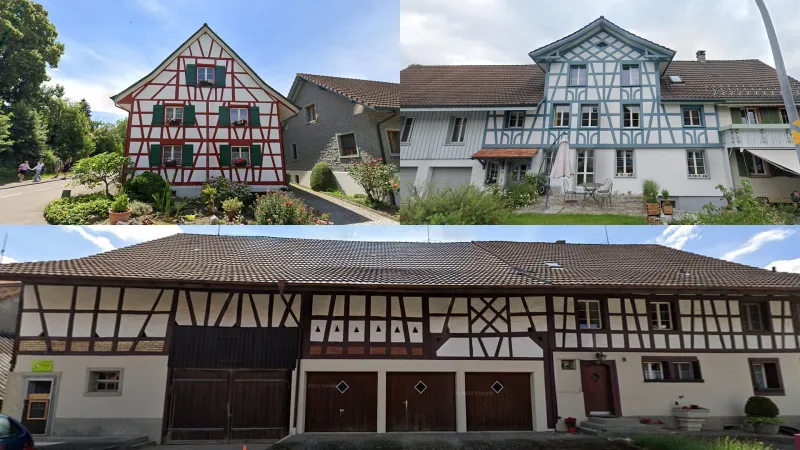
Timber frame houses are found in two main regions of Switzerland as shown on the map. There are rare exceptions elsewhere.
Gables in the canton of Lucerne commonly have arches similar to those you see in the canton of Bern. However unlike the simple semicircular arches in Bern, the arches are undulating.
Houses featuring multiple small roofs on the gable end can be found in the areas shown on the map, although can exceptionally be found elsewhere. The small roofs will sometimes also continue along the side walls of the building.
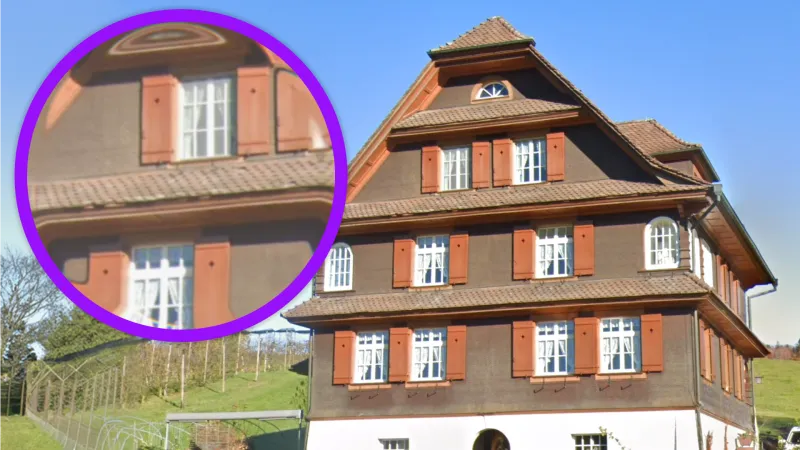
Houses with ‘miniature roofs' over windows are found in the area shown on the map. Sometimes these ‘miniature roofs' will span the whole wall and sometimes just the windows below them.
Downward-pointing finials at the ends of the load-bearing beams on gable roofs can be found in the areas shown on the map. They can take a variety of shapes, ranging from rectangular to ornamental forms.
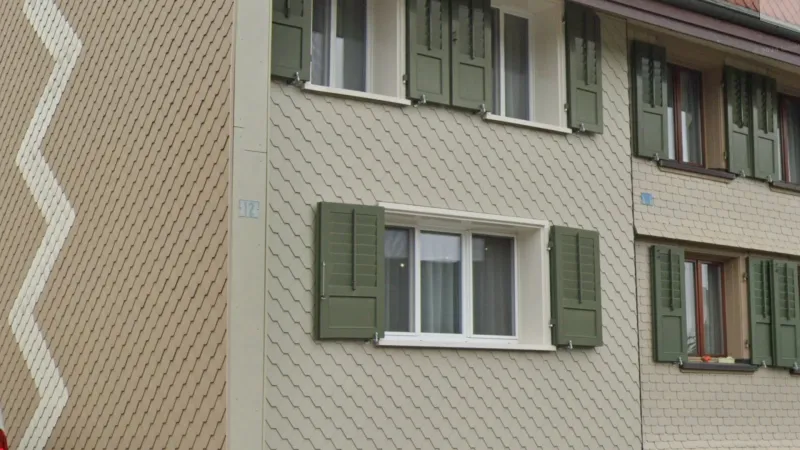
Shingle walls in a range of pastel colours are found primarily in the east of the country, becoming less common towards the west, although can be occasionally found anywhere. The shape of shingles can vary: round, rectangular, diamond and cone shapes all exist.
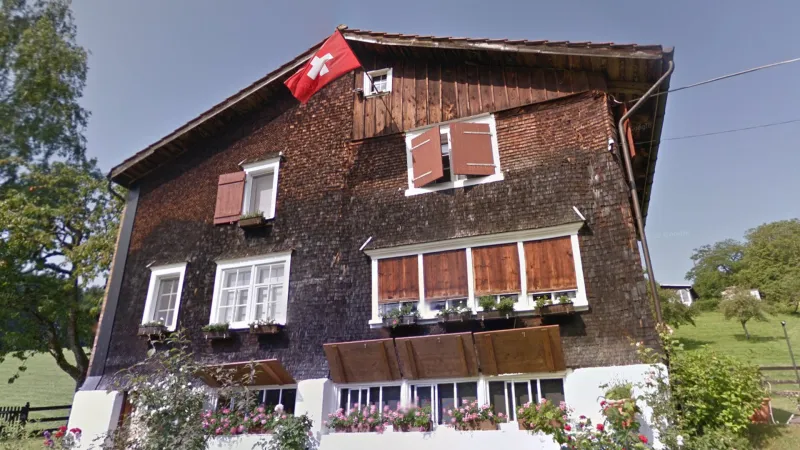
Traditional wooden shingle wall cladding is found across a central belt stretching from the canton of St. Gallen in the east to Valais in the west. The shapes of the shingles can vary and may be rounded or angular.
Double-pitched gable roofs, with the lower part of the roof at a shallower angle, can be seen in the area shown on the map.
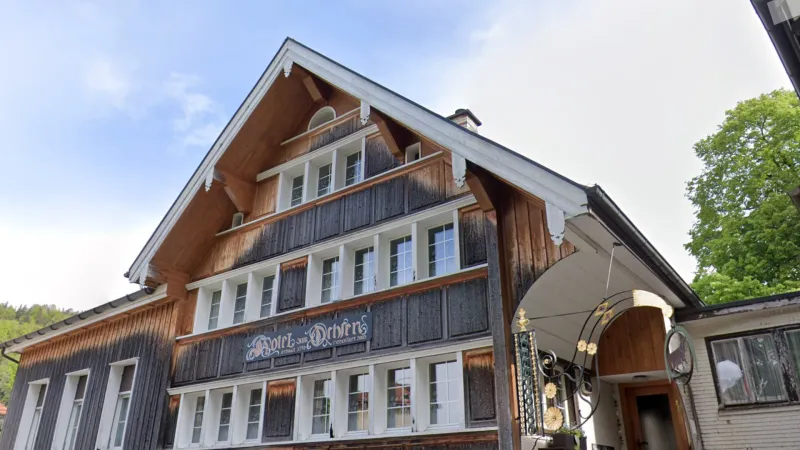
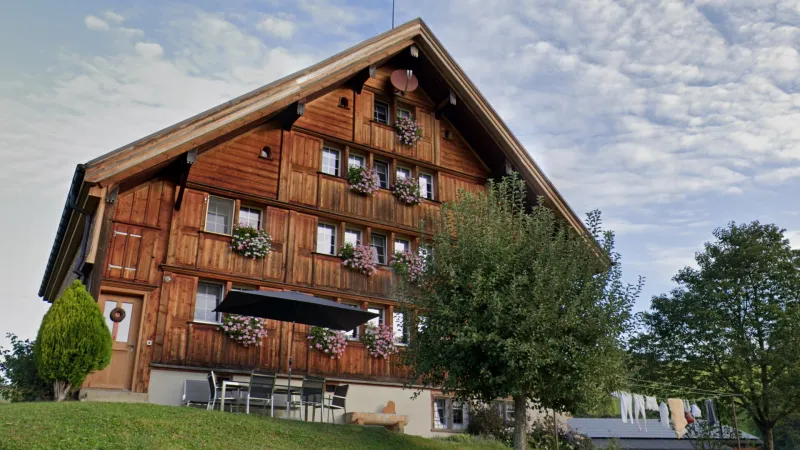
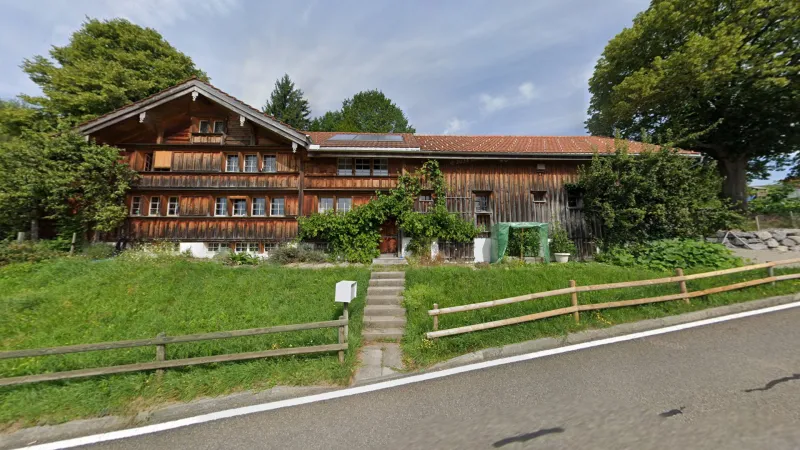
A very distinctive style of house is found in the Appenzell cantons and neighbouring St. Gallen. These houses have rows of sets of shutterless windows on the gable side of the house, with rectangular panels underneath and between the sets of windows. A ‘baroque’ variant of this style can be found, commonly in urban settings, with a distinctive curved roof shape and often decoration on the panels.
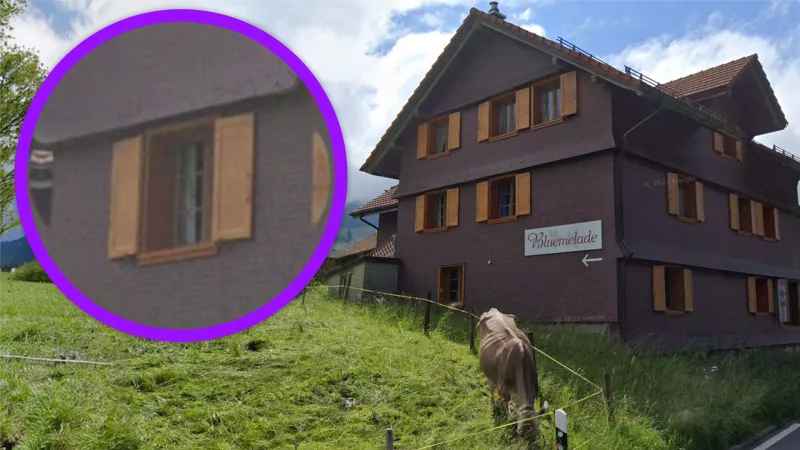
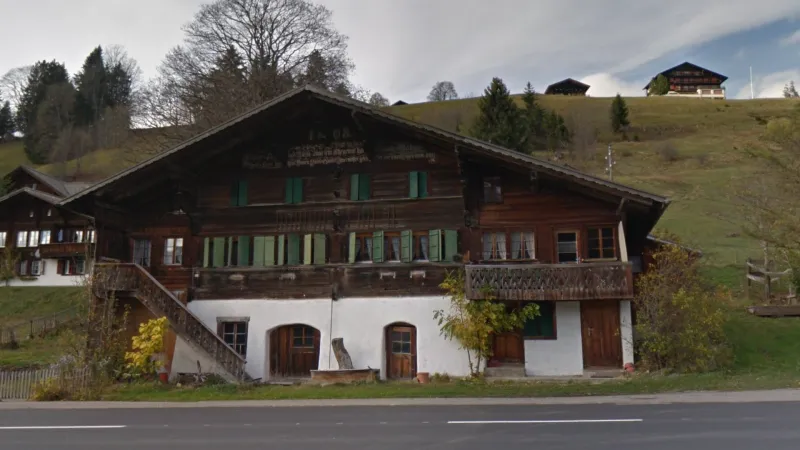
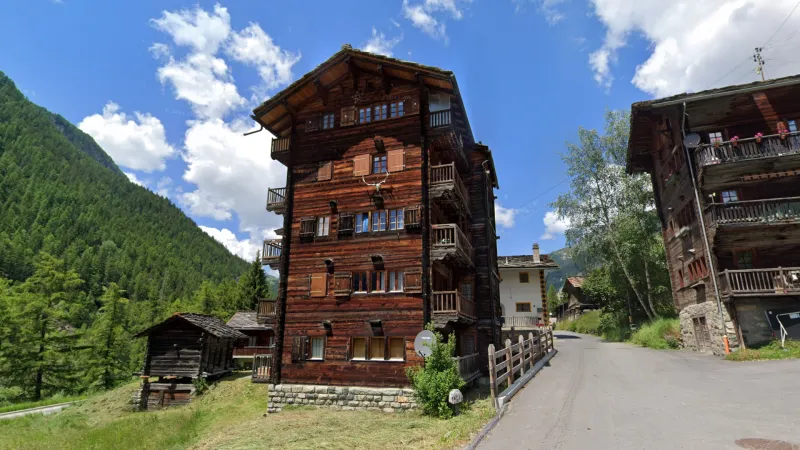
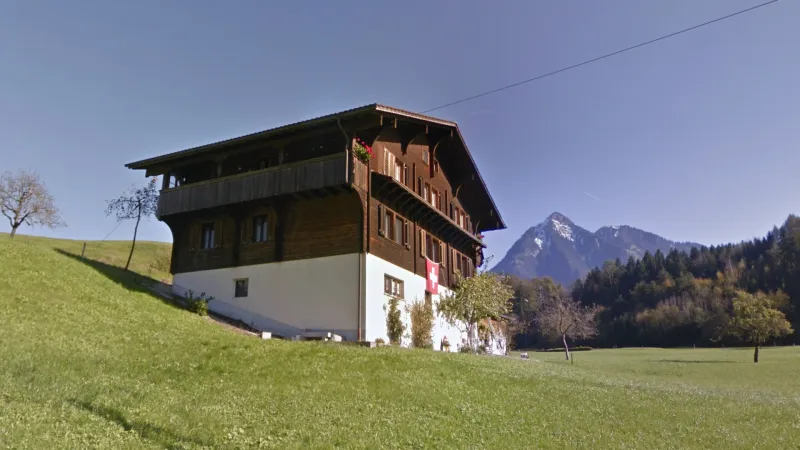
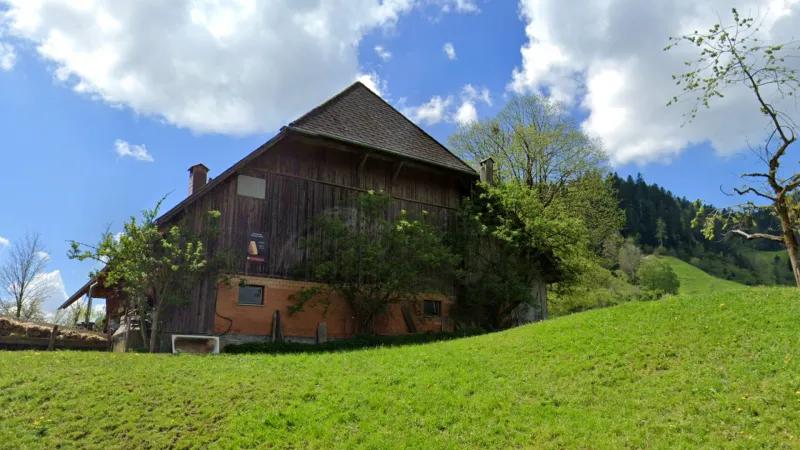
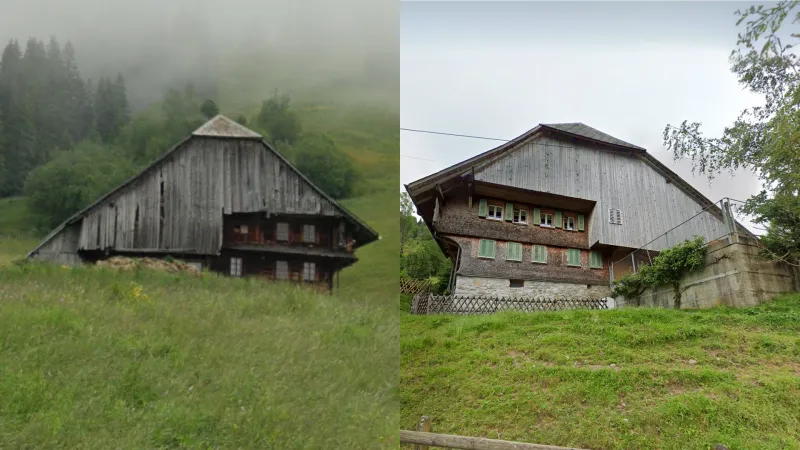
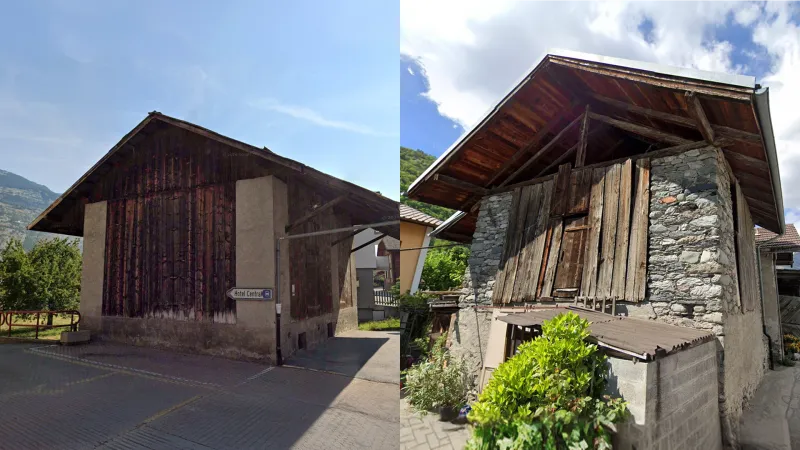
Dark-wood houses that are particularly wide can be seen in the southern parts of the cantons of Bern and Vaud and in northwestern Valais. Common features of these houses include:
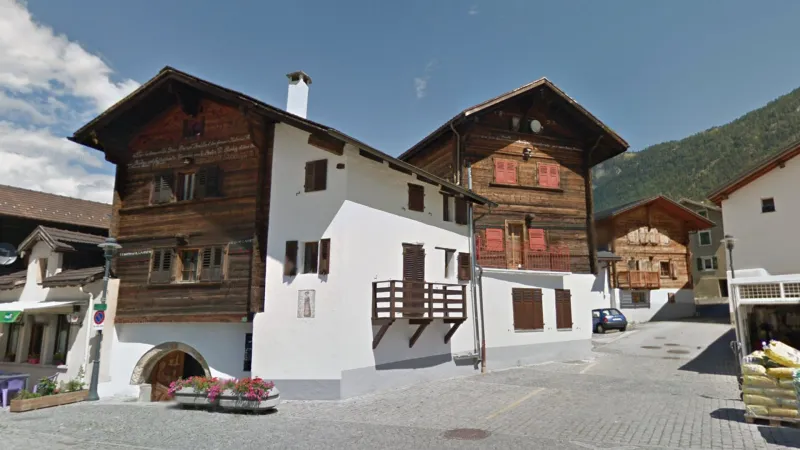
Houses blending timber and white-plastered walls are most common in Valais and northern Grisons, typically following a one-third to two-thirds ratio of either material.
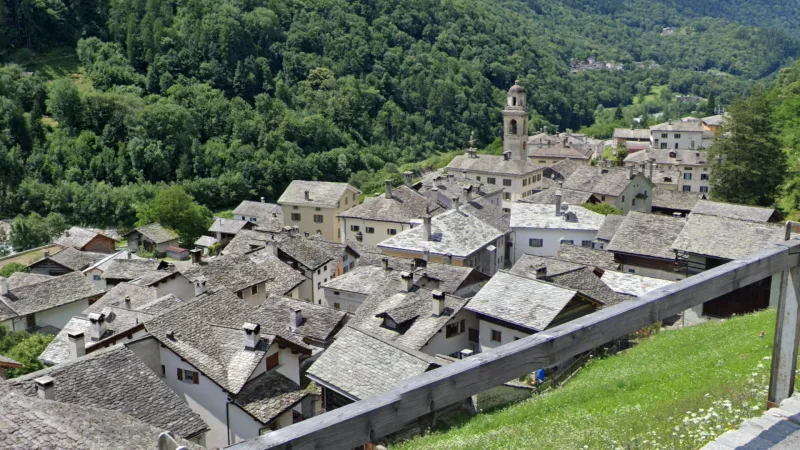
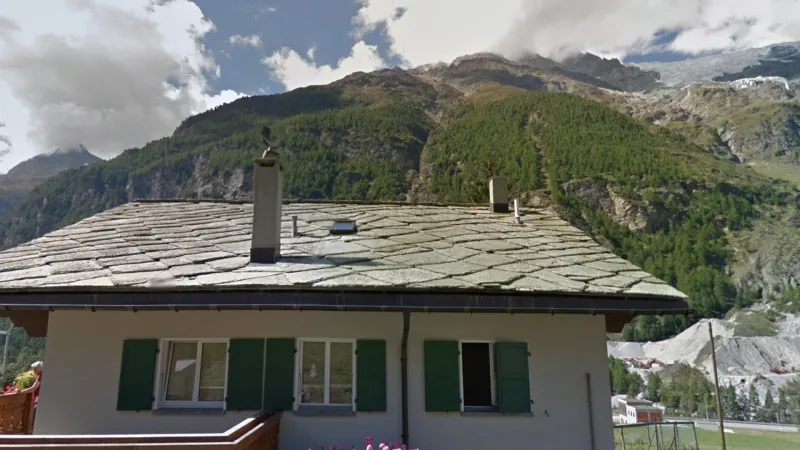
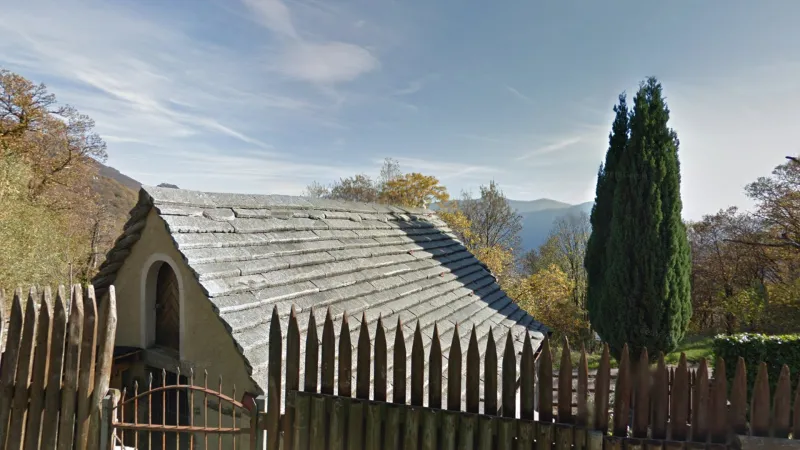
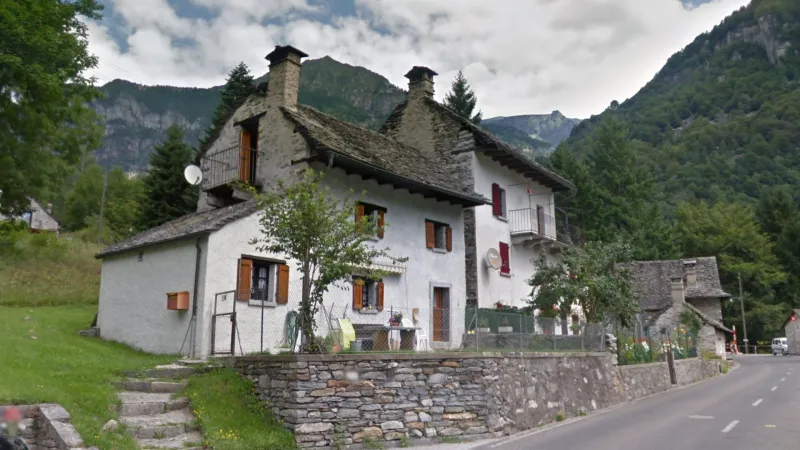
Slate roofs are commonly found in the three southern cantons of Valais, Ticino, and Grisons.
Roofs featuring large, diamond-shaped, slate slabs are found across central Valais.
In Ticino, slate roofs will sometimes be organised in neat rows of slate tiles, as opposed to the less regular pattern normal on other slate-roofed houses in Switzerland.
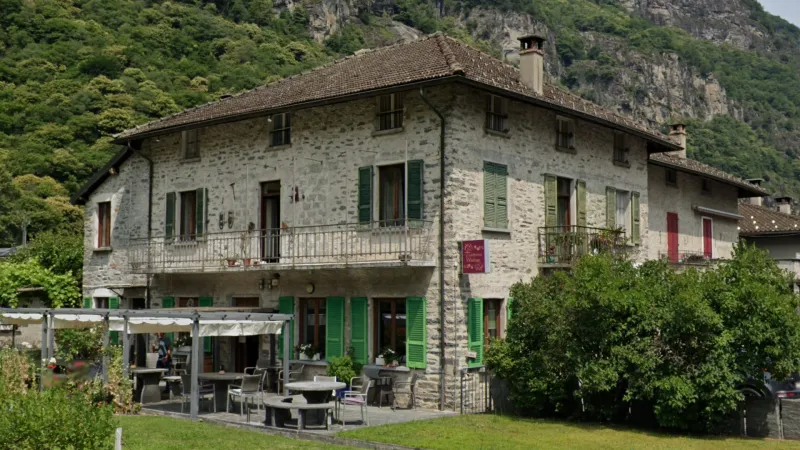
Buildings with walls made of irregular stones plastered with a thick, light-coloured mortar, often smeared over the stones, are found in Valais, Ticino and the Italian-speaking parts of Grisons.
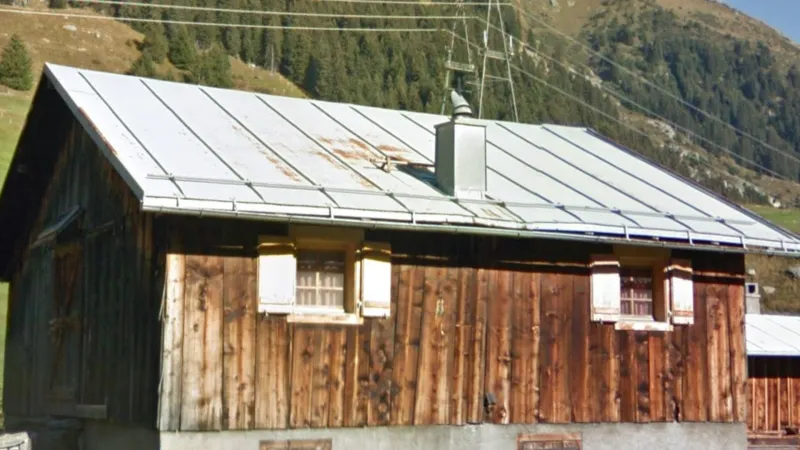
In Valais and Grisons, rectangular metal panels are sometimes used to roof houses and sheds. They are particularly found in the northwest of Grisons.
In the southernmost parts of Valais, notably around Zermatt and Evolène, you can sometimes find slate roofs featuring slate finials above the gables.
In the valleys of central Ticino, you will find houses with gable-end chimneys.
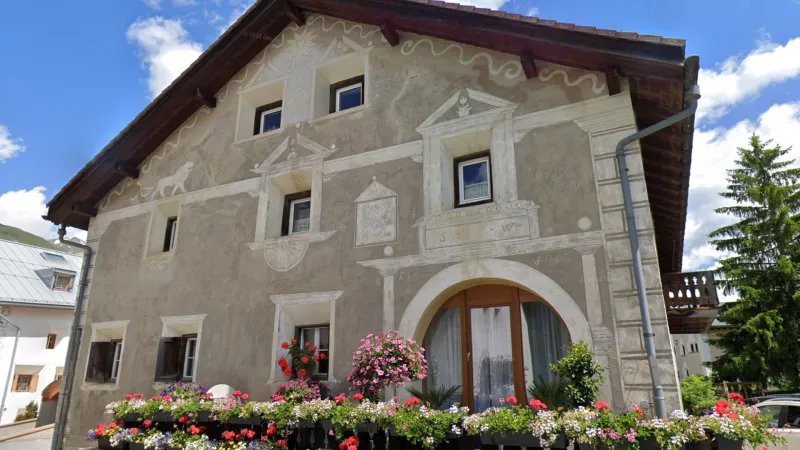
In Grisons, you will find the traditional decorative technique known as sgraffito, where intricate patterns or motifs are carved into the fresh, light lime plaster of house facades to reveal the darker layer of plaster beneath.
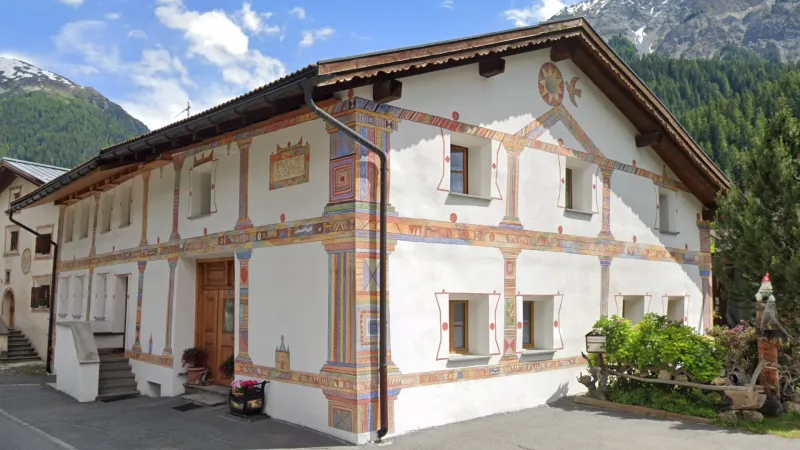
Val Müstair, in the far east of Grisons, paints its houses with a unique variant of Grisons sgraffito with more colours and a different style of designs. Normal sgraffito can also be found here
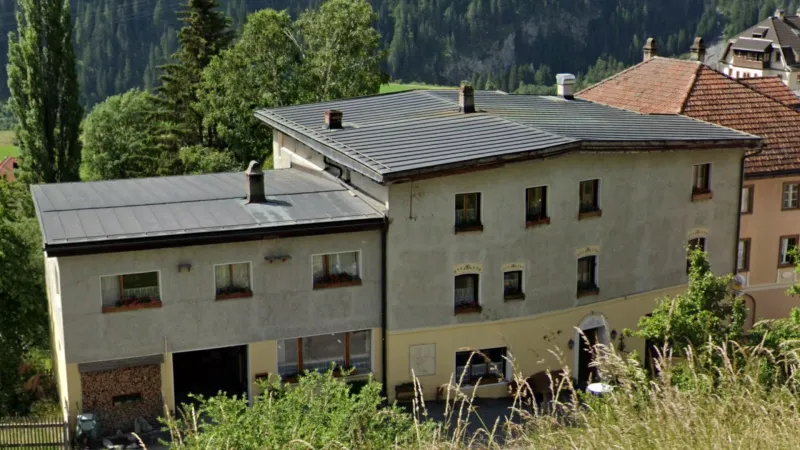
Most houses in Valsot, in the extreme east of the country, have very flat roofs with a barely noticeable slope. These houses can also be found in other nearby villages.
Barns
Barns are found throughout Switzerland and should always be viewed in conjunction with the surrounding architecture and landscape, as the differences are often subtle and certain elements appear nationwide.
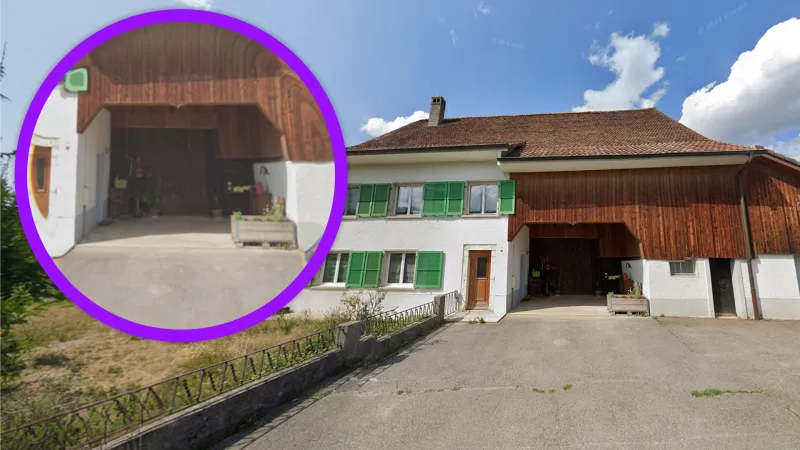
Barns in the cantons of Jura and Neuchâtel often have low-pitched roofs, mirroring the design of local houses. The barns often form part of the same building as the main house, although can be separate. Either version may feature large double doors for vehicle access.
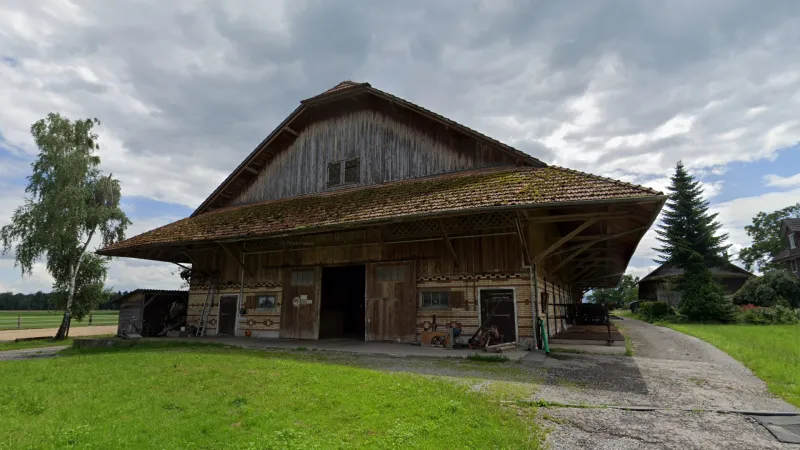
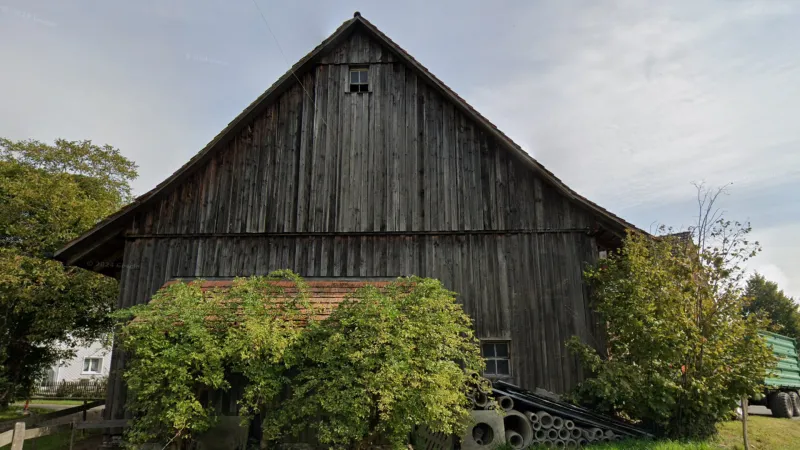
In the canton of Bern, the design of barns generally mirrors the local architecture. Barns in this region are typically bulky in appearance and frequently have half-hipped roofs. The roofs may also feature timber supports. A variant exists with an additional entrance for vehicle access. Sometimes the barn will be directly attached to the house.
Strikingly wide barns with tent-like roofs, resembling those found on houses in the region, can be found in the northern half of the canton of Bern.A variant of these barns exists with an additional covered entrance allowing vehicle access.
In the Entlebuch region, in the far south of the canton of Lucerne, you can find ‘cyborg’ house-barns with the house and barn ‘fused’ together. These buildings are particularly striking when viewed from the front.
In Zug and neighbouring cantons, you can find barns with a prominent transverse roof extending below the main gable.
Like houses in the same region, barns in the area shown on the map can sometimes have double-pitched gable roofs, with the lower part of the roof at a shallower angle.
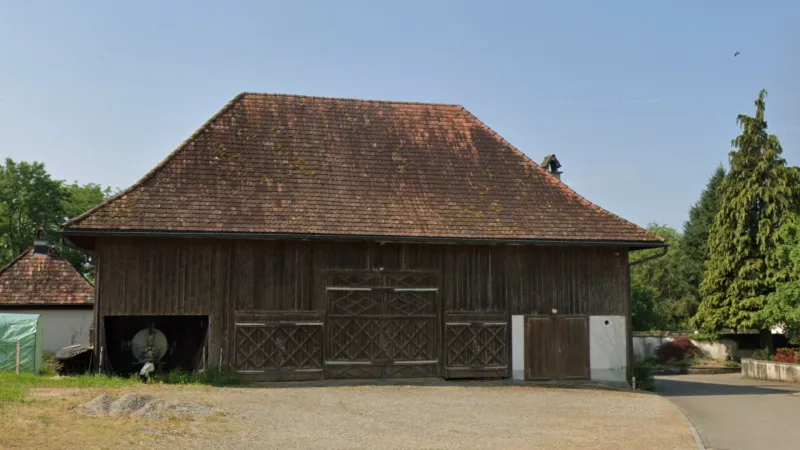
This diamond lattice pattern on the doors of barns is found in the cantons of Thurgau and Zurich.
Barns in Appenzell and the surrounding area are often directly attached to the main house in a T-shaped or L-shaped layout, making them often easy to recognise from a distance.
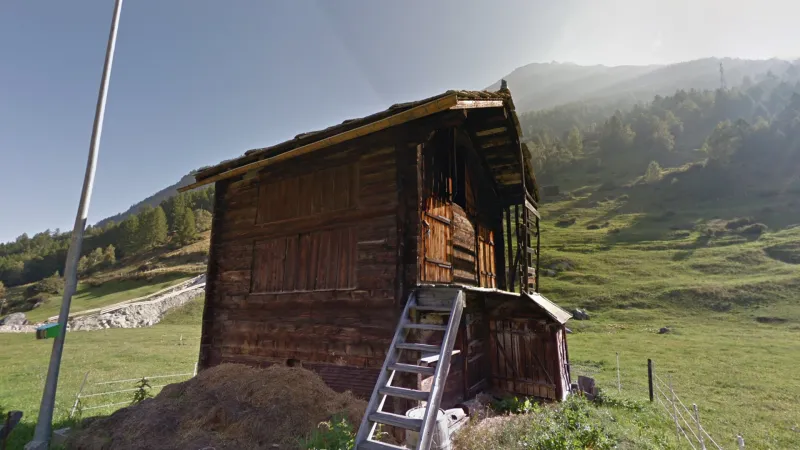
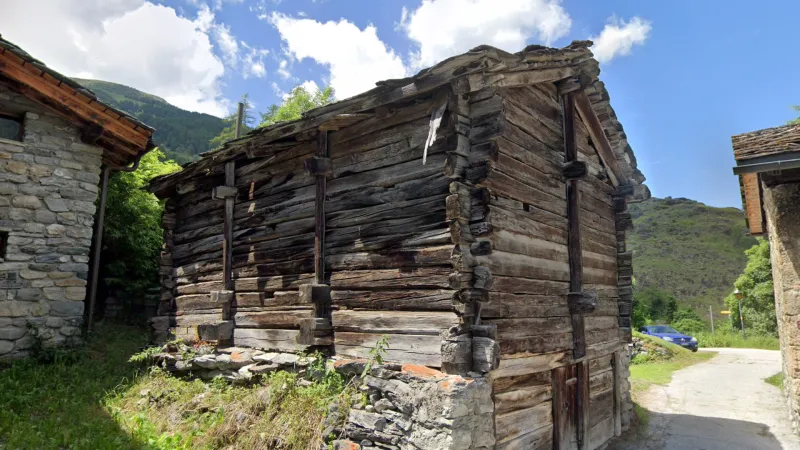
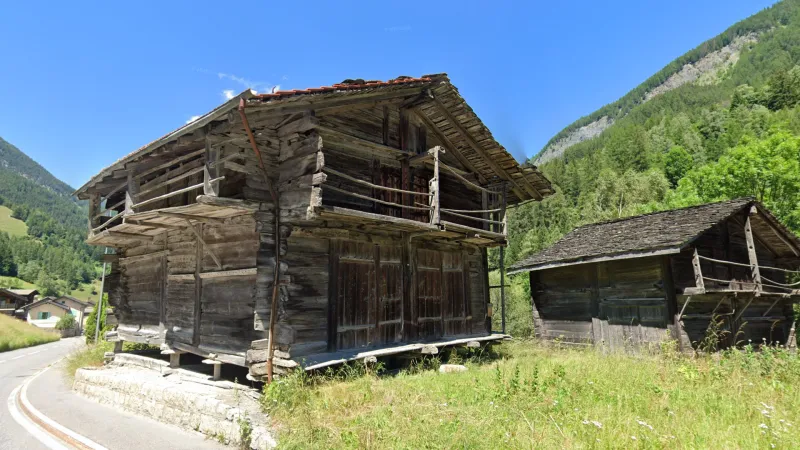
The walls of wooden huts in Valais are often made from a system of interlocking rectangular logs, easily visible from the outside of the building.
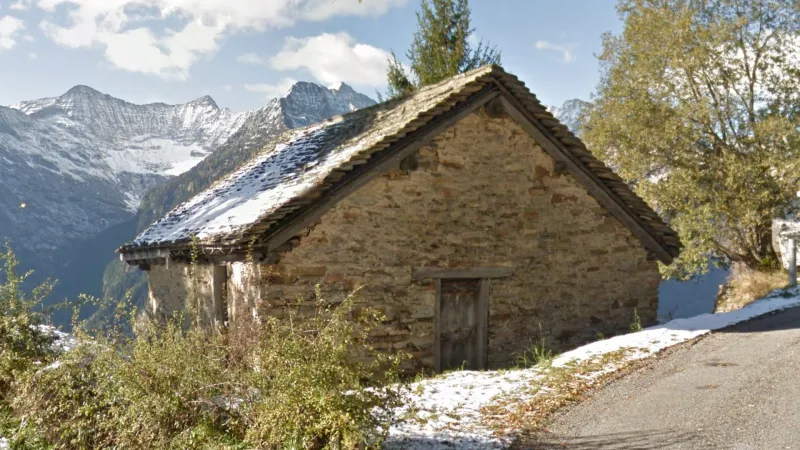
Huts in Ticino often have stone as their primary building material, with their roofs often made from slate tiles.
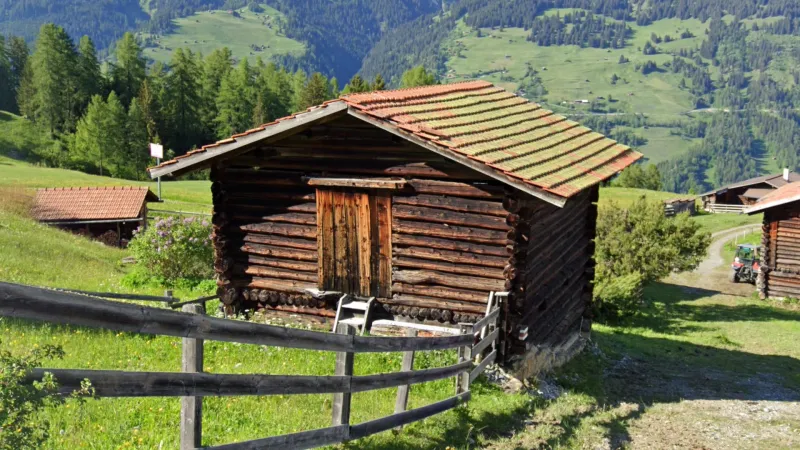
A key feature of huts in Grisons is the frequent use of round beams, rather than rectangular ones, either for the overall structure or just in the gable area. Huts with just rectangular beams can still be seen in this area.
Barns featuring a combination of wood and either concrete or stone can be found in Valais and Grisons. Typically, the concrete or stone elements are located at the corners of the barns. As with huts, exposed round beams are only found in Grisons.
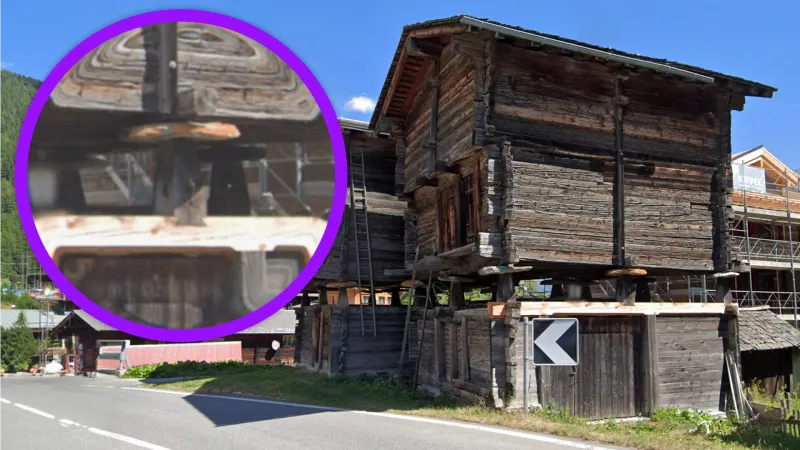
Raccards are the traditional raised wooden granaries of Valais. They are generally built on short stilts with a round stone slab on each stilt to guard against rodents.
These upper-floor wooden balconies are commonly seen on barns in southwestern Valais.
Churches & Religious Shrines
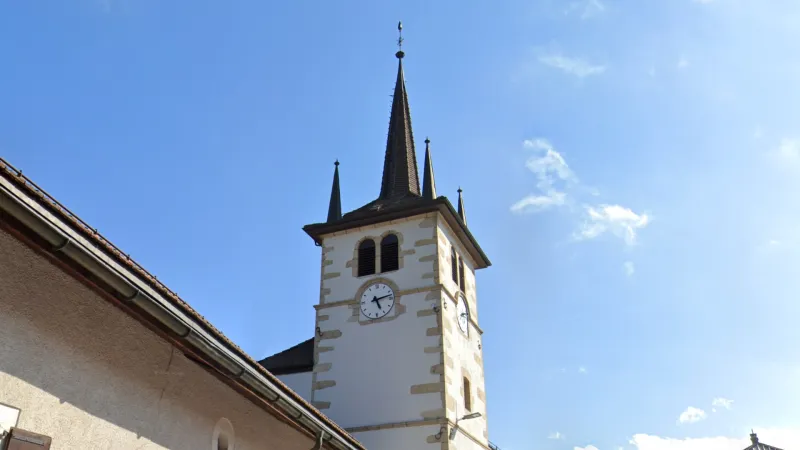
Church towers featuring multiple small spires surrounding a main spire are most common in the west of the country, particularly around Neuchâtel, although they can occasionally be seen elsewhere
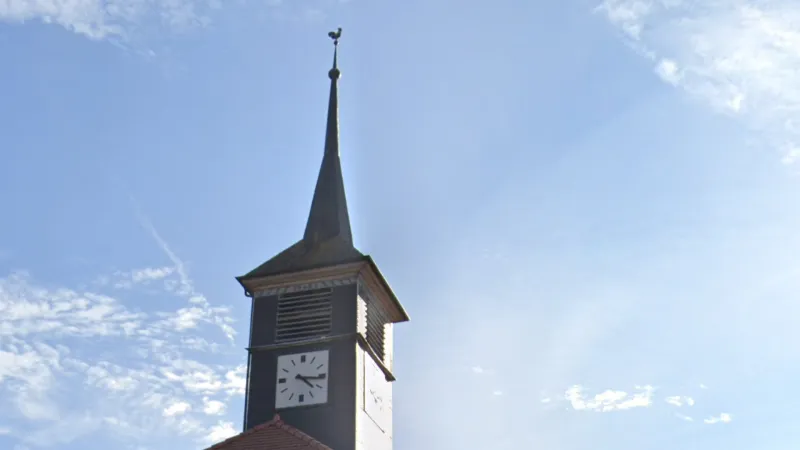
A rooster on top of a church steeple usually signifies a Protestant church and is a strong indicator for the French-speaking part of the country, although isolated examples can be found elsewhere.
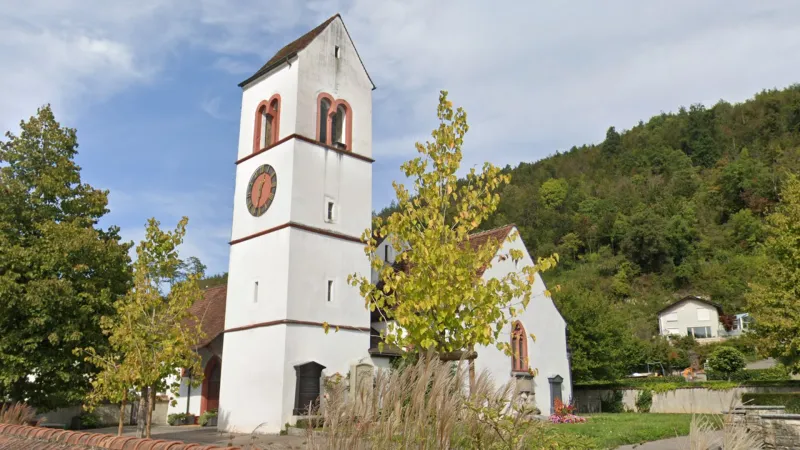
Church towers with a simple triangular gable shape are most frequently found in northern and central Switzerland.
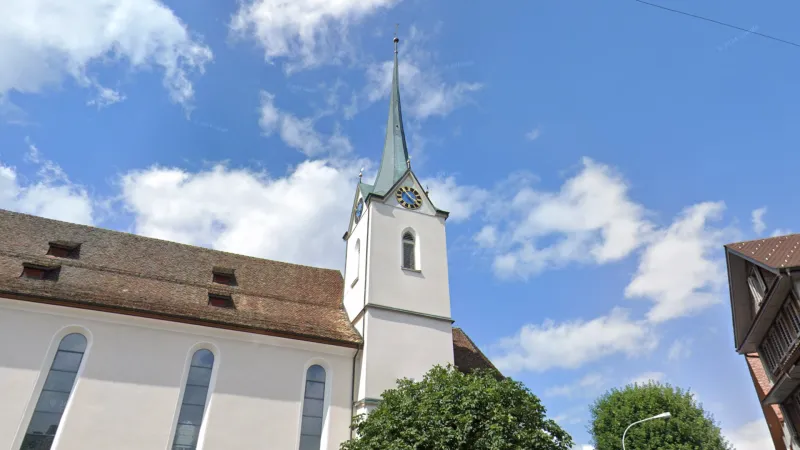
Church towers where the tower walls form triangular gables, pointing up, on multiple sides, occur most frequently in the northeast.
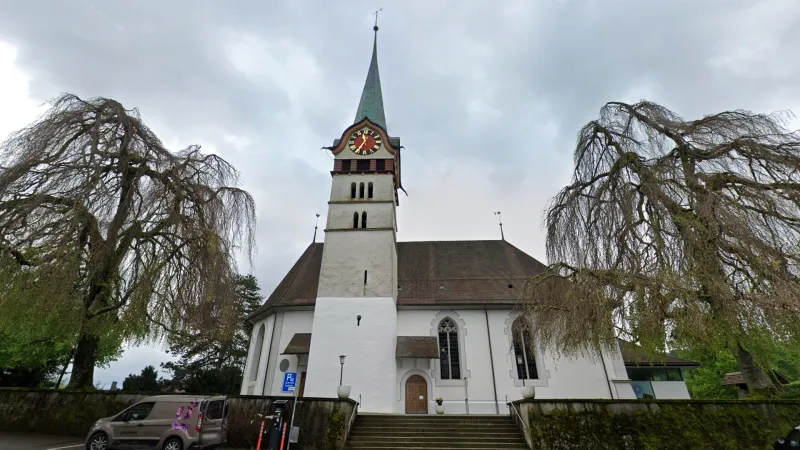
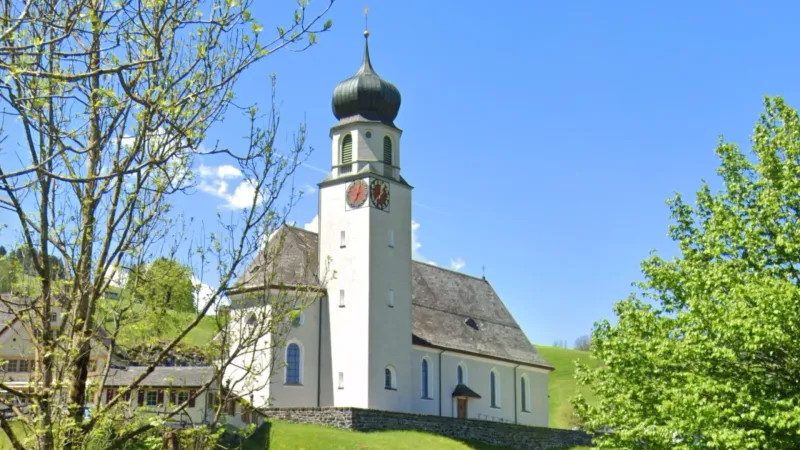
Church towers featuring an onion-shaped gable structure around a clock face can be found in a central band from the canton of Bern in the west to Glarus in the east.
Churches with onion domes are a strong indicator for the non-French-speaking regions of Switzerland, although exceptions exist elsewhere.
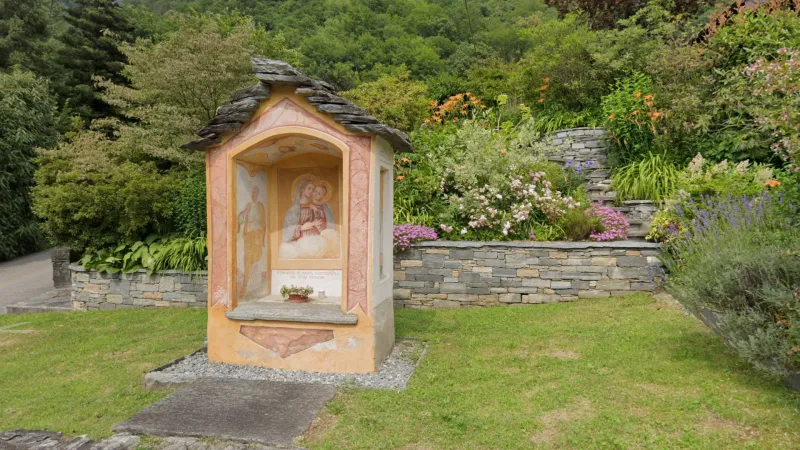
Catholic shrines in Ticino will often be colourful and feature religious imagery. Shrines in this area may also have slate roofs.
Infrastructure
Bus Stops
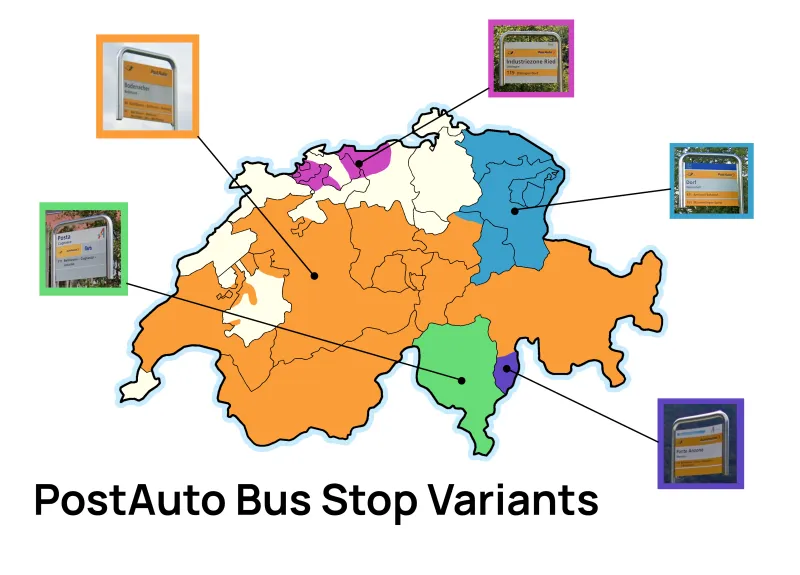
PostAuto (known as “CarPostal” in French, “AutoPostale” in Italian and “AutoDaPosta" in Romansh) is the largest bus company in Switzerland. There is a standard yellow-and-white design for PostAuto bus stops used in much of central and southern Switzerland. However, there are variants on this in other regions:
In eastern Switzerland, there is a blue stripe along the top.
In the northern areas shown on the map, there is white stripe along the top.
In southwestern Grisons, there is also a white strip along the top, but there is a logo with the letter ‘A’ on the top right and Italian will be used on the sign.
In Ticino, there is a different design with grey stripes and a logo with the letter ‘A’ on the top right.
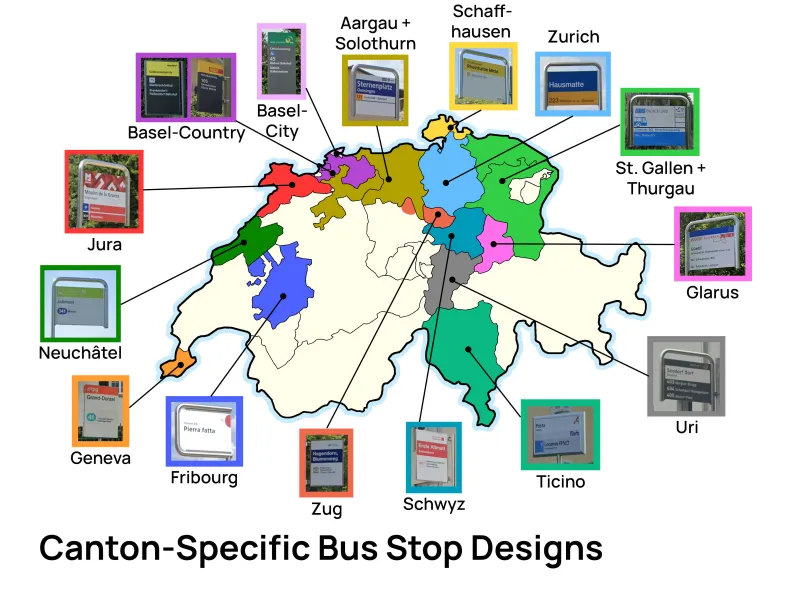
Many bus companies follow cantonal borders and have distinctive designs:
In Fribourg, you can see a design with a red semicircle in the top right.
In Geneva, you can see a design with an orange stripe at the top. This variant is also common.
In Neuchâtel, you can see a design with a light green stripe at the top.
In Basel-Country, you can see two different thin, dark designs with a yellow stripe at the top: one featuring the word "AutoBus" and one featuring the word "BLT" at the top.
In Basel-City, you can see a thin, dark design with a green stripe at the top.
In Aargau and Solothurn, you can see a design with a blue stripe.
In Schaffhausen, you can see a design with a yellow stripe at the top.
In the canton of Zurich, you can see a design with a fat blue section at the top, which will usually have a yellow or white bottom section, but may be other colours inside cities.
In St. Gallen and Thurgau, you can see a unique design with a blue bus and a blue section on the bottom.
In Glarus, you can see a design with the red ‘Glarner Bus’ logo on it and a blue stripe along the top. However, this blue stripe is sometimes missing.
In Uri, you can see a design with black sections on it, although in older coverage you can sometimes see this variant.
In Ticino, you can see a boxy grey design with a logo with the letter ‘A’ in the top right.
In Schwyz, you can see a thin design with a red stripe.
In Zug and northeastern Aargau, you can see a thin design with a blue stripe.
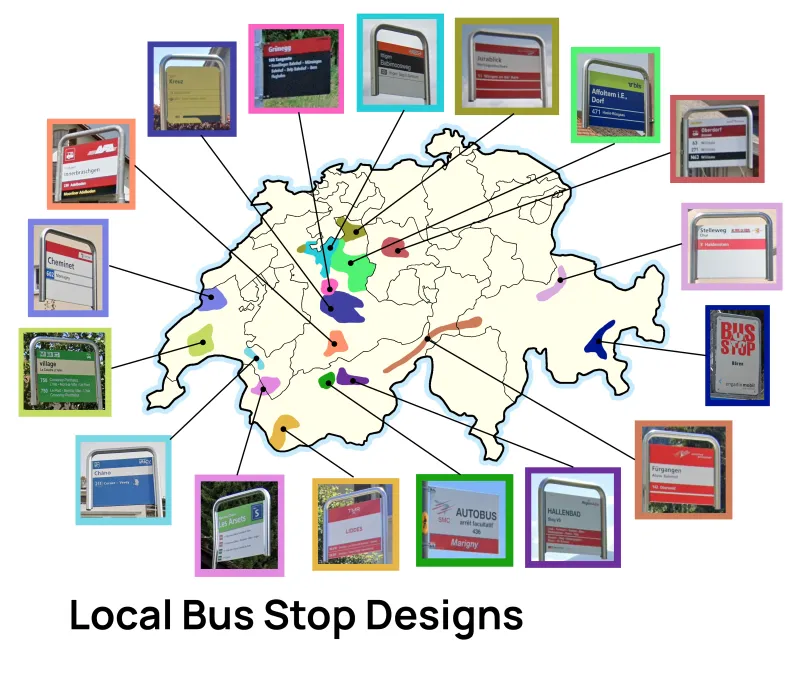
There are a large number of different regional bus stop designs. The following are some of the ones you are most likely to encounter:
In and around Thun, you can see a yellow design with a black logo resembling a pan in the bottom right.
In and around Münsingen, you can see a black design with a red section at the top.
North of the city of Bern, you can see a design with an orange stripe above a black section.
In the northeast of the canton of Bern, you can see a design with multiple red stripes. This design can rarely be seen elsewhere in the canton.
In the eastern parts of the canton of Bern, you can see a blue design with a lime green stripe at the top.
In the central parts of the canton of Lucerne, you can see a design with a dark red stripe
Around Chur, you see a minimalist design, with colorful stripes (red in the image, but can be any colour).
In and around St. Moritz, you can see a design with the words ‘BUS STOP’. A similar design will be found in Chur, but it will not feature the word ‘engadinmobil’ at the bottom.
In and around Andermatt, you can see a red design with a mountain logo in the centre top.
In the German-speaking parts of Valais west of Visp, you can see a design with stripes at the bottom (they are red in this example, but can also be other colors).
Northwest of Sierre, you can see a design with a red section at the bottom and the word ‘AUTOBUS’.
In southwestern Valais, you can see a red design with the letters ‘TMR’ in top centre.
On the border between Vaud and Valais, you can see a design with a green section at the top. This alternate design is also common.
Between Vevey and Villeneuve on the shore of Lake Geneva, you can see this blue design. You can also see this bus shelter design.
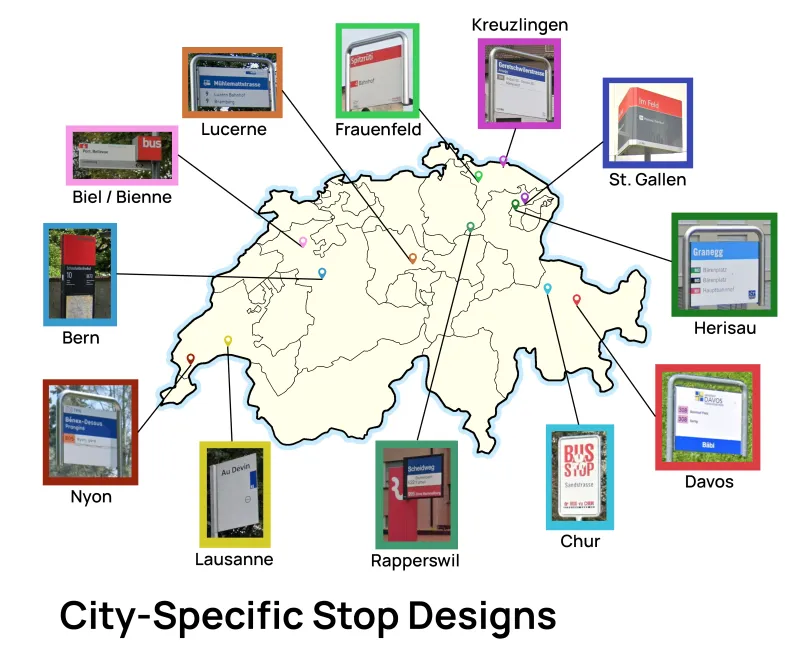
In and around Nyon, you can see a design with a blue section (similar to the design found in Aargau and Solothurn)
In the city of Bern, you can see a black design that is a full column with a red section at the top.
In Biel/Bienne, you can see a distinctive design with a red box intersecting the sign.
In the city of Lucerne, you can see a wide design with a blue stripe.
In Frauenfeld, you can see a design with a red stripe at the top.
In Kreuzlingen, you can see a design with a blue stripe at the top.
In St. Gallen, you can see a unique triangular design with a red and a black section.
In and around Herisau, you can see a design with a light blue section.
In and around Davos, you can see a design with a blue section at the bottom.
In Chur, you can see a design with the words ‘BUS STOP’. A similar design is used in and around St. Moritz.
In Rapperswil, you can see a design with a thick pink post.
Bollards
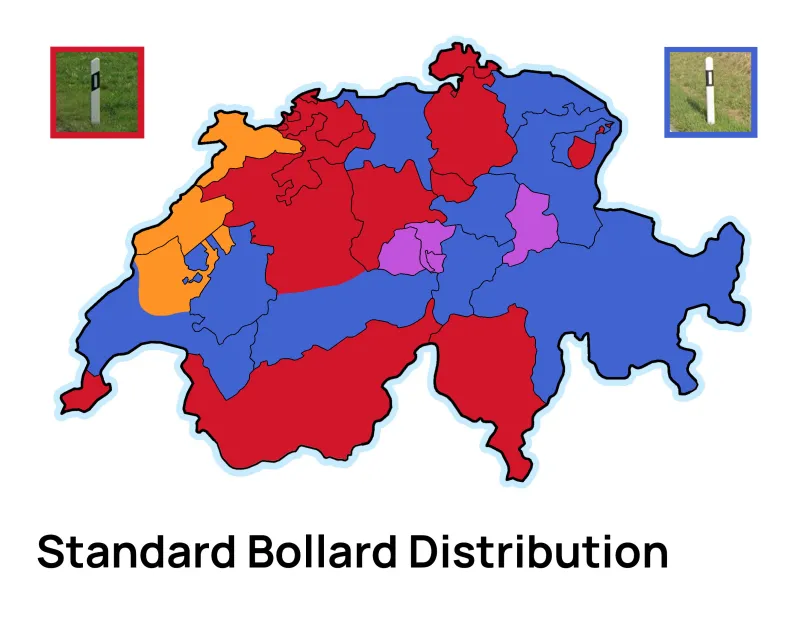
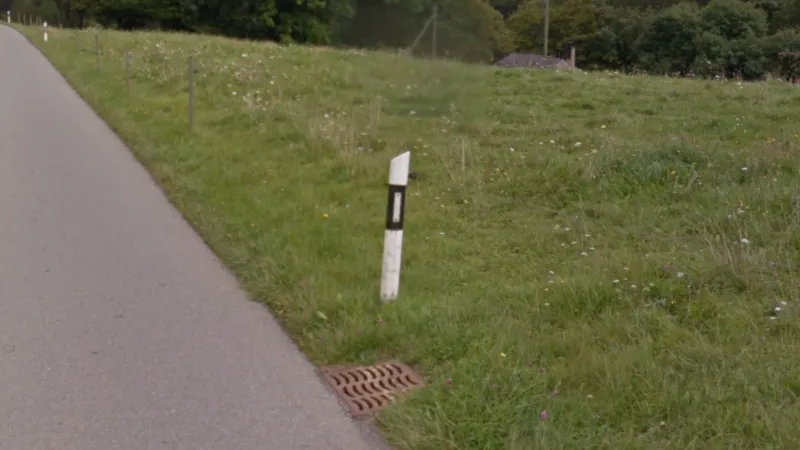
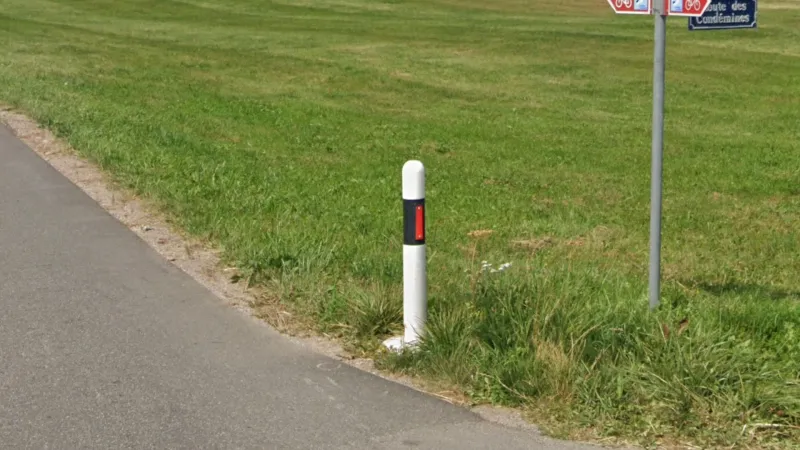
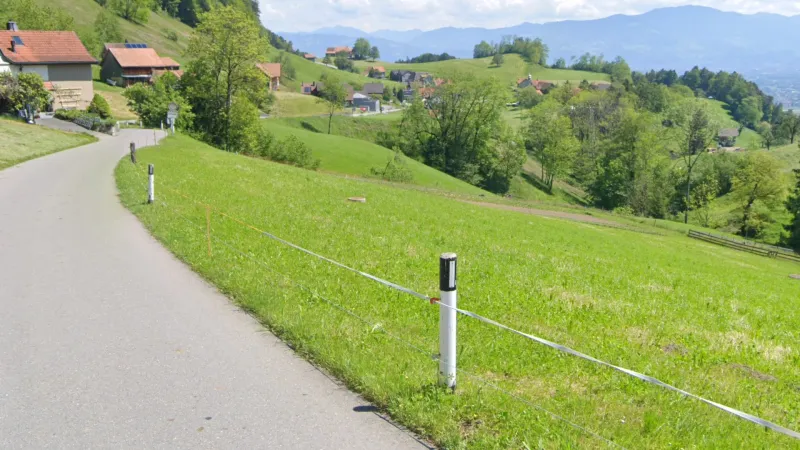
There are two main types of Swiss bollard: flat and round. Their distribution follows cantonal borders, although exceptions can occur and this distribution does not apply on major highways. Areas with the flat type are shown in red and areas with the round type in blue. Areas marked in purple have an even distribution of both types, while areas marked in orange have mostly flat bollards, but with a significant minority of round ones.
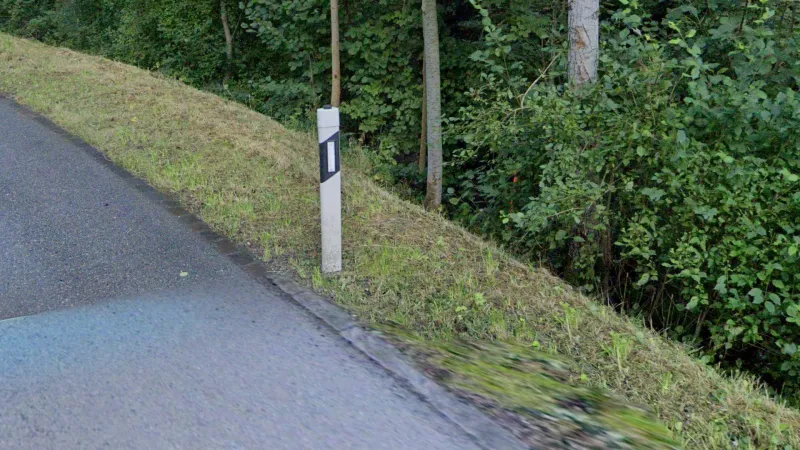
Bollards with a white cap with a small black button on top are most common in the northern Jura Mountains, but they can be found anywhere in the country.
Thin, round, wooden bollards with a slanted top can, uncommonly, be found in older coverage in Vaud.
Standard round bollards with a red reflector can rarely be found in the canton of Fribourg.
These round wooden bollards are found in these two exclaves of Appenzell Innerhoden.
Guard Rails
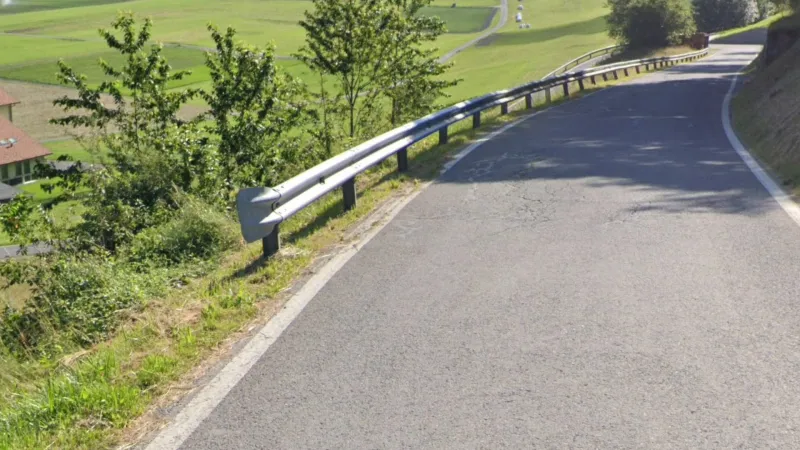
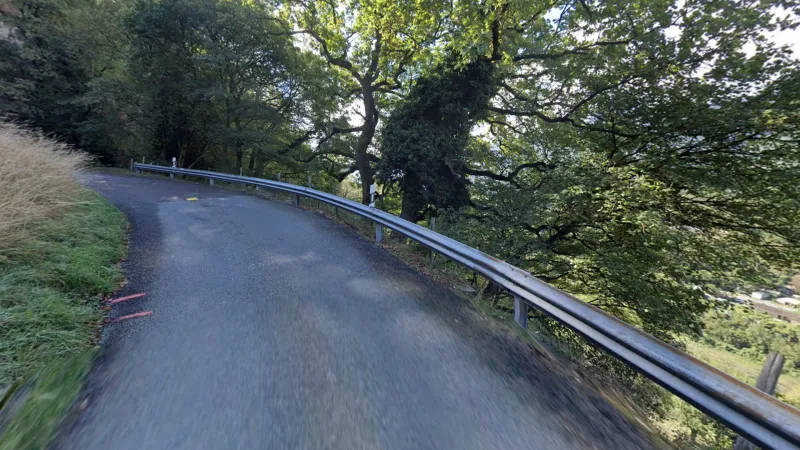
‘Italian’ guardrail endings are commonly found in Vaud and Valais and, to a lesser degree, in the cantons of Fribourg and Geneva.
This variant on the standard A-type guardrail, with an extra section above and below the usual guardrail, is found in the same areas that you see ‘Italian’ guardrail endings. These guardrails will also often be a lighter colour than the guardrails you see elsewhere.
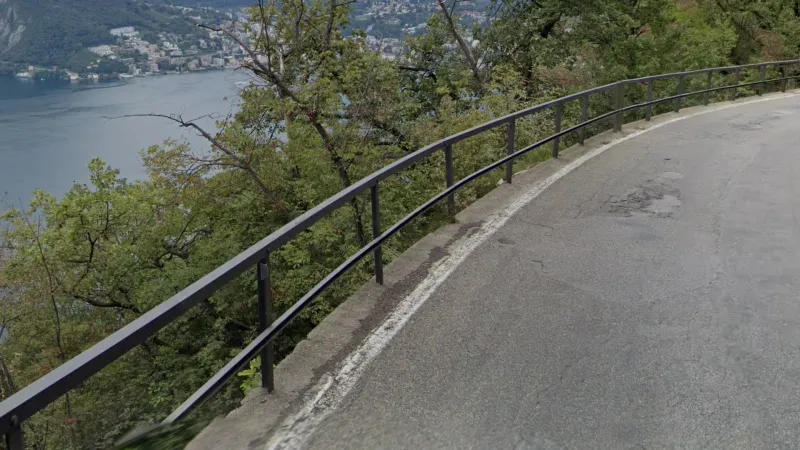
Roads in Ticino commonly have guardrails with two horizontal metal bars, the top one being square and the lower one having a continuous indent along its length. The end of the guardrail will often be angled.
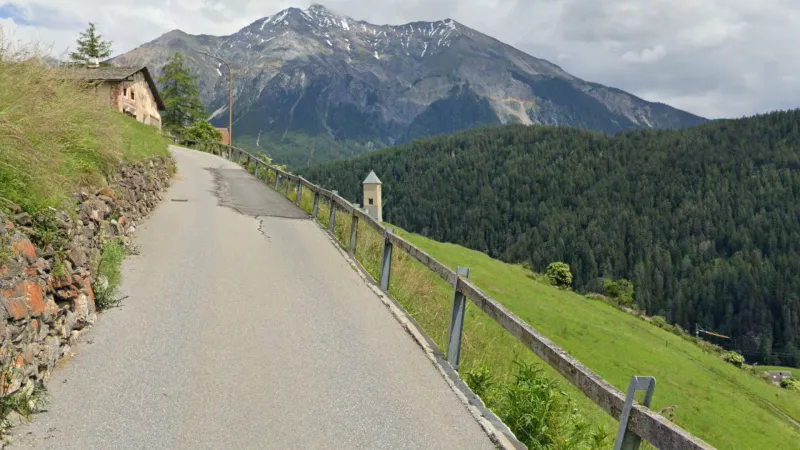
Guardrails with metal posts supporting a square wooden beam are most common in Grisons, with some exceptions in neighbouring St. Gallen and Ticino.
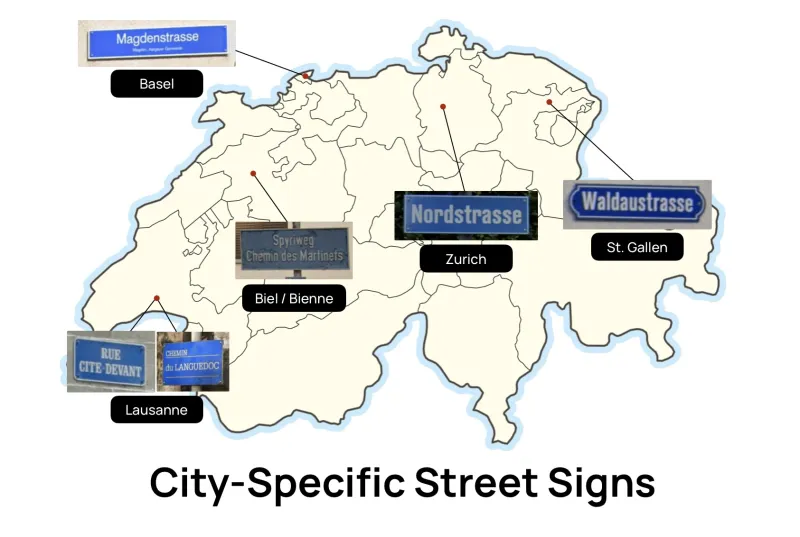
Basel street signs usually include a second, smaller line of text beneath the street name. While this can occasionally be found in other cities, this extra line appears on virtually every street sign in Basel. The signs are also frequently mounted inside a distinctive frame.
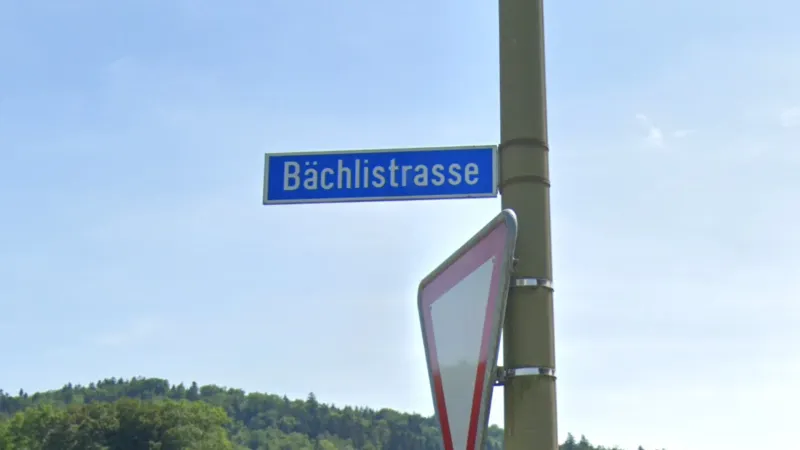
Flat, unindented street signs (of any colour) featuring a border can be found across the whole country, but are much more common in eastern cantons.
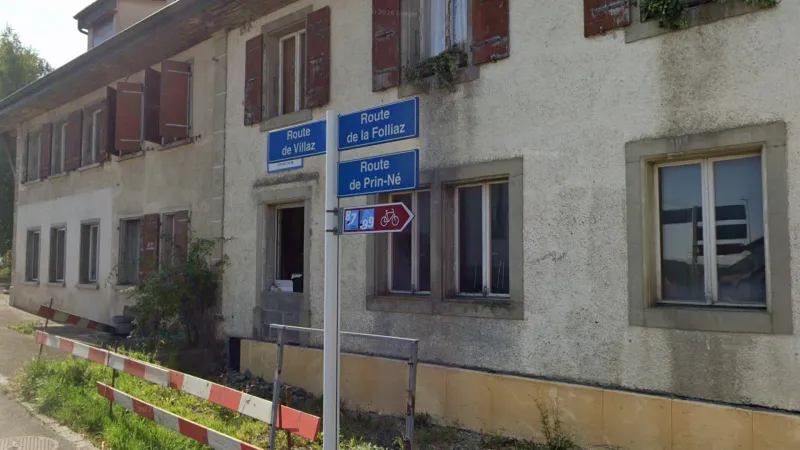
Street signs (of any colour) with notched corners can be commonly found in Vaud and in western Valais and nearby areas in neighbouring cantons.
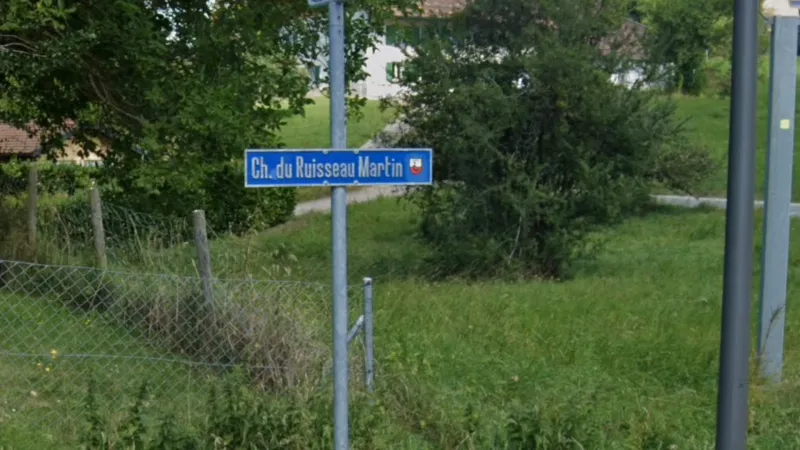
Street signs (of any colour or shape) featuring a coat of arms can be found in Vaud and western Valais.
Street signs with this distinctive modern font and thin white border, often on a white metal signpost, are commonly found in the canton of Fribourg. The colour can vary but is usually blue or red.
Directional Signs
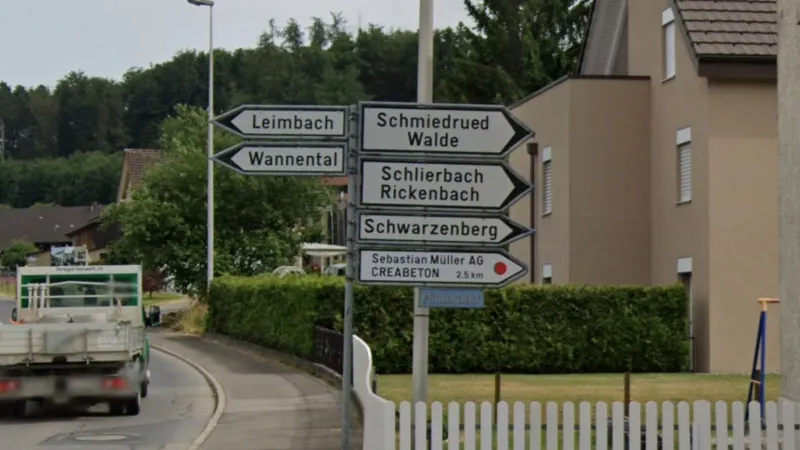
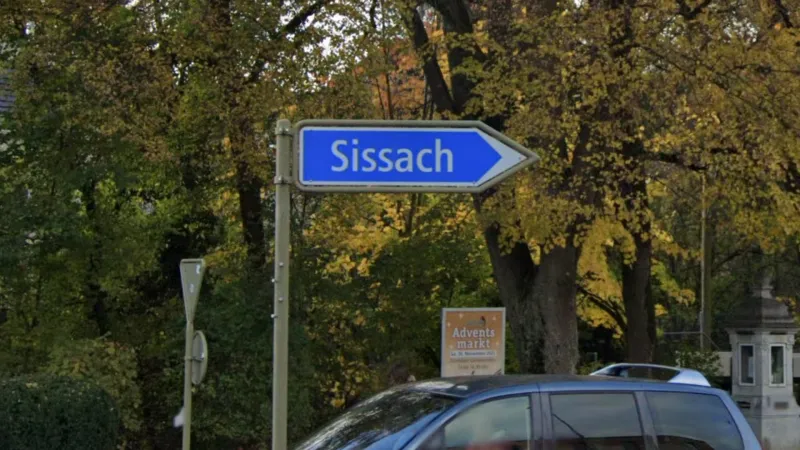
Virtually all direction signs in Switzerland are contained in a frame. However direction sign frames with angular corners, rather than the standard rounded corners, are most common in the cantons of Aargau and Lucerne, although can still commonly be found elsewhere.
Direction sign frames with a combination of angular corners and rounded corners are most commonly found in Basel-Country, although can still be found elsewhere. The corners nearest the signpost will be rounded, whereas the ones for the arrow will be angular. These ‘hybrid’ frames are also often an olive-green colour.
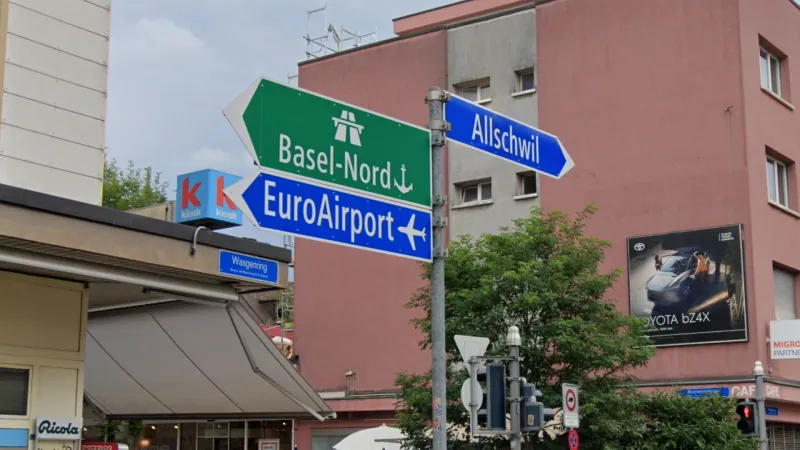
Direction signs with no frame are found almost exclusively in Basel-City.
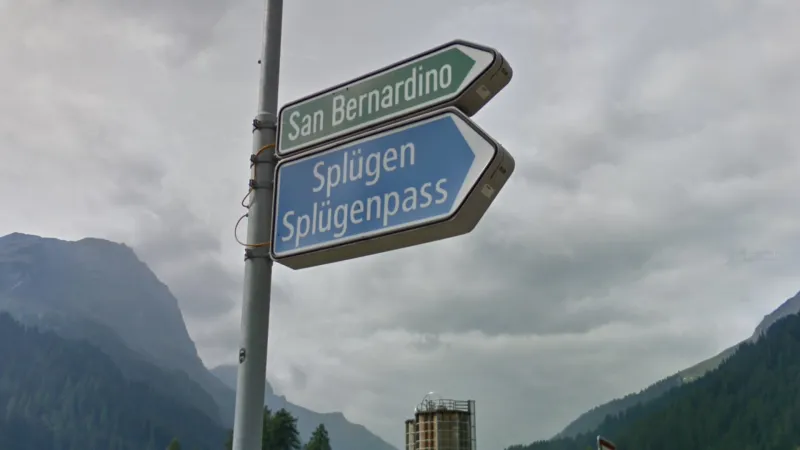
Thick direction signs with this distinctive design are most common in Grisons but can also be found elsewhere.
Road Markings
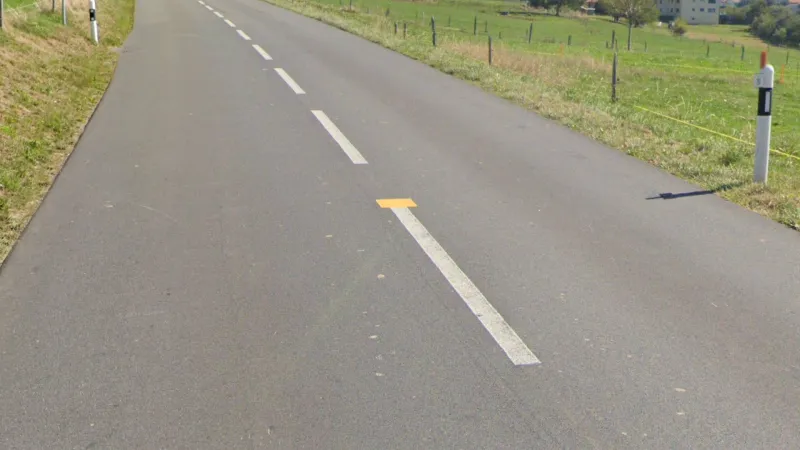
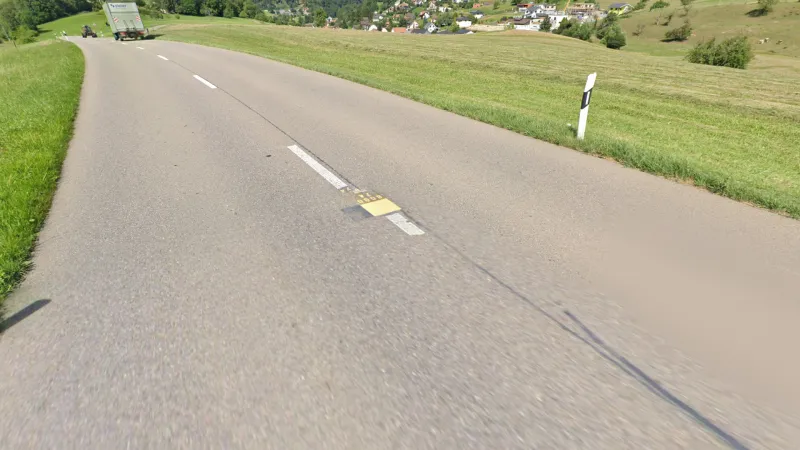
Switzerland often paints geodetic markers on roads to indicate specific features and mark distances. The most common of these are yellow square markers found in breaks in the centre line. These are found in most cantons, but are notably absent in certain cantons including Bern, Grisons and Zurich.
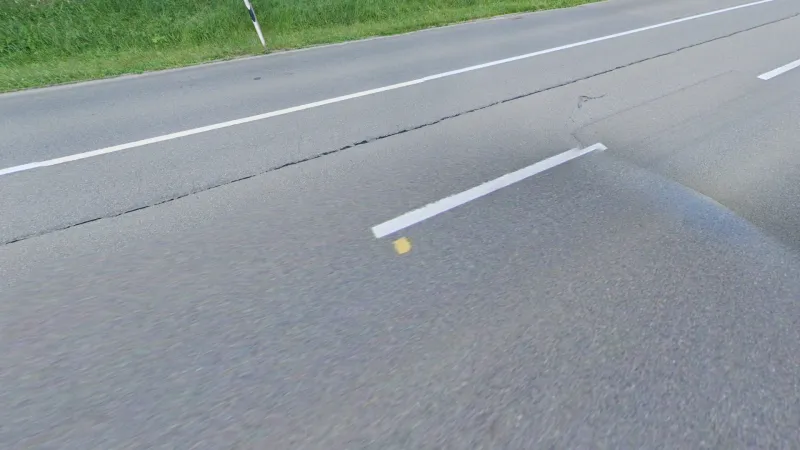
Small yellow squares that are offset from the centre line are found in only two cantons: Neuchâtel and Nidwalden.
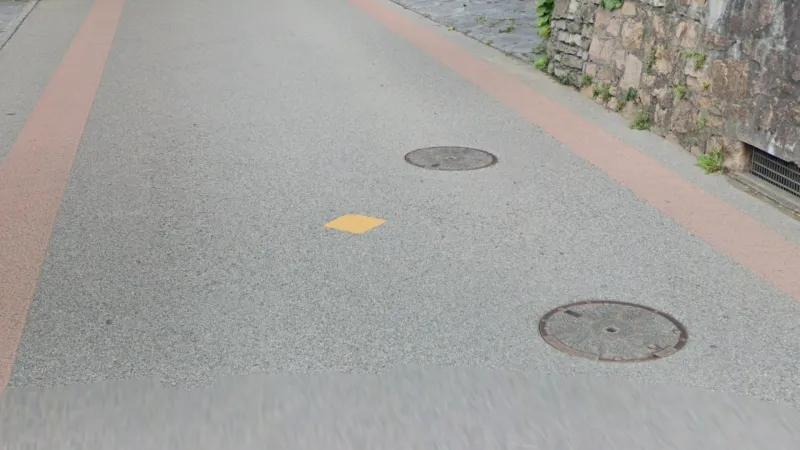
In Ticino, and more rarely in Grisons, you can find large yellow markers that are diamonds, circles or other shapes, instead of the standard squares.
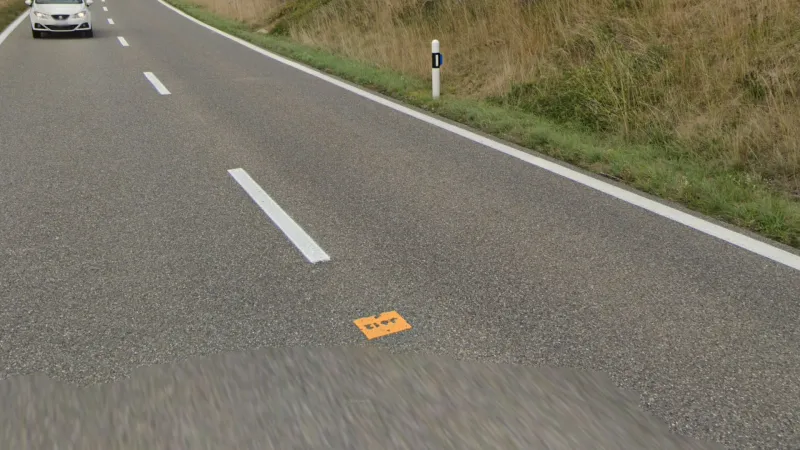
In Aargau, the yellow square markers always contain written numbers inside the square.
Yellow square markers in Solothurn will often have numbers painted outside the square. The markers will also sometimes be circular rather than rectangular, usually at intersections.
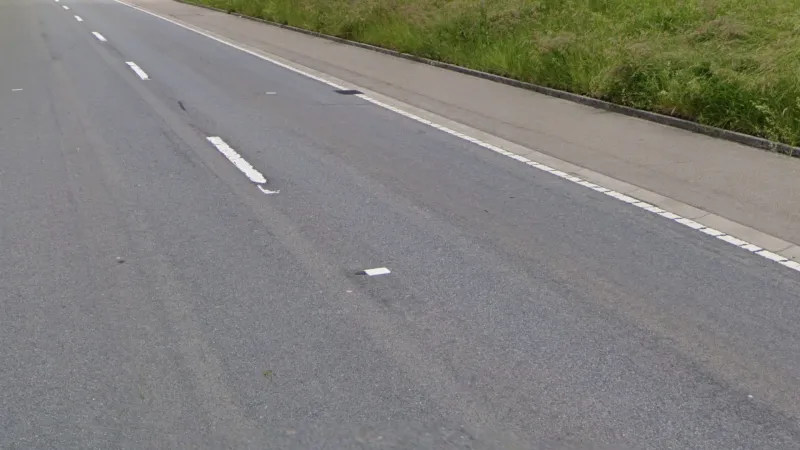
Small offset white squares are very common in, and unique to, the canton of St. Gallen.
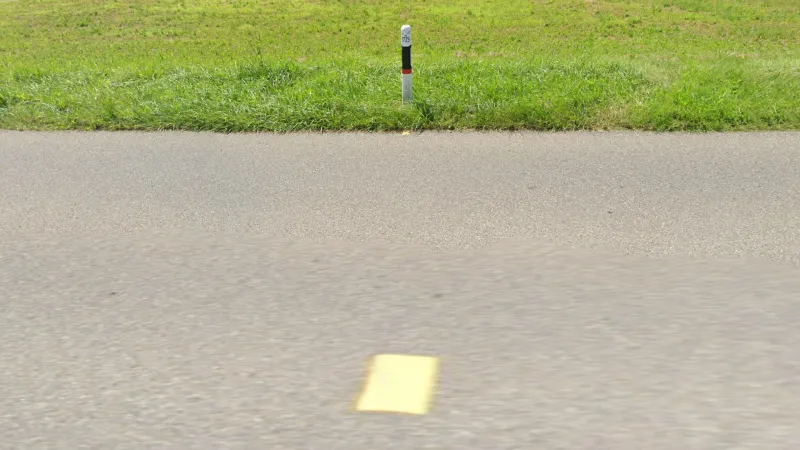
In most western cantons, whenever you have a yellow square marker you will also have a kilometre marker plaque by the side of the road, either on a bollard or on its own post.
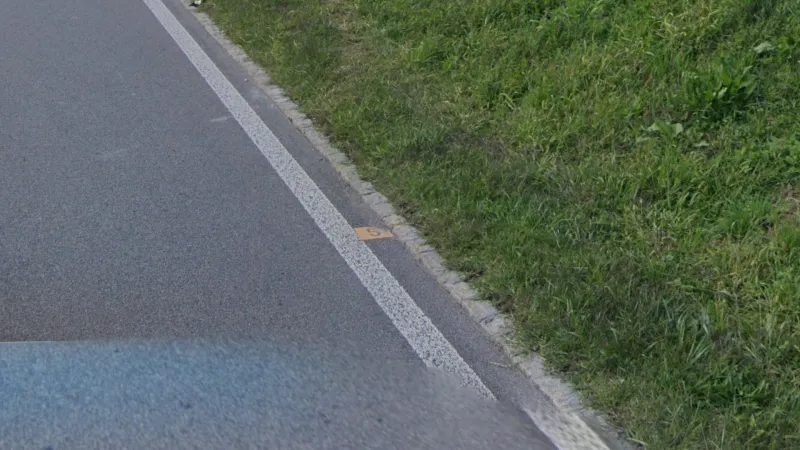
Small yellow squares with a number inside painted just outside the outer lines are the standard kilometre marker in Ticino.
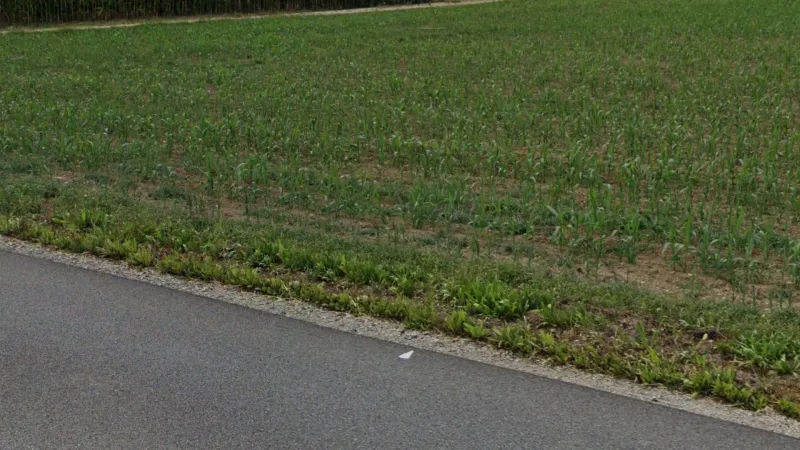
In Aargau, you will commonly see small triangular arrow markings pointing outwards along the edge of the road.
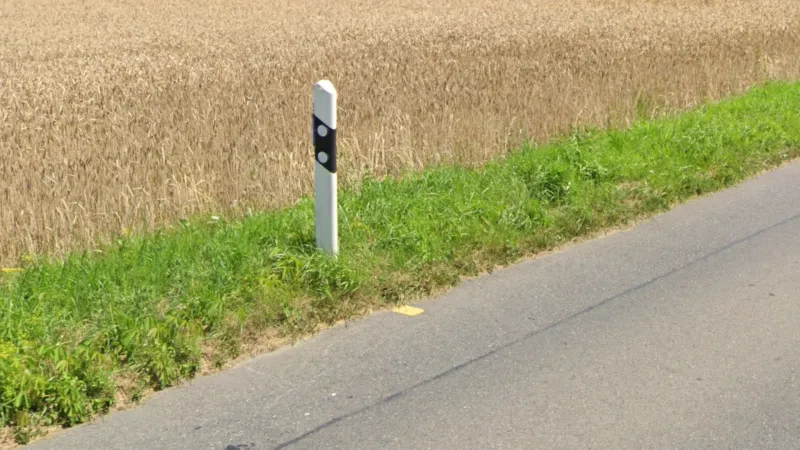
In the canton of Geneva, bollards are almost always marked by a thick, stubby mark of yellow paint.
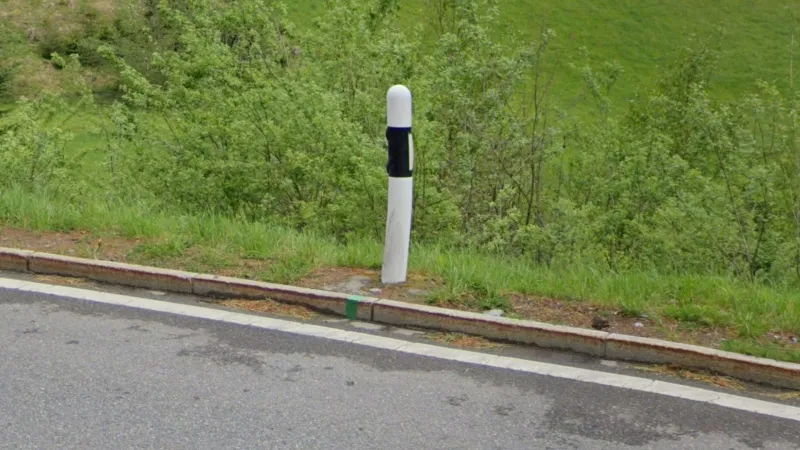
In Appenzell Ausserrhoden, the bases of bollards are typically marked with a subtle stripe of green paint, either on the curb or on the edge of the road.
Water Hydrants
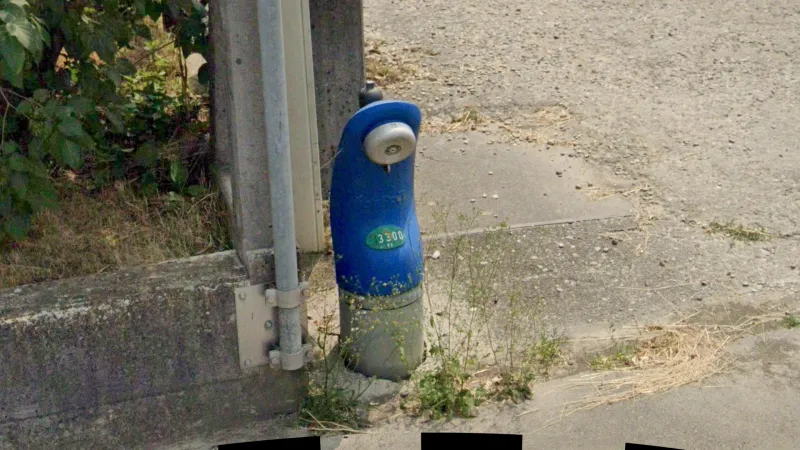
Fire hydrants with a green number tag are almost exclusive to the canton of Jura.
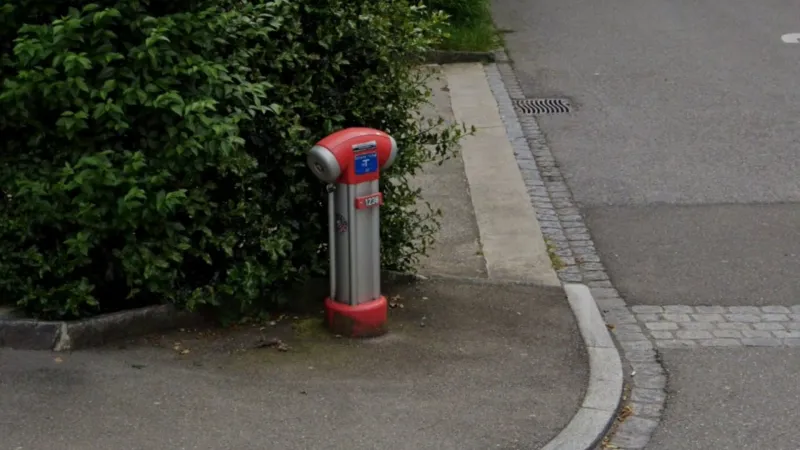
In and around the city of St. Gallen, you will find fire hydrants with this unique shape, consisting of two nozzles pointing in opposite directions with a smooth curve at the top.
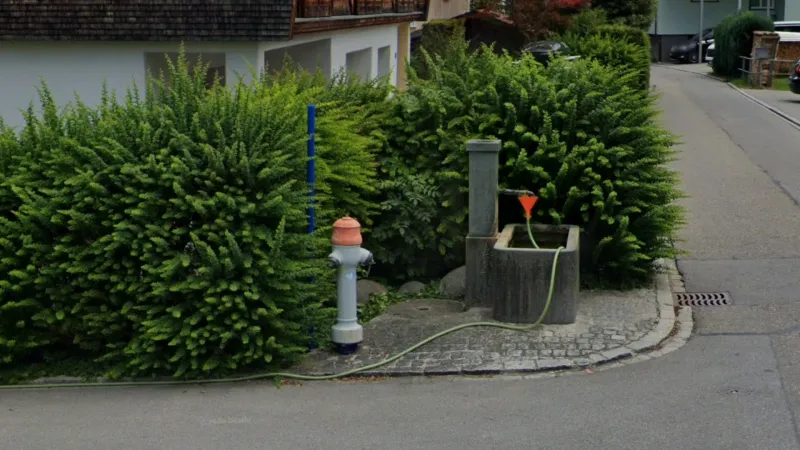
In Appenzell Innerrhoden, fire hydrants are typically accompanied by a blue marker pole, something not found in any other canton.
Miscellaneous
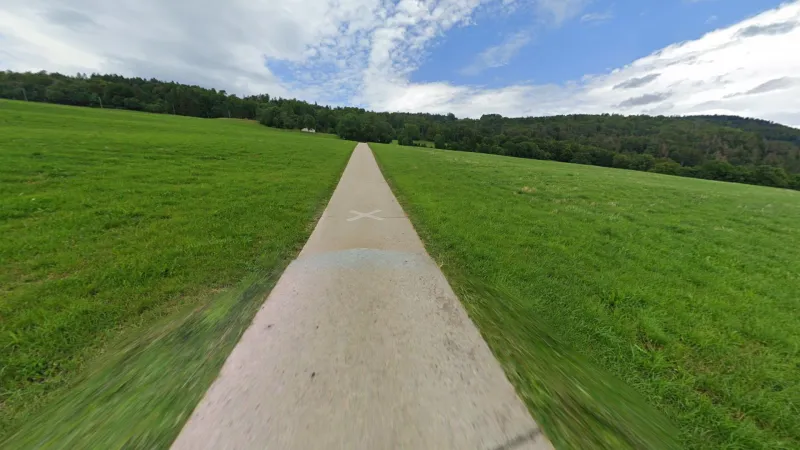
Roads made of concrete slabs can be found anywhere, but are exceptionally common in Vaud, western Fribourg and northern Jura.
The majority of road signs in the canton of Geneva feature a small ID code, usually written in either white or black characters depending on the background colour. The location of the code varies, even on the same type of sign, and can be hard to spot.
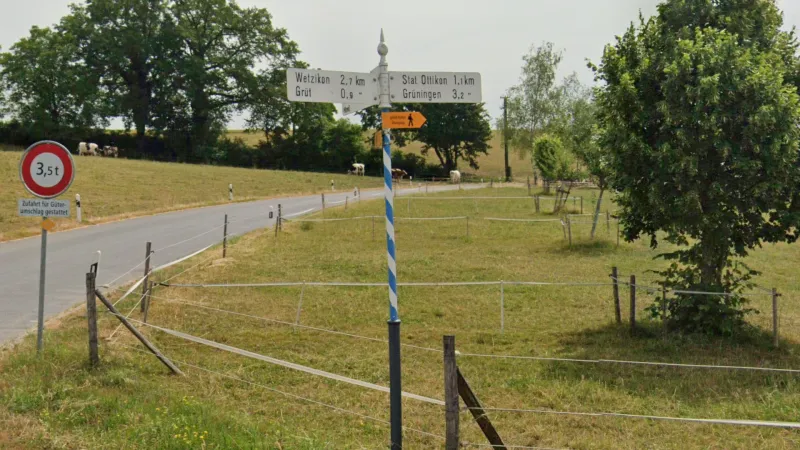
This specific style of village direction sign with a blue-and-white spiralled pole can commonly be found in rural parts of the canton of Zurich.
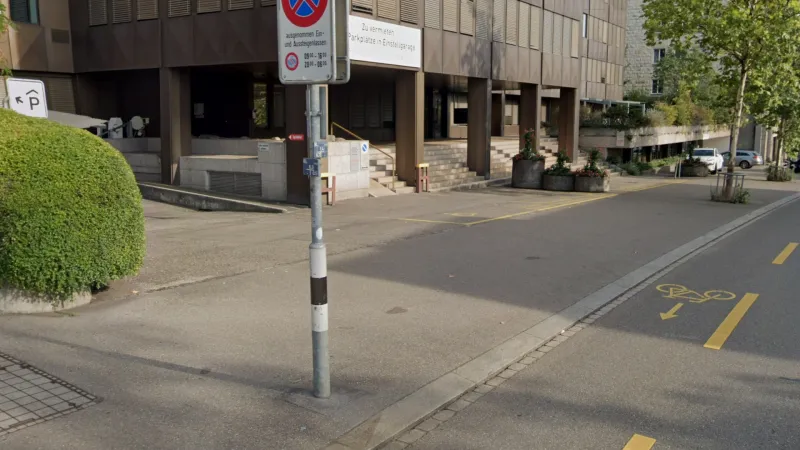
In the canton of Zurich, signposts and street bollards in urban areas often have white-black-white markings (like a ‘reverse Oreo’).
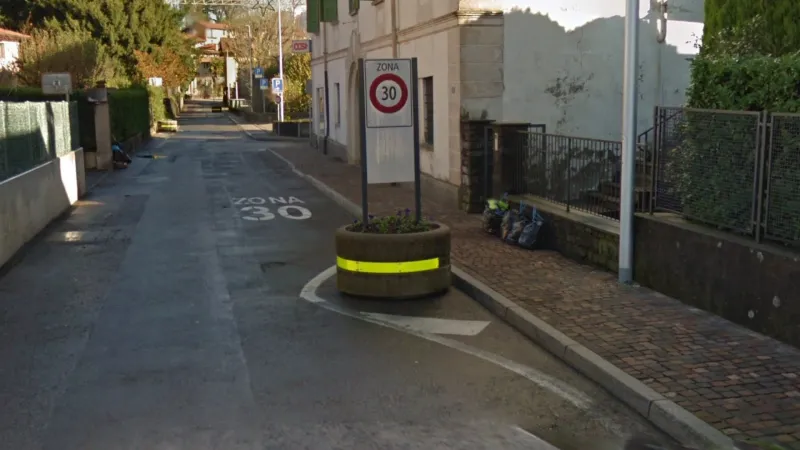
Street features in urban parts of Ticino can sometimes have neon-yellow markings.
Culture & Language
Romansh
ROMANSH LANGUAGE The Romansh language is a Romance language spoken in large parts of Grisons. While German is often used in these areas, it is very common to also find Romansh signage, both official and unofficial.While superficially the language can appear like a sort of mix of Italian and German, using a more German-inspired orthography despite being a Romance language, there are also more concrete ways to identify it:
The diacritics ö, ü, é and è are all common in Romansh. If the text contains diacritics present in German but not Italian (ö, ü) and also diacritics present in Italian but not German (é, è) then you can rule out both Italian and German.
The presence of certain consonant clusters that can rule out either German or Italian, including ‘tg’, ‘sch’ and ‘tsch’ (eastern dialects use ‘tsch’ whereas western ones use ‘tg’, see below).
Certain other consonant combinations are not exclusive, but noticeably more common in Romansh, such as ‘gl’, ‘gn’ and ‘gh’.
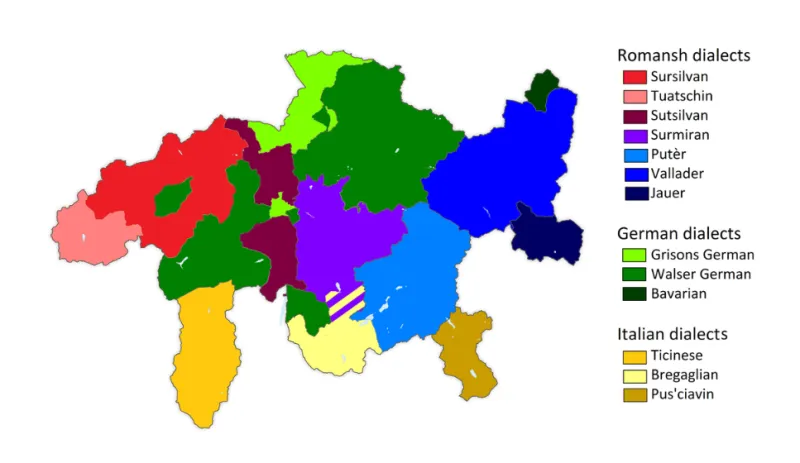
ROMANSH DIALECTS The Romansh language is highly divergent with a number of different dialects. Local signage prefers to use these rather than ‘Rumantsch Grischun’, an attempted unified standard. This is mostly helpful in two ways:Street signs - the word for street is ‘via’ in most Romansh dialects. However in the Surmiran dialect (shown in purple on the map), different towns use a number of different words, usually ‘voa’, ‘vea’ or variants with an ‘i’ or ‘j’ in the middle (e.g. voja).Houses - in Grisons, houses, even if they are not businesses, often have a name painted on them (e.g. ‘Casa Palusa’). Almost every dialect has its own word for ‘house’ so these names can be used to narrow the location down to a much smaller area: Vallader-Jauer uses ‘chasa’ Putèr uses ‘chesa’ Surmiran uses ‘tgeasa’, ‘tgesa’ or ‘tga’ Sutsilvan uses ‘tgea’ Sursilvan-Tuatschin uses ‘casa’ Tuatschin also sometimes uses ‘tgesa’ or ‘tgasa’
Toponymy
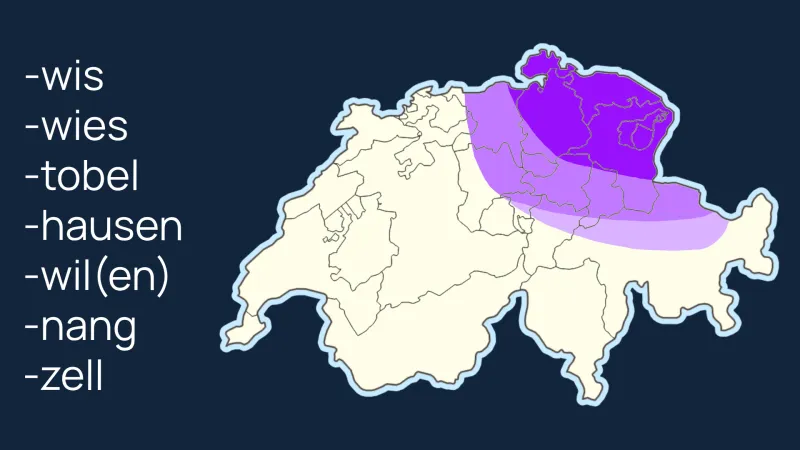
The majority of town names in the northeast of the country contain suffixes that are largely unique to the area. These include ‘-wis’, ‘-wies’, ‘-tobel’, ‘-hausen’, ‘-wilen’, ‘-nang’ and ‘-zell’. Note that while far from unique to the northeast, ‘-wil’ is also notably more common there.
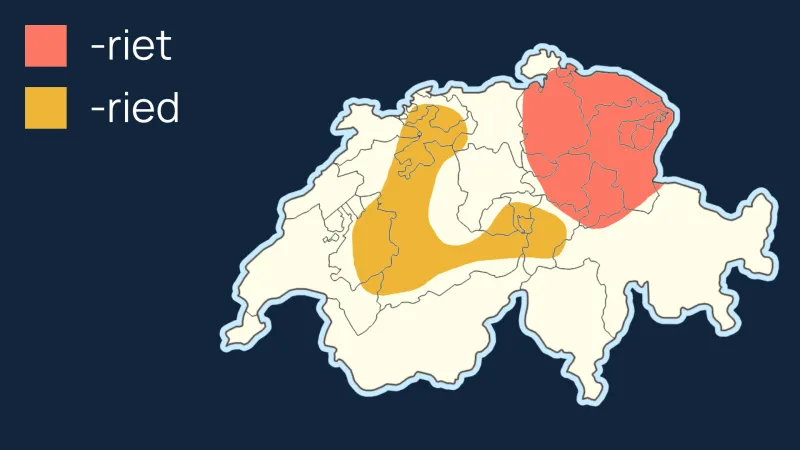
There is an east-west divide in the German-speaking part of Switzerland between ‘-riet’ in the east and ‘-ried’ in the west.
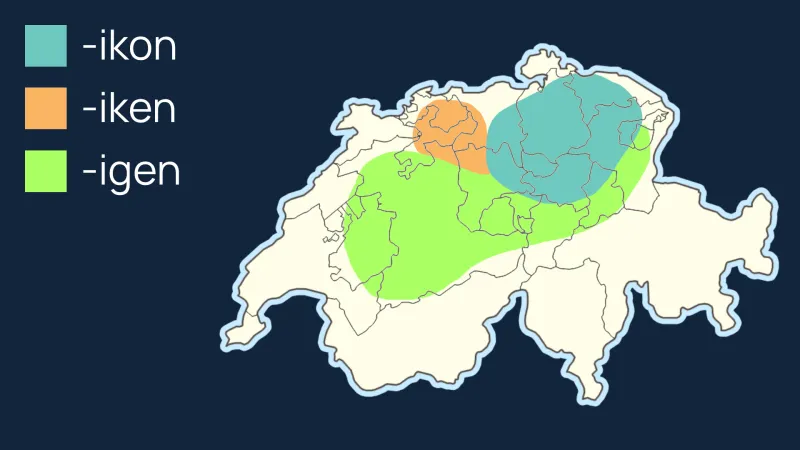
The suffixes ‘-ikon’, ‘-iken’ and ‘-igen’ occupy mutually exclusive regions within the German-speaking part of Switzerland, with ‘-ikon’ in the northeast, ‘-iken’ in the northwest and ‘-igen’ in the south.
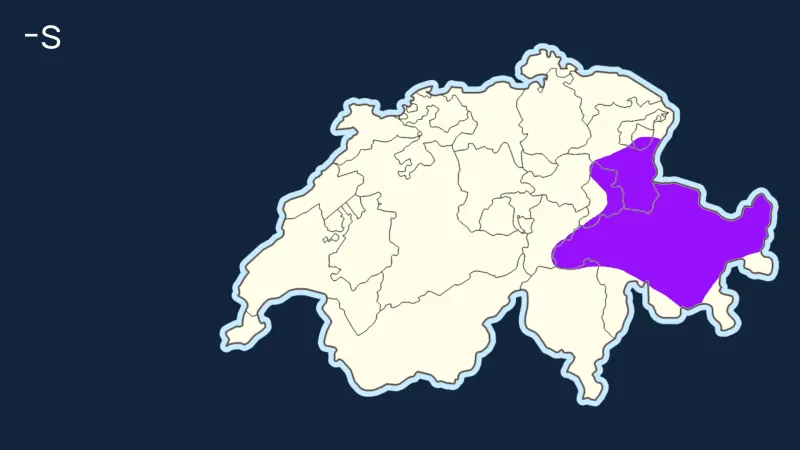
In the German-speaking part of Switzerland, town names ending in a consonant followed by ‘s’ (e.g. Grabs, Buchs, Malans) are generally only found near Liechstenstein. The same combination is also common in Romansh-speaking areas.


 Switzerland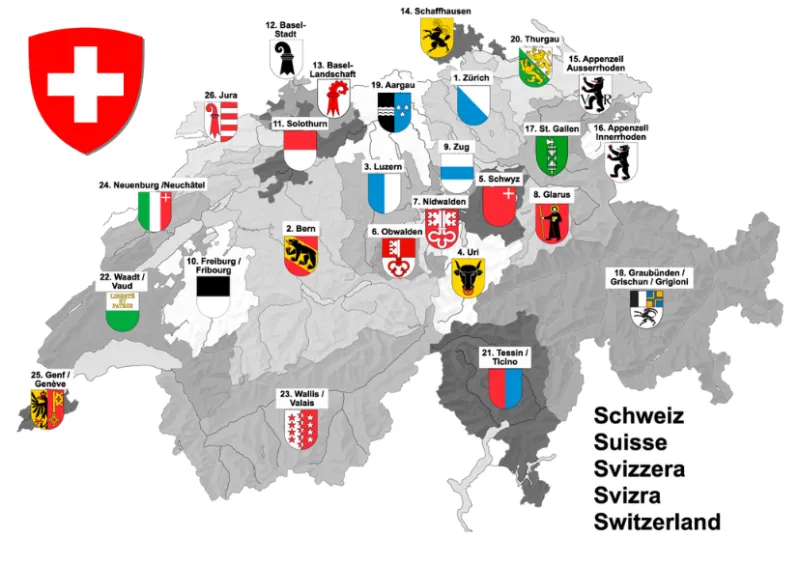



























































































































![[CZ] Bcz_Idk avatar](https://cdn.discordapp.com/avatars/587316473404325898/8c4790d3df2a105cf5e0bd6d8b5550ba.png?size=128)
